
When brick gets wet and temps swing below freezing, water inside the brick turns to ice and expands. That push widens tiny pores and hairline cracks. Melt, refill, refreeze, repeat. The brick surface flakes, mortar loosens, and gaps grow. This is freeze-thaw damage, and it hits fast when moisture hangs around the chimney.
Why wet brick fails when temps swing
Brick is like a sponge made of tiny straws. It soaks up rain and snowmelt. When a cold snap hits, the trapped water turns to ice and swells. Ice needs more room than liquid water, so it pushes on the brick and the mortar around it. That push breaks down the surface, called the face. Chips pop off, which we call spalling. Mortar joints crumble. Gaps form, so even more water gets in. The cycle speeds up.
Wet brick also stays cooler than dry brick. So while the sun warms the top, the wet areas lag, and that stress makes small cracks spread. Toss in wind, sun, and roof run-off, and you get a perfect storm on your chimney stack.
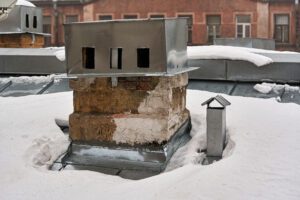
Old city brick chimney on a snowy roof. Close up
What freeze-thaw does to a chimney
- Crown cracks. The cement cap on top breaks, then water runs in.
- Spalling brick. Faces pop off, and you see hollow pits.
- Loose mortar joints. Joints look sandy, crumbly, or recessed.
- Leaky flashing. Ice lifts metal edges, then meltwater slips behind.
- Flue tile damage. Moisture freezes in small gaps and chips the liner.
- Efflorescence. White powder blooms on brick, a sign of water travel.
How to spot early warnings
Early warnings are like a squeaky hinge. Quiet, but clear. Catch them now, save a lot later.
- White lines or film on brick. That is salt left by moving water.
- Hairline cracks on the crown. Even thin lines let water in.
- Sand at the base of the chimney. Mortar is shedding grains.
- Thin flakes on brick faces. Feels like a potato chip peeling off.
- Damp spots that dry slow after sun. Water is trapped inside.
- Rust on the damper or firebox. Moisture is getting down the stack.
- Musty smell in the firebox. Moist air is entering, then sitting.
A quick story from the roof
Last fall, a homeowner said, My chimney looks fine from the yard. We climbed up and tapped a brick with a knuckle. It sounded hollow. With a gentle scrape, a thin face flaked off like old paint. He blinked and said, That thin? Yep. Freeze-thaw had been working on it for two winters, hidden from the ground.
Simple checks you can do from the ground
You do not need a ladder to catch the early stuff.
- Step back and scan all four sides. Look for color change, white haze, or streaks.
- Use binoculars and scan the crown. Seek cracks that look like a spider web.
- Look where the chimney meets the roof. Check for metal edges bent up.
- Watch the chimney after a snow. Does it stay wet longer than the roof.
- Inside, open the damper and shine a light. Check for rust, stains, or flakes.
What we usually see in Colorado Springs
- Chimneys on the wind side in Briargate wear faster on one face.
- In Old Colorado City, older soft brick tends to spall first below the crown.
- Roofs with steep valleys push meltwater toward the back of the stack, so flashing lifts sooner.
Why Colorado Springs weather hits chimneys hard
Our mix of sun and snap-freeze is tough. A warm afternoon on the south face can turn to a hard freeze at night. Snowfall can be dry, then a Chinook wind pushes temps up fast. Then we freeze again. That swing pumps water in and out of brick like a piston. UV at this altitude dries surfaces fast, which sounds good, but it leaves moisture trapped deeper in the brick. The top dries, the core holds water, and stress builds.
Heat and cold
- Heat expands the crown and cap, then cold shrinks it. The open and close motion opens hairline gaps.
- Warm sun on one face and shade on the other pulls joints apart across corners.
Rain and snow
- Wind-driven rain pushes water into vertical joints.
- Snow on the crown melts at the flue first, then runs into tiny cracks. Night freeze locks it in.
Humidity
- Dry air pulls water out of mortar too fast after a repair if not cured right, which can weaken it.
- Short bursts of humidity can add damp to a cool chimney, feeding the cycle.
Where the water gets in
Fixing freeze-thaw starts by stopping water entry. The usual routes are simple.
- Cracked crown or cap
- Open mortar joints
- Brick faces already spalled
- Loose or thin flashing
- Missing drip edge on the crown
- Porous, unsealed brick that soaks heavy
How to protect brick from freeze-thaw
- A proper crown. Poured in place concrete with a drip edge that overhangs the brick.
- Flexible crown coating. Fills hairline cracks and flexes with the season.
- Repointing with the right mortar. Fresh joints match the old mix and bond tight.
- Breathable water repellent. Stops liquid water, lets vapor escape. Do not use paint.
- Flashing tune-up. Step flashing and counter flashing tucked and sealed right.
- Cricket behind wide chimneys. A small roof to split water around the stack.
Friendly chat, because questions help
You may ask, Can I just paint the chimney. Paint traps water. Brick needs to breathe.
What about a clear hardware store sealer. If it is not vapor permeable, it can make spalling worse.
Do I need a new crown if I only see tiny hairlines. Hairlines are where the cycle starts. A crown coat can close them before they grow.
Fast troubleshooting
- If you see white powder bands, then track upward for the water source, often the crown or a bad joint above.
- If brick faces flake near the top, then suspect crown cracks or poor drip edge.
- If only one side flakes, then wind and sun exposure on that face likely drive the cycle, add water repellent and fix joints.
- If flashing stains the roof below, then reset step flashing and seal counter flashing.
- If the firebox smells musty after snow, then water is getting in from above, check crown and cap fit.
- If mortar turns sandy to the touch, then schedule repointing before bricks loosen.
- If flue tiles show chips, then get a camera check before use, clay chips can cut draft and cause soot issues.
Common myths that need a reset
- Myth, Brick is solid, it does not soak water. Fact, Brick is full of tiny pores that pull in water by capillary action.
- Myth, A coat of paint will seal it. Fact, Paint traps water and speeds up face pop and frost damage.
- Myth, Harder mortar is better. Fact, Mortar must be softer than brick so stress moves to the joint, not the brick face.
- Myth, Summer repairs can wait until winter. Fact, You want repairs cured before freeze cycles start.
How to tell spalling from normal wear
Spalling looks like chips or bowls in the brick face. You may see sharp edges around shallow pits. Normal weathering is smooth and even. Tap the spalled brick with a knuckle. It can sound hollow compared to solid brick nearby. Look for flakes on the roof near the chimney. That is a clue.
Crown cracks, the small leak with big punch
The crown is the hat. It sheds water away from the stack. If it is flat with no drip edge, water hugs the bottom and runs down the brick. Hairline cracks let water soak into the top course. In a freeze, that thin layer pops first. A good crown has slope, a drip edge, and a small bond break from the flue so it can move without cracking.
Mortar joints matter more than you think
Mortar is the cushion between bricks. It takes the stress. If the mix is too hard, the brick will take the hit and spall. If it is too soft or washed out, joints recess and let water run in. Repointing with a compatible mix is key. Match type and color, then pack the joint full. Tool it smooth so it sheds water.
Flashing, the unsung shield
Flashing is the metal that ties roof to brick. Step flashing sits under shingles, counter flashing tucks into the mortar above. If either lifts, water sneaks in and rides the joint. In a freeze, that trapped water pushes the joint apart. From the ground, look for straight, snug lines and no gaps.
Chimney caps and screens
A good cap keeps rain and snow from dropping into the flue. It also stops sparks and critters. Make sure the cap fits the flue tight and sits level. A warped or missing cap lets water land right where freeze-thaw hurts the most, inside the flue area.
DIY checks you can do safely
No roof work here, just smart eyes and simple tools.
- Binocular scan once a month during snow season.
- Take photos from the same spot. Compare changes.
- Use a moisture meter on interior walls near the chimney, watch for spikes.
- Place a small cup in the firebox during storms. If you find water, track it.
- After a thaw, touch the brick on a sunny day. If it still feels cold and damp, water is inside.
Small fixes a handy homeowner can handle
- Caulk tiny gaps in counter flashing, use a roof-safe sealant. Do not seal the whole seam solid, let the metal move.
- Clean efflorescence with a soft brush and water. Skip acid cleaners, they can chew mortar.
- Install a chimney cap kit if the fit is clear and safe from a ladder, or wait for a pro if the pitch is steep.
When to call a pro right away
- Large crown cracks or pieces missing
- Spalling in rows, not just random spots
- Rust streaks or water inside the firebox
- Loose bricks you can wiggle with a finger
- Smoke stains on the roof near the stack
- Any sign of leaning or out-of-plumb courses
Safety notes you should know
Work from the ground unless you have roof gear and skill. Ice and high wind near a chimney are no joke. Do not use salt on the crown or brick to melt ice. It pulls water into the surface and speeds damage. Do not start a hot fire to dry a wet flue. Rapid heat on damp clay can crack tiles.
Care schedule that fits a busy life
Weekly, in winter
- After snow or rain, do a quick ground scan for new wet spots or staining.
- Check inside for musty smells or rust on the damper.
Monthly, year round
- Binocular check of the crown, cap, and flashing lines.
- Brush off white film that you can reach safely.
Yearly
- Full chimney inspection by a trained tech before freeze season.
- Repoint small joints that opened over the year.
- Apply a breathable water repellent every few years when tests show water soak.
- Crown tune-up and cap check before first snow.
How freeze-thaw links to draft and smoke
A wet chimney does not just break brick. It can mess with draft too. Damp flue walls cool the rising smoke, which slows draft and can push smoke back into the room. Soot sticks to damp spots and builds faster. So keeping water out keeps the system running clean.
Talk through a repair path
Picture this chat.
You, I see flakes and a few crown lines. Is that bad yet.
Tech, Good catch. We will close the crown lines with a flexible coat, repoint the worst joints, and add a breathable water repellent. That stops water entry. Next, we watch it this freeze season. If the face holds, you are set.
You, Do I need to replace bricks now.
Tech, Only the few that lost most of the face. The goal is to protect the rest so they do not join the party.
Options that help in our climate
- Crown with a drip edge and a small overhang that clears the brick face.
- Seal with a siloxane based repellent that lets vapor out.
- Use a cricket behind a wide stack to split roof runoff.
Why not to wait until spring
Freeze-thaw makes tiny problems grow fast. If your crown is open in fall, every storm pumps water in. Fixing small cracks, tuning flashing, or adding a cap now can save the brick face that would be gone by April.
How to test if brick is too absorbent
A simple spray test can tell you a lot. Pick a dry day. Spray a small area with water. If the water soaks in within a minute and the color darkens fast, that area is thirsty. After repairs, a good repellent should keep water beading on the surface for some time while still letting vapor leave from inside.
Picking the right mortar
Use a mortar that matches the original hardness. Soft brick needs softer mortar. If you use a very hard mix, stress goes to the brick, and the face can pop in a freeze. A match also keeps color even, which helps rain shed the same way across the wall.
Chimney liners and moisture
If your tile liner has cracks, water can sit in the gaps and freeze. A camera check can spot this. A new liner can keep flue gases in, and moisture out of the masonry shell. Stainless steel liners can also help control condensation when your heating setup changes.
Little things that steal years from a chimney
- Sprinklers that hit the stack. Turn them away.
- Vines that hold moisture against brick.
- Firewood stacked tight to the chimney wall.
- Missing rain diverter up the roof slope feeding water right to the stack.
What to watch after a big storm
After a wet snow followed by a quick freeze, take a look the next day.
- New white streaks or a darker band on the brick
- Icicles hanging off flashing lines
- Cap tilted or screen clogged with ice
- Melt line that stops halfway down a face, hinting at water trapped inside
If you see any of these, snap a photo and note the wind direction. That detail helps find the source.
FAQs
Q, What is freeze-thaw damage on a chimney.
A, Water gets into brick and mortar, freezes, expands, and breaks the surface and joints. It repeats with each freeze.
Q, How fast can freeze-thaw hurt brick.
A, One hard winter can start spalling if water entry is steady. Two or three winters can make real damage if left alone.
Q, Can I stop spalling once it starts.
A, You can stop it from spreading by keeping water out, fixing joints, and sealing with a breathable repellent. Bad bricks can be replaced.
Q, Does a cap really help with freeze-thaw.
A, Yes. A snug cap keeps rain and snow out of the flue and off the crown, which cuts a main water source.
Q, How do I know if my crown needs work.
A, Look for hairline cracks, standing water, or no drip edge. If you see any, a crown coat or rebuild will help.
Q, Is pressure washing a good idea.
A, No. It can drive water deep into brick and mortar, which sets up more freeze-thaw damage.
Q, What if only one side of my chimney shows damage.
A, That face gets more wind or sun. Fix the source, then protect that side with repointing and a good water repellent.
Q, Is paint a good seal for brick.
A, No. Paint traps moisture. Brick needs to breathe. Use a vapor permeable repellent instead.
Q, Should I worry about water inside the firebox.
A, Yes. Water inside means an opening up top. Catch it early to prevent flue and masonry damage.
Q, Who can check all this before winter.
A, A trained chimney tech can inspect the stack, crown, flashing, and liner, then map a plan before the first freeze.
Your chimney works hard in our swingy weather. Watch for the small signs, keep water out, and act early. The brick and mortar will last longer, your fire will burn cleaner, and your home will stay safer through winter after winter.
If you want a hand with inspection, crown repair, repointing, flashing, or water protection in Colorado Springs, the crew at Chimney Sweep Colorado Springs can help. We know the local swings, from sunny afternoons to cold snaps overnight, and we fix the small stuff before it grows. Call 720-505-5030 or visit https://chimneysweepscoloradosprings.com to schedule a visit.