
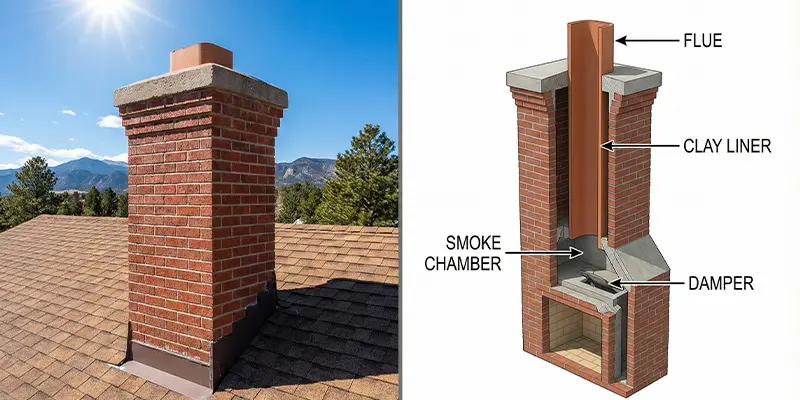
When you look at your fireplace, you probably just see the bricks and the fire. But your chimney is actually a complex machine. It has many parts working together to keep smoke moving out and heat staying in. Understanding the parts of a chimney can help you spot problems early.
Whether you have a masonry chimney (made of brick) or a factory-built one, the anatomy is similar. This guide breaks down the structure of a chimney from the very top of the roof down to the floor of your living room. We will explain what each part does in simple language.
The Exterior: What is on the Roof?
The parts outside your home take the most abuse from Colorado weather. They fight wind, snow, and sun to protect the inside.
1. Chimney Cap
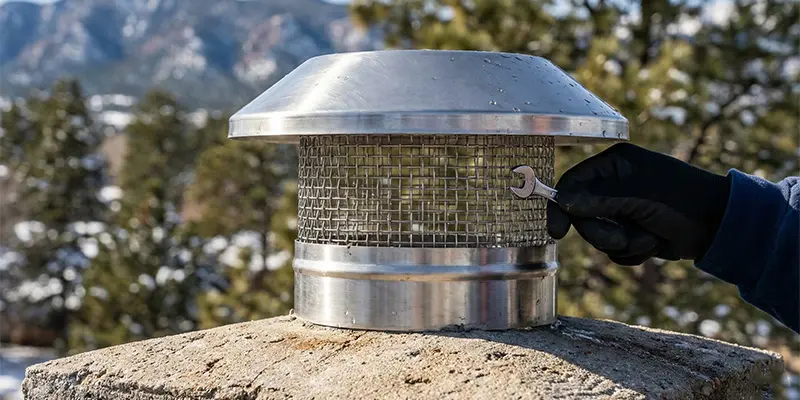
The cap is the metal roof that sits on top of the flue. Think of it as an umbrella. Its main job is to keep rain, snow, and animals out. If you ask, “what is a flue cap,” this is it. It usually has a mesh screen called a spark arrestor. This screen keeps hot sparks from flying out onto your roof and stops birds from flying in.
2. Chimney Crown
The crown is the concrete slab that covers the top of the bricks. It slopes away from the center like a roof. The crown stops water from soaking into the bricks. If the crown cracks, water gets inside the masonry. In Colorado Springs, this water freezes and expands, causing the bricks to break apart (spalling).
3. Chimney Flashing
This is the metal seal where the chimney meets your roof. It keeps water from dripping into your attic. If you see water stains on your ceiling near the chimney, bad flashing is often the culprit.
The Interior: Inside the Stack
These are the parts you cannot see from the yard, but they are critical for safety.
4. The Flue
The flue is the tunnel that smoke travels through. It is the hollow space inside the chimney. Most chimneys have at least one flue for the fireplace. If you have a gas furnace, it might have its own separate flue in the same chimney.
5. Chimney Liner
The liner is the protective material inside the flue. Old chimneys might just be bare brick, but modern safety codes require a liner. It can be made of clay tiles, stainless steel, or poured concrete. The liner protects the house from heat and stops dangerous gases like carbon monoxide from leaking into your bedrooms.
6. Smoke Chamber
This area is shaped like an upside-down funnel. It sits right above the fireplace but below the flue. It gently squeezes the smoke so it can travel up the narrow flue without puffing back into the room. The walls here need to be very smooth to prevent creosote buildup.
The Firebox Area: Where the Fire Burns
This is the part of the structure you see and use every day inside your home.
7. The Damper
The damper is a door that seals the fireplace when you aren’t using it. It keeps warm air inside your house. You open it before you light a fire to let smoke out. If your damper is warped or rusted, you might lose expensive heat in the winter.
8. Smoke Shelf
This is a flat shelf located behind the damper. You cannot see it easily. Its job is to catch falling debris and rain water. It also helps stop downdrafts (cold air coming down the chimney) from blowing smoke into your face.
9. Firebox
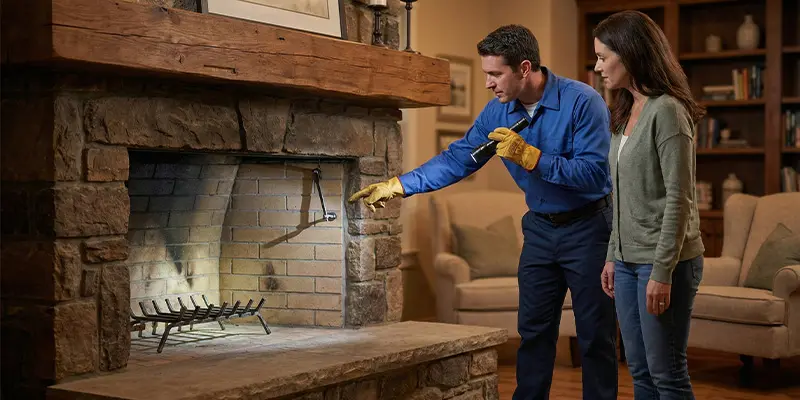
The firebox is the area where you build the fire. It is lined with special “fire bricks” that can handle extreme heat. These bricks are tough, but they can crack over time. Cracked fire bricks are a fire hazard and should be fixed quickly.
10. The Hearth
The hearth is the floor of the fireplace. The “inner hearth” is where the fire sits. The “outer hearth” extends into the room. It is made of non-combustible material like stone or tile to protect your carpet from flying sparks.
11. Ash Dump (Optional)
Some fireplaces have a small metal door on the floor of the firebox. You can push old ash through this door. The ash falls into an “ash pit” in the basement or outside the house, making cleanup easier.
Why Does This Matter?
Knowing the structure of a chimney helps you understand repairs. If a technician tells you your “crown is cracked” or your “liner is damaged,” you now know exactly what that means. Ignoring a broken part can lead to water damage, mold, or even a house fire.
For example, a missing cap lets water rust your damper. A cracked liner lets heat reach the wood frame of your house. Every part relies on the others to work correctly.
Keep Every Part Working
The best way to protect all these parts is with regular care. A professional chimney inspection checks every component we listed above. We check the cap for rust, the crown for cracks, and the liner for safety.
If you live in Colorado Springs, the freeze-thaw cycle is tough on your masonry. Don’t wait until bricks start falling to check your system. A simple checkup now can save you from a major rebuild later.
Do you have questions about the parts to a chimney or need a repair? Contact us today to keep your home warm and safe.
For more details on how these parts work together, you can read guides from the CSIA or the NFPA.