
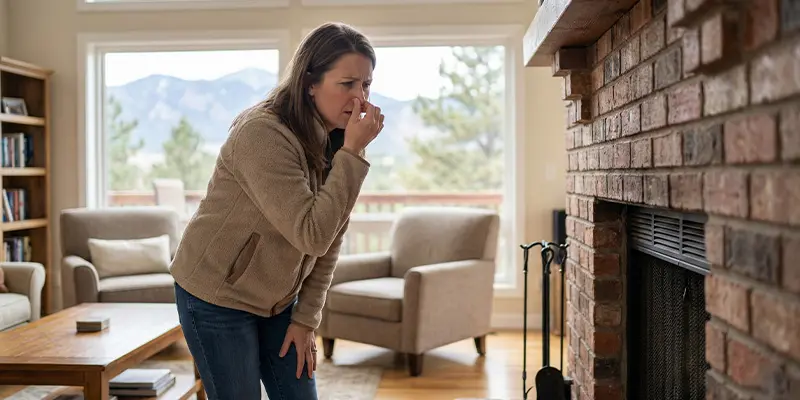
You walk into your living room and stop. You smell something gross. Maybe it smells like a wet dog, a stale campfire, or something rotting. You look around, but the smell is coming from your fireplace.
A smelly chimney is a very common problem in Colorado Springs, especially in the spring and summer. But a bad smell is not normal. It is a sign that something inside your chimney is wrong. It could be old soot, water damage, or even a trapped animal.
This guide explains the four most common reasons your fireplace smells bad and how to fix them simply.
1. The Campfire Smell (Creosote)
Does your living room smell like an old bonfire or hot asphalt? This is usually caused by creosote.
Creosote is the black, tar-like residue left behind when you burn wood. Even if you haven’t used your fireplace in months, that soot is still there. In the summer, humidity (moisture in the air) mixes with the creosote. This creates a strong, acrid odor.
The Fix: You need a professional chimney cleaning. We scrub away the soot and creosote so there is nothing left to smell. This is the most common solution for chimney odors.
2. The Musty or “Wet Dog” Smell (Water)
If your fireplace smells damp, moldy, or like a wet dog, you likely have a water leak. Rain or melted snow is getting inside your chimney.
Water mixes with the soot inside the flue to create a nasty paste. This smells terrible. Worse, water ruins your bricks and metal liner.
The Fix: You probably need a chimney cap. This is a metal roof for your flue that stops rain from falling in. If you already have a cap, your chimney crown might be cracked, letting water soak into the bricks. We can seal these cracks to stop the leak.
3. The Rotting Smell (Animals)
This is the worst smell of all. If you smell something rotting or decaying, an animal might be trapped inside.
Birds, raccoons, and squirrels love to build nests in chimneys because they are warm and safe. Sometimes, they get stuck and cannot get back out. A dead animal in the flue is a health hazard and smells awful.
The Fix: Do not try to remove a wild animal yourself. Call a professional. We can safely remove the animal (or the nest) and clean the area. Then, we install a chimney cap with a mesh screen so animals cannot get back in.
4. The Smoky Smell (Negative Air Pressure)
Do you smell smoke even when you don’t have a fire lit? This is often caused by air pressure problems.
Your house breathes. When you run bathroom fans, your dryer, or your range hood, they suck air out of your house. To replace that air, your house might suck air down the chimney. This pulls the smoky, sooty smell from the flue right into your living room.
The Fix: Keep your damper closed tightly when you aren’t using the fireplace. You can also try cracking a window nearby to let fresh air in. If the problem continues, you might need a special top-sealing damper that acts like a storm door for your chimney.
Simple Steps to Stop the Stink
If your fireplace smells, don’t just spray air freshener. That only hides the problem. Follow these steps to fix it for good:
- Close the Damper: Make sure the metal door inside your fireplace is shut tight when the fire is out.
- Schedule a Cleaning: Remove the source of the smell. A clean chimney rarely smells bad.
- Check the Cap: Go outside and look up. Do you see a metal cap on top? If not, you need one.
- Waterproof: If your bricks get dark when it rains, they are soaking up water. We can apply a clear waterproofing seal to stop this.
Conclusion
You shouldn’t have to live with a smelly house. Whether it’s old soot, a water leak, or a critter, the solution is usually simple.
If you live in Colorado Springs and are tired of the smell, give us a call. We will find the cause and fix it fast so you can breathe easy again.
For more tips on keeping your air clean, check out the CSIA homeowners guide or safety tips from the NFPA.