
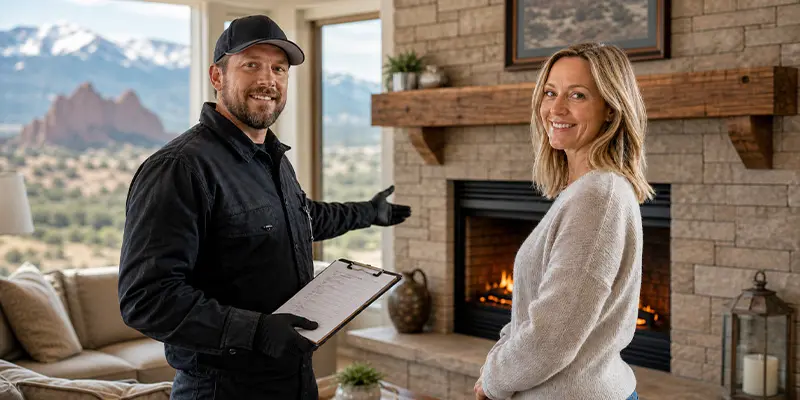
When the snow starts falling in Colorado Springs, nothing feels better than lighting a warm fire in your living room. But before you strike a match, you need to make sure your fireplace is actually safe to use. A fireplace is a wonderful feature, but it needs regular care to work correctly.
Many homeowners do not know where to start. They wonder if they should clean the chimney themselves, or what parts they need to check. Skipping maintenance can lead to dangerous chimney fires or expensive water leaks.
To make things easy, we created this simple chimney maintenance checklist. It breaks down exactly what you need to do before winter arrives. Follow these easy steps to keep your home safe, warm, and ready for the freezing weather.
Step 1: Do a Simple Visual Check Outside
You do not need to be an expert to spot major problems. Start by walking out into your yard. Look up at your chimney from the ground. You are looking for obvious signs of damage caused by our harsh Colorado weather.
First, look at the bricks. Are any of them missing? Do you see chunks of brick laying on your roof? This happens when water gets inside the bricks and freezes. When the water turns to ice, it expands and breaks the bricks apart.
Next, look at the very top of the chimney. You should see a metal roof covering the hole. This is called the chimney cap. If you do not see a metal cap, your chimney is completely open to the rain and snow. You need a cap to stop water and animals from getting inside.
Finally, look for white, powdery stains on the outside of the bricks. This is called efflorescence. It means water is soaking through your masonry. If you see this white stain, you have a moisture problem that needs to be fixed.
Step 2: Do a Simple Check Inside
Once you finish looking outside, come back into your living room. Take a flashlight and look inside your fireplace. You are checking to make sure the parts you use every day are working smoothly.
Find the damper handle. The damper is the metal door that opens and closes the chimney hole. Try to open and close it. It should move easily. If it is stuck, or if you hear a loud grinding noise, it might be rusted. A rusted damper will not seal correctly, which means cold air will blow into your house all winter long.
Now, look at the walls of the firebox. This is the area where you actually build the fire. The walls are made of special fire bricks. Look for deep cracks or missing pieces of mortar between the bricks. If the firebox is cracked, the intense heat from the fire can escape and reach the wooden frame of your house.
Step 3: Schedule a Professional Inspection
You can spot big problems from the yard, but you cannot see inside the long, dark tunnel of your chimney. That is why the next step is the most important one on the checklist.
Fire safety groups recommend that you hire a professional for a chimney inspection every single year. A professional inspector is trained to find hidden dangers that you cannot see.
During an inspection, a certified technician will look at the entire system. We use special cameras to look all the way up the inside of the flue liner. We check for tiny cracks, dangerous soot buildup, and hidden bird nests. An annual inspection is the only way to know for sure that your chimney is safe to use.
Step 4: Get the Flue Cleaned
If the inspector finds soot inside your chimney, you need to get it cleaned. When you burn wood, it creates a sticky, black residue called creosote. Creosote coats the inside of your chimney like tar.
Creosote is highly flammable. If it gets too thick, a single spark can set it on fire. A chimney fire is incredibly hot and very dangerous. It can destroy your chimney and spread to your roof in minutes.
You should never try to clean creosote yourself. It requires special brushes, heavy-duty vacuums, and proper training. Schedule a professional chimney flue cleaning to scrub that dangerous fuel out of your house. Our team uses tools that clean the flue perfectly without leaving a single speck of dust in your living room.
Step 5: Prepare the Right Firewood
The type of wood you burn makes a huge difference in how clean your chimney stays. If you burn the wrong wood, you will ruin your chimney very quickly.
You should only burn “seasoned” firewood. Seasoned wood is wood that has been cut and left to dry out for at least six months to a year. It has very little moisture inside it. Because it is dry, it burns very hot and creates very little smoke.
Never burn “green” or wet wood. Wet wood is heavy and hard to light. When it finally burns, it creates a massive amount of cold, heavy smoke. Burning wet wood creates dangerous creosote much faster than dry wood.
To check if your wood is ready, hit two logs together. If they make a hollow, sharp sound, they are dry. If they make a dull thud, they are still wet. Always store your firewood outside, stacked neatly, and covered so the rain stays off.
Step 6: Clear the Hearth Area
Before you light your first fire, take a look at the area around your fireplace. This area is called the hearth. It needs to be clear of anything that can catch on fire.
Move rugs, blankets, and pillows at least three feet away from the fireplace opening. Do not place holiday decorations or dry plants too close to the heat. If you have young children or pets, consider putting up a sturdy metal safety screen to keep them away from the hot glass or open flames.
Step 7: Check Your Home Safety Alarms
This is a step you should never skip. Your chimney is designed to pull smoke up and out of your house. But if a strong gust of wind blows down the chimney, or if the flue gets blocked, smoke and invisible gases can enter your living room.
Carbon monoxide is a deadly gas created by burning wood or gas. You cannot see it, and you cannot smell it. You must have working carbon monoxide detectors in your home.
Test your smoke detectors and your carbon monoxide detectors before the winter season begins. Put fresh batteries in all of them. Make sure you have a detector installed on every floor of your house, especially near the bedrooms.
What About Gas and Pellet Stoves?
If you have a gas fireplace or a pellet stove, you still need to follow a maintenance checklist. These appliances do not create thick creosote like wood fireplaces, but they still need care.
Gas fireplaces can get clogged with dust, pet hair, and spider webs. The glass doors can get cloudy with a white mineral film. Pellet stoves have small motors and exhaust pipes that get blocked with fine ash. No matter what kind of fireplace you have, it needs to be checked and cleaned by a professional every year.
Do Not Wait Until It Snows
The biggest mistake homeowners make is waiting until the first big snowstorm to call a chimney sweep. By the time November arrives, chimney professionals are extremely busy. You might have to wait weeks for an appointment.
The best time to complete this checklist is in the late summer or early fall. By getting your inspection and cleaning done early, you can relax. When that first cold front hits Colorado Springs, you will be completely ready to safely light a beautiful fire.
Conclusion
Taking care of your chimney does not have to be difficult. By doing a simple visual check, buying dry wood, and hiring a professional for an annual cleaning, you can protect your home.
Your fireplace should bring your family comfort, not worry. If you are ready to cross the most important items off your checklist, give our local team a call today. We are here to make sure your chimney is clean, strong, and completely safe.
For more great tips on home heating safety, you can always visit the websites for the CSIA or the NFPA.