
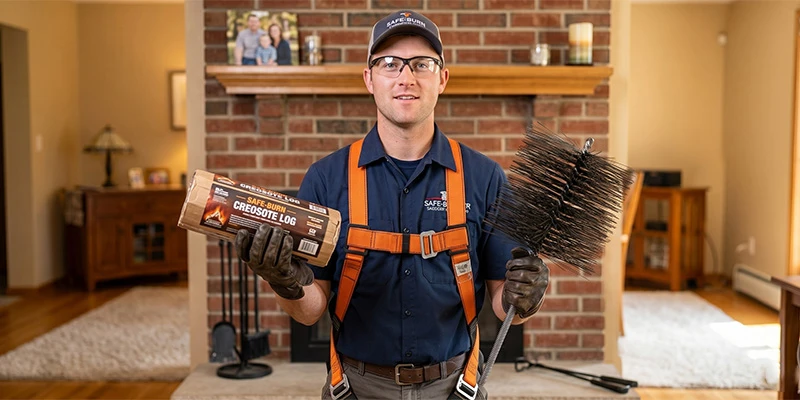
If you own a wood-burning fireplace in Colorado Springs, you know that keeping it clean is part of the job. Burning wood creates a dark, sticky buildup inside your chimney called creosote. To get rid of it, you might be tempted to go to the hardware store and buy a “chimney sweeping log.”
The box makes a very big promise. It says you just need to light the log on fire, sit back, and let it clean your chimney for you. It sounds like the perfect, easy solution. It saves you time, and it saves you money.
But does it actually work? The short answer is no, a sweeping log does not clean your chimney.
This simple guide will explain exactly what these logs do, what they leave behind, and the only safe way to make sure your fireplace is ready for winter.
What is a Chimney Sweeping Log?
A chimney sweeping log looks just like a regular artificial fire log. However, it is packed with special chemical additives. When you burn the log, these chemicals are released into the smoke.
As the chemical smoke travels up your chimney, it sticks to the creosote on the walls. Creosote is a dangerous, highly flammable tar. When the chemicals from the log mix with the creosote, a chemical reaction happens.
The chemicals dry out the sticky tar. They change the creosote from a thick, hard glaze into a dry, flaky crust. This makes the creosote much less sticky and much more brittle.
The Big Catch: They Do Not “Clean” Anything
Here is the most important thing you need to know. The sweeping log changes the texture of the creosote, but it does not make it disappear.
Think about washing dirty dishes. If you have a plate with baked-on food, you might soak it in warm, soapy water. The soap loosens the food and makes it soft. But the plate is not clean yet. You still have to take a sponge and scrub the food off the plate and rinse it down the drain.
A sweeping log is exactly like the soapy water. It loosens the danger, but it does not remove it. The flaky creosote is still sitting inside your chimney. To actually clean the chimney, you still need to scrub the walls.
The Hidden Danger of Falling Soot
So, what happens to that dry, flaky creosote after you burn the log? Eventually, it starts to fall off the walls of the chimney.
Some of it will fall all the way down into your firebox, where you can sweep it up. But a lot of it will not make it that far. Inside your fireplace, right above the damper door, there is a flat area called the smoke shelf. You cannot easily see this shelf from your living room.
When the heavy flakes of creosote fall, they often land on this smoke shelf and pile up. A giant pile of dry creosote sitting on your smoke shelf is a massive fire hazard. If a stray spark from your next fire flies up and lands on that pile, it can start a chimney fire.
This is why using a sweeping log by itself can actually make your chimney more dangerous. It takes the hazard from the walls and piles it up in a hidden area.
Can a Sweeping Log Cause a Chimney Fire?
Yes, it is possible. Sweeping logs burn very hot. If your chimney already has a very thick layer of stage three creosote (which looks like shiny, black glass), the intense heat from the log can actually ignite the creosote before the chemicals have time to work.
If you have not had your chimney inspected in years, burning a chemical log is a very risky gamble. You should never burn a sweeping log if you think your chimney is heavily blocked.
When is it Safe to Use a Sweeping Log?
Sweeping logs are not completely useless. They actually have a very specific purpose in the fireplace industry.
Professional chimney sweeps sometimes use these logs or similar chemical sprays as a “treatment.” If a homeowner has severe, glazed creosote that is too hard to brush away, we might tell them to burn a sweeping log. We let the chemicals dry out the tar for a week or two. Then, we come back and use our heavy-duty metal brushes to easily scrub the flaky residue away.
A sweeping log is a helpful tool, but it is not a replacement for a brush. You should only use one as a pre-treatment before a real cleaning.
The Only Way to Truly Clean a Chimney
There are no shortcuts to home safety. The only way to remove creosote and keep your home safe from a chimney fire is physical scrubbing.
When you hire a professional for a chimney flue cleaning, we do the hard work for you. Here is the proper way to clean a chimney:
- We Protect Your Home: We lay down clean drop cloths and set up an industrial vacuum to catch all the dust.
- We Use the Right Tools: We use stiff, custom-sized brushes on long, flexible rods to scrub every inch of the chimney walls, from the very top to the very bottom.
- We Clean the Hidden Areas: We reach up and vacuum off the smoke shelf, removing all the fallen debris that sweeping logs leave behind.
- We Inspect the Structure: While we clean, we look for cracks in the bricks, broken dampers, or rusted metal liners. A sweeping log cannot tell you if your chimney is structurally safe.
3 Signs You Need a Professional Sweep Today
If you were thinking about buying a sweeping log, your chimney probably needs attention. Here are three clear signs that you should skip the hardware store and call a professional instead.
1. You Smell a Campfire Odor: If your living room smells like an old campfire even when you do not have a fire lit, your chimney is full of creosote. The smell is a warning sign.
2. Your Fire Smokes Up the Room: If smoke pushes back into your living room when you light a fire, your chimney is not drafting correctly. This could be caused by thick soot, a bird nest, or cold air blockages. A chemical log will not fix a draft problem.
3. You See Black Soot Falling: If you look in your fireplace and see black, crunchy flakes on the floor, the creosote is already peeling off the walls. This means the layer is dangerously thick. You need a sweep immediately.
What About Pellet Stoves and Gas Fireplaces?
It is very important to note that you should never use a chimney sweeping log in a gas fireplace or a pellet stove.
Sweeping logs are only designed for traditional, wood-burning fireplaces. The chemicals and the intense heat will destroy the delicate sensors and motors inside a pellet stove. It will also ruin the artificial logs and gas burners in a gas unit.
If you have one of these modern heaters, they require a completely different type of maintenance. You need a specialized chimney inspection to clean the small exhaust pipes and check the internal fans.
Conclusion: The Final Verdict
We all want an easy fix for household chores. But when it comes to fire safety, you cannot cut corners. A chimney sweeping log is just a chemical treatment. It loosens the dirt, but it does not remove it.
Relying only on sweeping logs creates a false sense of security. The debris piles up in hidden areas, creating a massive hazard right above your living room.
The smartest and safest choice is to hire a trusted local expert. We will scrub the walls, vacuum the debris, and inspect the entire system so you can enjoy a worry-free winter.
If you are ready for a real, deep clean, give our Colorado Springs team a call today. For more facts on fireplace safety and creosote removal, you can check out the guidelines from the CSIA or the NFPA.