
For homeowners in Colorado Springs, a fireplace makes winter nights cozy and warm. But burning wood creates a hidden danger inside your chimney called creosote. If you ignore it, this buildup can cause a chimney fire.
You don’t need to be an expert to keep your home safe. This guide explains exactly what creosote is, why it is dangerous, and when you need to call a professional. We want to help you keep your fireplace efficient and safe for your family.
What is Creosote and Why is it There?
When you burn wood, it creates smoke, water vapor, and gases. As this hot smoke goes up your chimney, it hits the cold walls of the flue. The smoke cools down quickly and turns into a residue. That residue is creosote.
Creosote is highly flammable. Think of it as sticky fuel coating the inside of your chimney. It builds up faster if you burn wet wood, if your fire doesn’t get enough air, or if your flue is very cold—which happens often during our Colorado nights.
The 3 Stages of Creosote
Creosote changes the longer it stays in your chimney. Professionals break it down into three stages:
Stage 1: Soot and Ash
This looks like black dust or powder. It is the easiest type to remove. If you get a regular chimney sweep colorado springs service, we can usually brush this away easily. It happens when wood burns cleanly.
Stage 2: Crunchy Flakes
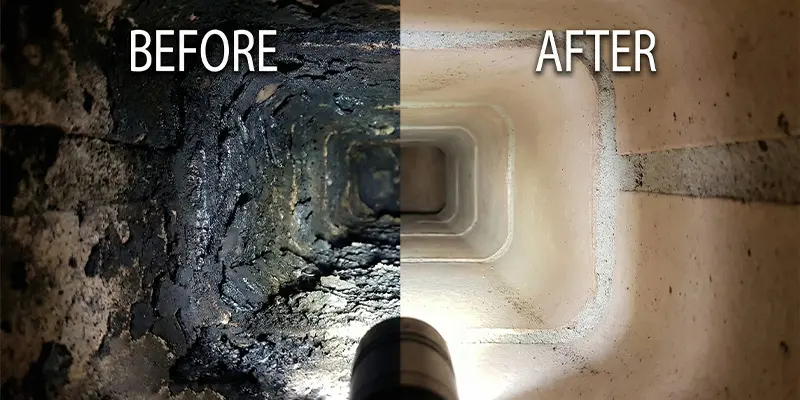
This looks like crunchy black cereal or tar flakes. It happens when air flow is blocked or the smoke lingers in the chimney too long. It is harder to clean than simple dust. We have to use stiffer brushes to scrape it off without hurting your chimney liner.
Stage 3: Glaze
This is the most dangerous form. It looks like shiny, hardened tar dripping down the chimney. It is very thick and hard to remove. This glaze is concentrated fuel for a fire. Removing it is difficult and often requires special chemical treatments to break it down.
What a Chimney Fire Really Looks Like
Many people think a chimney fire is always loud and explosive, with flames shooting out of the roof. While that can happen, many fires are quiet and slow-burning. You might not even know one is happening inside the chimney walls.
A chimney fire burns hotter than 2,000 degrees. That heat can crack the tiles inside your chimney or melt metal liners. If the liner breaks, the heat can reach the wooden frame of your house.
Signs you may have had a chimney fire:
- Metal dampers or caps look warped or twisted.
- You see cracked tiles in the fireplace.
- The rain cap looks discolored.
- You smell a hot, tar-like odor.
- You see “puffy” creosote with rainbow streaks.
If you think you had a fire, stop using the fireplace immediately. Call a pro to check it.
Why You Need an Annual Inspection
Safety groups recommend you get your chimney inspected at least once a year. This is true even if you don’t use it much. Animals can build nests, and winter weather can damage the bricks.
A professional chimney inspection is the only way to see inside. We use special cameras to look for cracks or gaps that could let fire escape.
- Level 1 Inspection: The basic checkup. We look at the parts of the chimney we can easily see to make sure everything looks sound.
- Level 2 Inspection: A deeper look. This is required when you buy or sell a home, or after a storm or fire. We use a camera to scan the entire inside of the flue.
How We Clean Your Chimney
Cleaning a chimney yourself is messy and usually doesn’t work well. You risk breathing in toxic soot, and you might miss the dangerous glaze at the top.
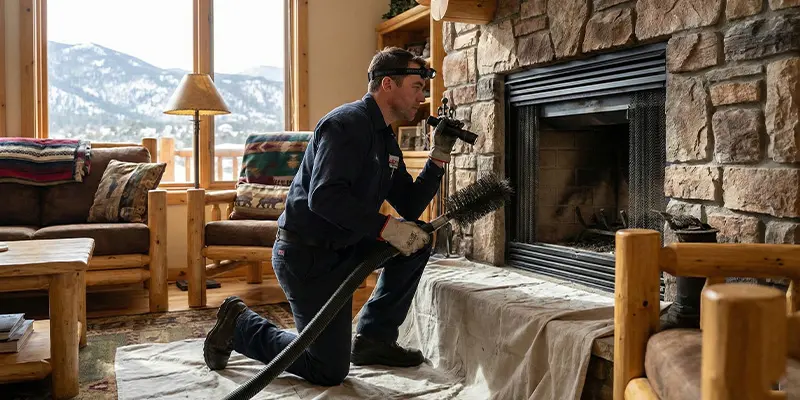
Here is what a professional cleaning looks like:
- Protect the Room: We put down drop cloths and set up a strong vacuum to catch all the dust.
- Check the System: We look at the firebox and damper to make sure they aren’t broken.
- Sweep: We use special brushes to scrub the inside of the chimney from top to bottom.
- Remove Debris: We vacuum up all the soot and creosote that fell down.
- Final Look: We make sure the airway is clear and safe for your next fire.
Gas and Pellet Stoves Need Care Too
It’s not just wood fireplaces that need help.
Pellet Stoves: These burn small wood pellets. They create a very fine ash that can clog the motors and fans. Because the pipes are smaller, they can get blocked quickly. We clean the whole system to keep it running right.
Gas Fireplaces: Gas burns cleaner, but logs can still get sooty. We also need to check for bird nests in the vent and make sure the gas valves aren’t leaking. We also clean the glass to remove the white film that builds up over time.
Simple Tips for a Safer Home
- Burn Only Dry Wood: Use dry hardwood like oak. Wet wood creates way more smoke and creosote. Never burn trash or cardboard.
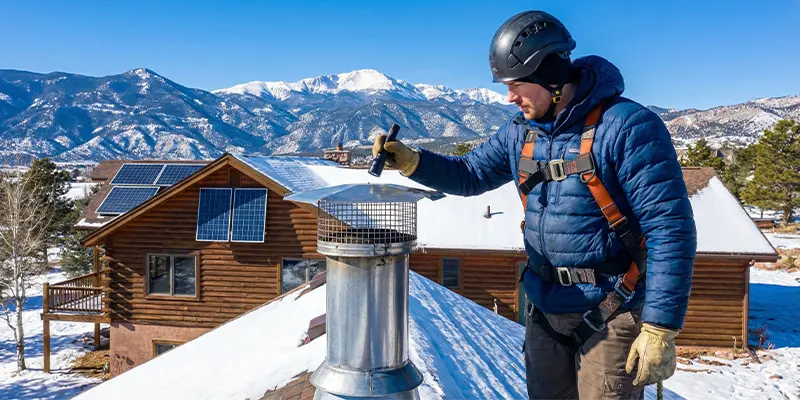
- Check Your Cap: A chimney cap keeps rain, snow, and animals out. If you see rust or water in the fireplace, your cap might be broken.
- Listen to the Fire: If your wood hisses, it’s too wet. If you hear a loud roaring sound like a train, you might have a chimney fire.
- Install Detectors: Make sure you have smoke and carbon monoxide detectors on every floor, especially near bedrooms.
Conclusion
Your fireplace should be a happy place, not a worry. You can prevent creosote buildup and damage just by getting regular checkups. A clean chimney is a safe chimney.
For homes in Colorado Springs, Castle Rock, and Pueblo, we are here to help. Don’t wait until you smell smoke. Be proactive and keep your home safe.
For more safety tips, you can check the CSIA website or the NFPA guide for homeowners.