
Living in Colorado Springs means dealing with wild weather. We have hot, sunny days, heavy snowstorms, and freezing nights. While we love the changing seasons, this weather is very hard on your house. It is especially hard on your brick chimney.
Your chimney stands tall above your roof. It takes the full force of the wind, rain, and snow. Over time, this constant abuse breaks down the bricks and the cement. A damaged chimney is not just an ugly eyesore. It is a serious safety hazard that can let water into your house or cause a dangerous fire.
You do not need to be a masonry expert to know when your chimney needs help. This simple guide will teach you the warning signs of chimney damage, why it happens, and how professionals fix it.
The Hidden Enemy: The Freeze and Thaw Cycle
To understand why chimneys break, you need to understand water. Bricks and the cement between them (called mortar) are porous. This means they act like hard sponges. When it rains or snows, they soak up moisture.
During the day in Colorado, the sun melts the snow, and the water sinks deep into the bricks. But at night, the temperature drops below freezing. When water freezes, it expands. This expanding ice pushes against the inside of the brick.
This freeze and thaw cycle acts like a slow-motion hammer. It happens hundreds of times every winter. Eventually, the pressure is too much, and the brick simply breaks apart. This is the root cause of almost all exterior chimney damage.
5 Signs You Need Chimney Repair
If you walk out into your yard and look up at your roof, what do you see? Here are the five most common problems you might spot.
1. Spalling Bricks (Flaking and Peeling)
If you find pieces of broken brick laying on your roof or in your yard, you have a problem called “spalling.” This is a direct result of the freeze and thaw cycle.
The front face of the brick peels off, leaving the soft, crumbly inside exposed. Once a brick starts to spall, it loses its structural strength. If too many bricks spall, the entire chimney can become weak and lean to one side.
2. Crumbling Mortar Joints
Look at the gray cement lines between the bricks. Are they full and smooth? Or are there deep holes and missing chunks? This cement is called mortar. Mortar actually breaks down faster than the bricks do.
When the mortar washes away, water can flow straight into the center of your chimney. This water will eventually leak through your ceiling and ruin your drywall.
3. A Cracked Chimney Crown
The chimney crown is the flat concrete roof that covers the very top of your chimney. It seals the top so water cannot pour down inside the masonry walls.
Because the crown faces the sky, it takes a beating from the sun and rain. Over time, the concrete shrinks and cracks. Even a tiny crack is a big problem. Water gets in, freezes, and splits the crown wide open. A broken crown is the number one cause of major chimney leaks.
4. Rusted or Loose Flashing
Flashing is the metal wrapping that connects your chimney to your roof shingles. It creates a watertight seal.
High winds can bend the flashing. Rust can eat holes through it. If you see water stains on your ceiling near the fireplace, bad flashing is usually the culprit. Replacing flashing is a common and highly important repair.
5. Damaged Flue Liner
You cannot see this part from the yard, but it is the most important part for fire safety. The flue liner is the tube inside the chimney that carries the hot smoke out.
Liners can crack from extreme heat or water damage. If the liner is cracked, the intense heat from your fire can escape into the wooden frame of your house. This is how many devastating house fires start.
How Professionals Fix the Damage
If you see any of the signs listed above, do not panic. Most chimney problems can be fixed if you catch them early. Here is how professional technicians repair your system.
The Art of Tuckpointing
When the mortar between your bricks is crumbling, we do not have to tear the whole chimney down. Instead, we use a process called tuckpointing.
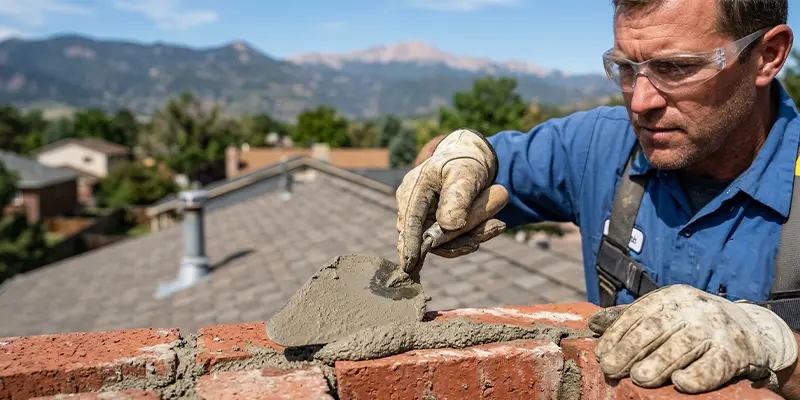
We use special grinding tools to remove the old, damaged mortar. Then, we mix fresh, new mortar. We carefully pack the new mortar into the joints. We even match the color of the new mortar to the old mortar so your chimney looks beautiful and original. Tuckpointing restores the strength of the chimney and stops water from getting in.
Rebuilding the Crown
If your chimney crown only has hairline cracks, we can sometimes coat it with a thick, flexible waterproof sealant. This creates a rubber-like barrier over the top.
But if the crown is crumbling into pieces, we have to rebuild it. We remove the old concrete, build a wooden mold, and pour a brand new, reinforced concrete crown. A proper crown has a slight overhang, like the brim of a hat, to drip water away from the bricks.
Chimney Rebuilding
Sometimes, the damage is just too severe. If the chimney is leaning heavily, or if more than half of the bricks are spalling, tuckpointing will not work. The structure is no longer safe.
In this case, we have to do a partial or full rebuild. We take the chimney down brick by brick until we reach a solid, undamaged foundation. Then, we build it back up with brand new bricks and mortar. It is a big job, but it gives you a perfectly safe, beautiful chimney that will last for decades.
Why You Should Never Wait on Repairs
It is easy to put off home repairs. You might think, “It is just a few missing bricks, I will fix it next year.” But with chimneys, waiting always costs you more money.
Water damage acts like a disease. It spreads. A small crack in the crown lets water in, which ruins the mortar. The ruined mortar lets more water in, which ruins the bricks. Before you know it, a simple sealing job has turned into a complete chimney tear-down.
Furthermore, a weak chimney is dangerous. We get strong wind gusts in Colorado. A deteriorating chimney can literally blow over and crash through your roof.
The Power of Waterproofing
Once your chimney repairs are complete, you want to protect your investment. The best way to do this is with professional waterproofing.
We spray a special, clear repellent all over the bricks. This is not like regular paint. It allows the bricks to breathe and let trapped moisture escape, but it stops rain and snow from soaking in from the outside. Waterproofing stops the freeze and thaw cycle in its tracks.
Conclusion
Your chimney is a strong, heavy structure, but it is not invincible. The harsh Colorado weather is always working against it. By paying attention to the warning signs like flaking bricks, missing mortar, and rust, you can catch problems early.
If you suspect your chimney needs help, the best first step is a professional chimney inspection. We can take a close look, show you exactly what is going on, and explain the best way to fix it.
Do not let a small leak turn into a major headache. Keep your home safe, dry, and warm. For more information on masonry safety and standards, you can visit the CSIA or the NFPA websites.