
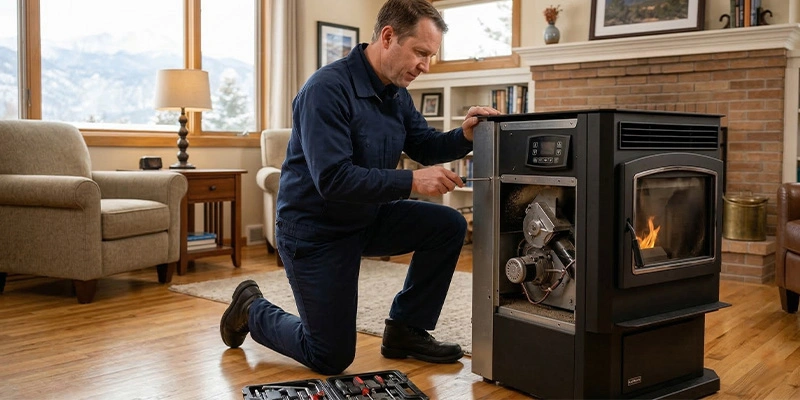
Winter in Colorado Springs is beautiful, but the cold weather means you need a reliable way to heat your home. Many people choose pellet stoves because they are highly efficient and easy to use. Instead of chopping heavy firewood, you just pour a bag of small wood pellets into the machine and push a button.
But unlike a traditional brick fireplace, a pellet stove is a complex machine. It has computer boards, electric motors, moving parts, and exhaust fans. Because it has so many working parts, it needs regular care to keep running smoothly.
If your stove stops working in the middle of a snowstorm, it can be very stressful. This complete guide will explain how your stove works, common problems you might face, and how to keep it in perfect shape all winter long.
How Does a Pellet Stove Work?
To understand how to fix your stove, it helps to know how it creates heat. Here is a simple breakdown of the main parts:
- The Hopper: This is the bin at the top or back of the stove where you pour the wood pellets.
- The Auger: This is a long, corkscrew-shaped metal piece. It slowly turns and pushes the pellets from the hopper down into the fire.
- The Burn Pot: This is the small metal cup where the fire actually burns.
- The Igniter: This is a heating element that gets super hot to light the pellets on fire automatically.
- The Blowers: Your stove has two fans. One fan blows the exhaust smoke outside through a vent pipe. The other fan blows the warm air into your living room.
When all these parts work together, you get a steady, warm fire. But if just one part gets dirty or breaks, the whole system can shut down.
Common Pellet Stove Problems (And How to Fix Them)
Even the best pellet stoves act up sometimes. Here are the most common problems homeowners experience and what you can do about them.
1. The Stove is Not Feeding Pellets
You turn the stove on, but no pellets fall into the fire. This usually means there is a problem with the auger.
The Fix: First, check the hopper. Sometimes pellets get jammed together and form a “bridge” over the auger hole. Just use a stick to stir the pellets and break the jam. If the hopper is clear, the auger motor might be broken or jammed by a foreign object like a piece of plastic from the pellet bag. This requires professional help to take the motor apart safely.
2. The Fire Keeps Going Out
If your fire starts but quickly dies, your stove is probably suffocating. A fire needs oxygen to survive.
The Fix: The most common cause is a dirty burn pot. If the small air holes in the burn pot are clogged with hard ash (called clinkers), air cannot reach the fire. Wait for the stove to cool completely, take out the burn pot, and scrape those holes clean with a metal tool.
3. The Stove is Blowing Cold Air
It is very frustrating when your heater acts like an air conditioner. If the fan is running but the air is cold, the stove’s internal sensors are confused.
The Fix: Your stove has a “proof of fire” sensor. If the fire is too small or the sensor is covered in thick soot, the stove thinks the fire went out. It will keep blowing air to cool the machine down before shutting off safely. Cleaning the inside of the stove usually fixes this issue.
4. The Glass Gets Black and Dirty Too Fast
It is normal for the glass door to get a little cloudy after a few days. But if the glass turns completely black after just one use, you have an airflow problem.
The Fix: This means the smoke is not moving fast enough. Check your air damper to make sure it is open. Also, make sure you are using high-quality wood pellets. Cheap pellets have too much moisture and create dark, heavy soot.
Simple Maintenance You Can Do at Home
The secret to a long-lasting pellet stove is regular cleaning. You should not wait for the stove to break before you clean it. Here is a simple schedule to follow.
Daily Chores
Every day or two, you need to clean the burn pot. Turn the stove off and let it cool. Take a special scraping tool and remove the hard, crusty ash from the pot. If you skip this step, your stove will not light properly the next day.
Weekly Chores
Once a week, you should empty the ash pan located at the bottom of the stove. You should also wipe down the glass door. Do not use regular glass cleaner like Windex, because the chemicals can damage the glass when it gets hot. Use a special fireplace glass cleaner or just a damp paper towel dipped in a little bit of soft ash.
Monthly Chores
Once a month, you should let the hopper run completely empty. Vacuum out the sawdust at the bottom of the hopper. If too much sawdust builds up, it can block the auger and stop the pellets from feeding.
Choosing the Right Wood Pellets
Not all wood pellets are the same. The fuel you buy directly impacts how often you need to clean your stove.
You can buy hardwood or softwood pellets. Surprisingly, softwood pellets often burn hotter and leave less ash behind. The most important thing is to look for the words “Premium Grade” on the bag. Premium pellets have less than 1 percent ash content. If you buy cheap, low-grade pellets from a big box store, you will spend twice as much time cleaning your stove.
Always store your pellets in a dry place. If pellets get wet, they swell up and turn into mush. You cannot use wet pellets in your stove, as they will jam the auger instantly.
When to Call a Professional for Pellet Stove Service
While you can do the daily cleaning yourself, a pellet stove requires a deep cleaning and mechanical checkup once a year. This is not a job for a homeowner. The internal parts are delicate and require special tools.
A professional technician will do several important things. First, they will clean the exhaust venting pipe. The pipes for these stoves are much smaller than a regular chimney. They get clogged with fine, powdery fly-ash very quickly. If the exhaust pipe is blocked, dangerous carbon monoxide can back up into your home.
Second, the technician will clean the hidden areas inside the stove. They will remove the metal plates inside the firebox and vacuum out the internal ash traps. They will also inspect the motors, lubricate the moving parts, and test the safety sensors.
If you live in our area and need help, scheduling a professional pellet stove repair or annual service is the best way to ensure your heater will not fail you on a freezing January night.
Why Annual Inspections Matter
We cannot stress enough how important safety is. Pellet stoves are very safe when they are maintained correctly, but neglecting them can lead to smoke damage or fires.
Just like a traditional wood-burning fireplace, the venting system needs to be checked every single year. The extreme temperature changes in Colorado can cause metal vent pipes to warp or seals to crack. Getting regular chimney inspections for all your heating appliances keeps your family protected.
Conclusion
A pellet stove is an amazing way to heat your home efficiently. By taking a few minutes each week to clean the burn pot and empty the ash, you can prevent most common problems.
However, when the motors make strange noises, the pellets won’t feed, or it is time for your annual deep clean, do not hesitate to call for help. Trusting a local expert ensures the job is done safely and correctly.
Keep your home warm and your family safe this winter. If you need assistance with your stove, reach out to our team today. For more information on heating efficiency and safety, you can also read guidelines from the EPA or the NFPA.