
Chimney Removal in Colorado Springs - Full Teardown & Demolition
Sometimes Removing a Chimney Is the Smarter Long-Term Decision
We walk through repair vs. removal costs honestly before any work is scheduled.
- CSIA-certified crew
- Structural assessment first
- Roof closed the same project
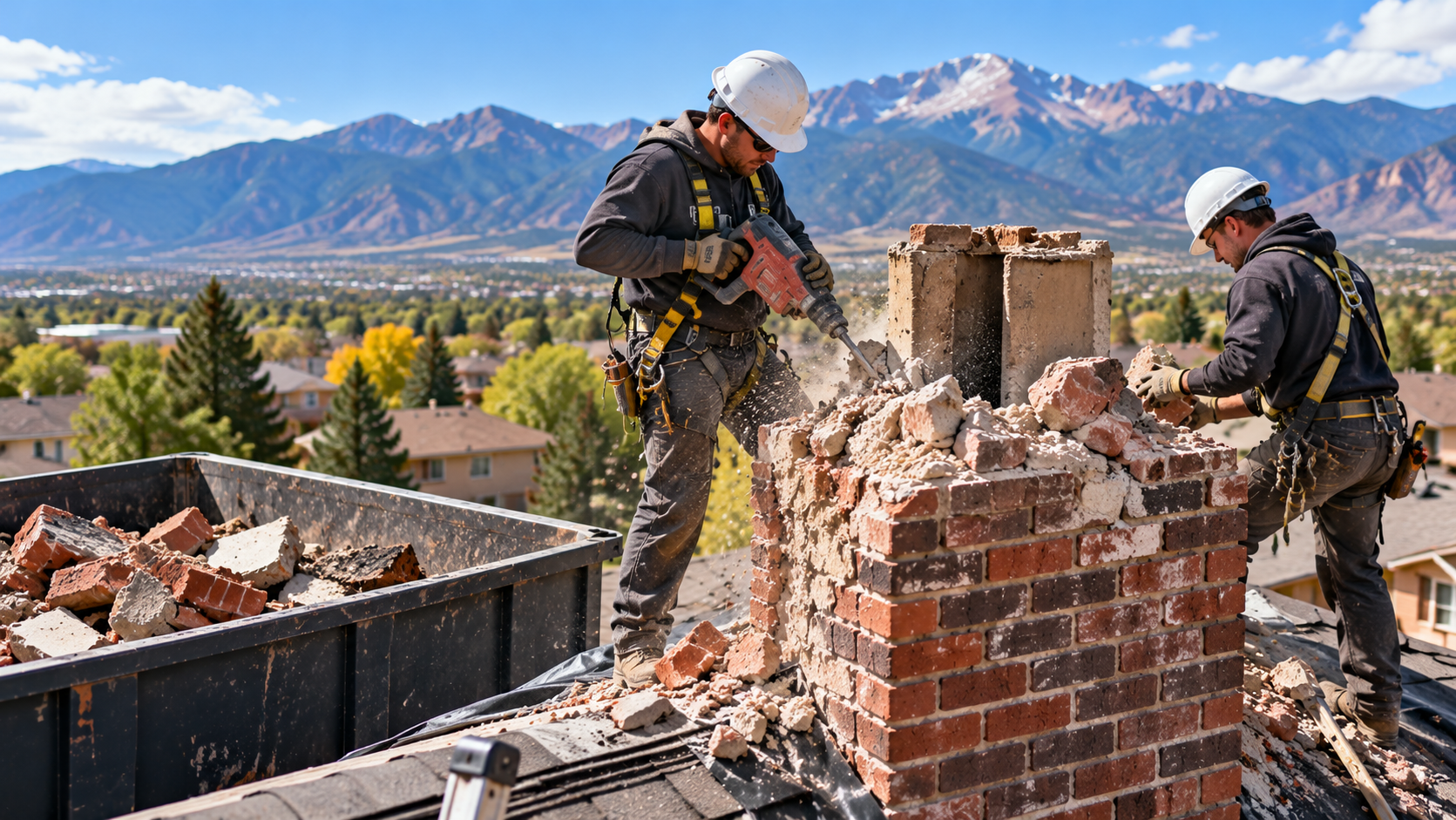
Chimney Removal Is a Practical Choice, Not a Drastic One
Full chimney removal in Colorado Springs means one crew, one clear scope, and a properly closed roof when the job is done.
Not every chimney belongs to a home that still uses it. Plenty of Colorado Springs houses were converted to gas heat or upgraded HVAC systems years - sometimes decades - before the current owner moved in. That unused chimney still needs cap maintenance, masonry checks, and occasional repair.
At a certain point, those ongoing costs stop making sense. When that threshold hits, chimney removal - including roof penetration closure (patching and weatherproofing the roof opening left after the stack comes down) - is often the most financially sound path forward. We assess the full picture before any work is scheduled.
40-50Freeze-thaw cycles in a single season
Colorado Springs Chimneys Face a Specific Set of Conditions
The climate and housing stock in Colorado Springs create conditions that accelerate chimney deterioration faster than many homeowners expect.
Colorado Springs sits at roughly 6,000 feet elevation. The freeze-thaw cycle here runs hard from October through April. Water works into mortar joints, freezes overnight, expands, and pries the masonry apart. Over 40 or 50 freeze-thaw cycles in a single season, a chimney that looked stable two years ago can shift noticeably.
Older neighborhoods - Stratmoor, Fountain, Security-Widefield - carry a lot of 1960s and 1970s construction. Chimneys in those homes were often built to serve wood-burning systems that haven't been used in 20 years. Many of those structures are now past the point where selective repairs make economic sense.
Our crews operate across Colorado Springs ZIP codes and into Monument, Palmer Lake, and Fountain - all within our standard service radius from our Fountain Boulevard base. We've seen this pattern consistently across the region.
How One Colorado Springs Homeowner Decided Between Repair and Removal
The decision between chimney repair and full removal comes down to three variables: condition, use, and what continued maintenance will actually cost.
I walked a job in Briargate not long ago. The homeowner had inherited the house from a family member and hadn't used the fireplace once.
The homeowner asked me flat out: "Can this be repaired?"
Technically? Yes. We could have repointed the mortar, replaced the cap and flashing, sealed the crown, and addressed the spalling brick. That's real work with real cost - and it doesn't change the underlying situation. The chimney still wouldn't be used. In three to five years, the same questions come back around.
- 1Spalling brickThe chimney had visible spalling brick - that's where the brick face begins to flake and pop off from freeze-thaw moisture damage - running from the crown down to the roofline.
- 2FlashingThe flashing was pulling away.
- 3CapThe cap had cracked.
- 4Attic framingAnd when I got into the attic, the framing around the flue had been partially cut years back to accommodate an HVAC chase. Nobody had ever reinforced it properly.
I told her what I tell every customer in that position: the cost-benefit threshold - the point where ongoing repair and maintenance exceeds the one-time cost of full removal - had already been crossed. She wasn't keeping a functional system alive. She was maintaining a liability.
We scoped the full chimney removal, including interior work at the firebox level, attic and interior impact (the effect on attic framing and any interior chimney breast space), and complete roof penetration closure. She had one crew on site for two days. The roof was patched, shingled to match the existing surface, and weatherproofed before we left. That's the outcome worth planning for. One clean project instead of recurring piecemeal repairs on a system that isn't doing anything for the household.
Structural Attachment Assessment Happens Before Any Demo Starts
Every chimney removal begins with a structural attachment assessment - we evaluate how the chimney connects to your home before we touch anything.
Chimney demolition scope - the full extent of what gets removed, from the top of the stack to the firebox and potentially down to the foundation - varies based on how the chimney is built into the house.
Before we quote a project, we look at all of it. We identify shared structural loads, note what's happening in the attic around the flue, and determine whether the firebox and hearth need to come out or can remain in place. Pikes Peak Regional Building Department permit requirements - the local building rules that apply when work affects structural framing or the roof system - factor into our planning from the start.
No surprises at the roofline. That's the standard we hold ourselves to.
Exterior-only chimney
- The stack runs up the outside of the home
- Removal is relatively straightforward
Built into the house
- Passes through interior living space
- Shares framing with the home's structure
- Footings may extend into the basement floor
Our Removal Standards
We hold chimney removal to the same standards as any structural project - thorough assessment, clean execution, and a finished roof you can trust.
- Scope defined before demo begins - assessment drives the plan, not assumptions
- Structural attachment assessment included on every project
- Pikes Peak Regional Building Department permit requirements reviewed and addressed upfront
- Roof penetration closure completed in the same project scope - framing, sheathing, roofing material, and flashing matched to the existing surface
- Attic and interior impact evaluated before teardown - framing reinforced where needed
- Interior chimney breast and firebox demolition available when included in scope
- Clean site - debris removed, materials hauled, work area left clear
- CSIA Certified - Chimney Safety Institute of America trained and verified
No partial scopes handed off. One coordinated project from the first assessment to the final roof patch.
How the Removal Process Works
Site Visit and Scope Assessment
We start with a site visit. We evaluate the chimney's current condition, confirm the full demolition scope, and check how the structure connects to your home's framing. This is where unused chimney maintenance liability - the ongoing cost of keeping a non-functional chimney in safe condition - gets quantified against one-time removal cost. We look at the attic framing around the flue, check the firebox and hearth situation, and confirm which permit requirements apply. You get a clear scope document before any work is scheduled. No assumptions built into the quote.
Demolition and Structural Work
Teardown starts at the top of the chimney stack and proceeds to the agreed scope level - roofline only, or continuing below the roofline through the firebox and down to the foundation. Interior chimney breast removal, when included, is done carefully to avoid impact on surrounding walls and living areas. Attic framing around the former flue is reinforced and made structurally sound.
Roof Penetration Closure and Post-Work Walkthrough
The roof penetration closure is the final and most visible part of the job. We frame the opening, install sheathing, apply roofing material matched to your existing surface, and seal the flashing. The finished patch is weatherproofed and inspected before we leave the site. We also walk the interior with the homeowner to confirm any spaces - formerly home to the chimney breast or firebox - are clean, stable, and ready for their next use.
Areas We Serve in and Around Colorado Springs
We handle chimney removal across the greater Colorado Springs area.
- Colorado Springs
- Monument
- Palmer Lake
- Fountain
- Security-Widefield
- Stratmoor
- Briargate
- Rockrimmon
- Cimarron Hills
- Black Forest
- Falcon
- Woodmen Hills
- Manitou Springs
- Peyton
- Calhan
- Pueblo
- Pueblo West
- Canon City
- Florence
- Penrose
- Woodland Park
- Divide
- Castle Rock
- Parker
- Highlands Ranch
- Lone Tree
- Centennial
Our crews serve Colorado Springs, Monument, Palmer Lake, Fountain, Security-Widefield, Stratmoor, Briargate, Rockrimmon, Cimarron Hills, Black Forest, Falcon, Woodmen Hills, Manitou Springs, Peyton, Calhan, Pueblo, Pueblo West, Canon City, Florence, Penrose, Woodland Park, Divide, Castle Rock, Parker, Highlands Ranch, Lone Tree, Centennial, and communities throughout the Pikes Peak Region.
Ready to Find Out If Removal Is the Right Call?
Chimney Sweep Colorado Springs handles full teardown, structural assessment, and roof closure - one project, one crew, one clear scope.
If you've got an unused chimney in Colorado Springs that's raising maintenance questions, the first step is an honest assessment - not a sales pitch. Call us at 720-505-5030 or email info@chimneysweepscoloradosprings.com. We'll review your situation, walk through the repair vs. removal numbers, and give you a scope you can make a real decision from.
Frequently Asked Questions
Call and talk to the team directly.
Call (720) 505-5030Full chimney removal in Colorado Springs typically costs less than three to five rounds of repeated structural repairs. The cost-benefit threshold shifts quickly when a chimney is unused and deteriorating. Spalling brick, failed flashing, and crown damage each carry separate repair costs. One removal project - including roof closure - eliminates all of them permanently. We run those numbers honestly during the assessment so you can compare before deciding.
Partial removal - stack only, above the roofline - is a common and valid scope. Below-roofline work, including firebox and foundation removal, is optional and depends on your plans for that interior space. We define the exact demolition scope during the structural attachment assessment before any demo begins. You choose the scope that fits your home and budget.
Most residential chimney removals take one to two days on site. Timeline depends on scope - roofline-only projects run faster than full interior teardowns. Roof penetration closure, framing, sheathing, and shingle matching are completed in the same project. We don't leave an open roof at end of day.
Roof penetration closure includes framing, sheathing, roofing material, and flashing - all matched to your existing roof surface as closely as possible. Older roofs with discontinued shingle colors may show a patch; we flag that upfront. The closure is fully weatherproofed and inspected before we leave the site.
Permits are required when chimney removal affects structural framing or the roof system - which most full removals do. In El Paso County, building permits are handled by the Pikes Peak Regional Building Department, and its requirements are reviewed during our initial assessment. We identify which permits apply and address them before scheduling demo. You won't be left managing permit paperwork on your own.
CSIA-certified chimney professionals assess structural attachment, attic framing, and interior impact before any teardown - general demo crews typically don't. Chimneys share framing with roofs and sometimes load-bearing walls. Missing that during demo creates structural and weatherproofing problems. Our assessment-first approach means the crew knows exactly what they're removing before the first brick comes down.