Forensic Chimney Diagnostics in Colorado Springs - Advanced Technical Inspection
Find Out Why the Same Chimney Problem Keeps Coming Back
Combustion analysis, pressure differentials, and thermal imaging in one diagnostic session
- CSIA-certified technicians
- Four tools, one session
- Written root-cause finding
Forensic Chimney Diagnostics: A Real Answer to a Recurring Problem
Forensic chimney diagnostics find the root cause - not just the visible damage.
This is the diagnostic service built for chimneys that keep failing. You've had it cleaned. You've had it inspected. Maybe you've had a repair done. And the same smoke smell comes back, the same water shows up, the same draft problem returns every season. That pattern means the cause hasn't been identified yet.
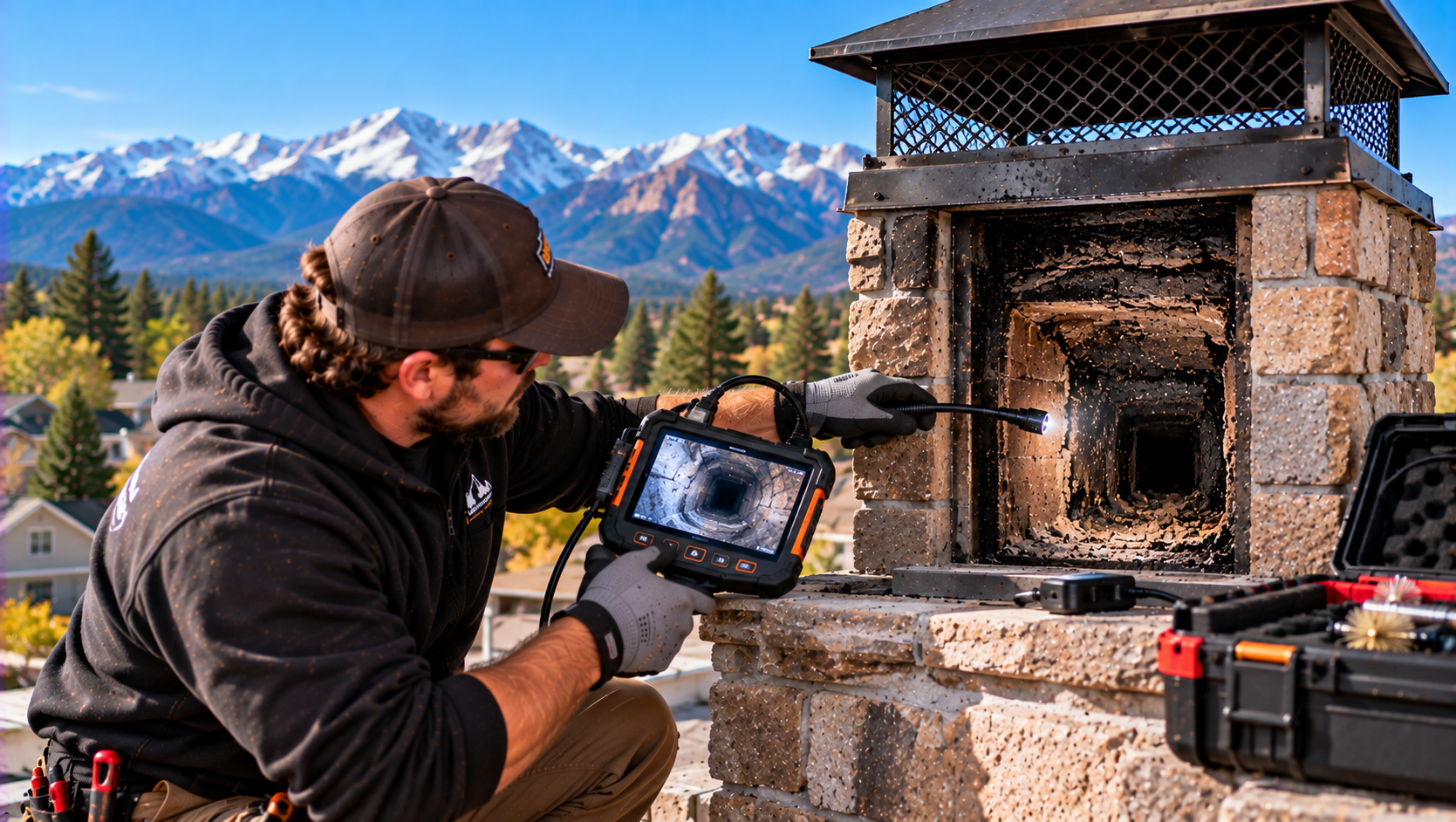
Forensic chimney diagnostics - an advanced technical inspection that uses thermal imaging, video flue scanning, pressure differential measurement, and combustion gas analysis together - produces a documented root-cause finding. Not a list of what's visible. The mechanism driving the failure.
At Chimney Sweep Colorado Springs, we deliver that finding in a single diagnostic session and a written report you can act on.
4 toolsCross-referenced in one session
Colorado Springs Chimneys Develop Specific Failure Patterns Worth Investigating
Colorado Springs homes develop recurring chimney problems for reasons tied directly to local conditions.
The Front Range sits at elevation. Most of Colorado Springs falls between 6,000 and 6,800 feet above sea level. At that altitude, combustion air is less dense. That changes how a flue draws. A system that drafts correctly at sea level can produce persistent backdraft and odor problems here - not because anything is broken, but because the airflow relationship between the home and the flue hasn't been balanced for altitude.
Add the local climate. Colorado Springs sees dramatic temperature swings between morning and afternoon, especially in shoulder seasons. That freeze-thaw cycling stresses mortar joints and liner surfaces differently than a stable-climate region. A crack that opened last winter may not appear on a standard visual inspection until it's moved enough to show a stain.
Our forensic diagnostic calls dispatch from our office on East Fountain Boulevard. We know the Pikes Peak region's building stock and its specific failure signatures.
What a Forensic Diagnostic Actually Looks Like in the Field
I've been inside chimneys that had three separate inspection reports and still smoked every time.Chimney Sweep Colorado Springs Diagnostic Team
One call that stands out: a home in the Briargate area had been through two inspections and one mortar repair over about 18 months. We ran a full forensic diagnostic session. Here's what we did.
- 1Smoke every fallEvery fall, smoke entered the living room within the first 15 minutes of a fire. The homeowner had been told the system was within acceptable limits each time.
- 2Two cracks at one tile jointFirst, we placed the video scanning camera at the firebox throat and ran it to the top, documenting the full liner interior on camera. There were two small lateral cracks at the same flue tile joint - not large enough to flag on a visual inspection, but positioned at a curve where heat concentrated.
- 3A weatherized houseThen we ran pressure differential testing - measurement of the pressure relationship between the flue interior and the living space. The home had been weatherized with added attic insulation the previous year. That created a negative pressure condition inside the house.
- 4The flue as a relief valveWhen the fireplace was cold, the flue acted as a pressure relief valve. The cracks and the negative pressure were working together.
- 5Heat in the chase wallThermal imaging - an infrared camera that detects heat signatures inside the chimney system - confirmed heat migration through those lateral cracks into the tile chase wall on the second floor. We documented all of it in a written root-cause finding. The repair addressed both the liner and the pressure condition. The smoke problem did not return.
That's the difference between a symptom list and a root-cause finding.
The Diagnostic Report Is Built to Hold Up - Even in a Formal Proceeding
Our forensic reports are formatted for insurance claims and litigation when that's what you need.
Here's what most homeowners don't realize about advanced chimney inspection reports: the format matters as much as the findings. A standard inspection form documents what was observed. It does not establish chain-of-custody, photograph evidence in sequence, or provide the methodology narrative that an insurance adjuster or attorney requires.
Insurance and litigation documentation - forensic inspection reports formatted for use in insurance claims or legal proceedings - require a different standard of recordkeeping. We build that into the session from the start. Every measurement is recorded with timestamps. Every thermal image is paired with its corresponding video scan frame. The written finding explains the mechanism, not just the location.
If you're dealing with a storm damage claim, a real estate dispute, or a contractor disagreement involving your chimney system, call us at (720) 505-5030 before any remediation work begins. Preserving the condition for documentation is part of the process.
Forensic report
- Chain-of-custody established
- Timestamped measurements, images paired to video frames
- A methodology narrative that explains the mechanism
Standard inspection form
- Documents what was observed
- No evidence sequence
- No methodology an adjuster or attorney can rely on
Our Standards for Advanced Chimney Diagnostic Service in Colorado Springs
Every forensic diagnostic session follows CSIA inspection protocols and a documented methodology. Our technicians carry CSIA certification - the industry's baseline credential for diagnostic standards and inspection protocol. That matters on a forensic call because the methodology has to be defensible, not just thorough. Here's how we run a session:
- Thermal imaging using an infrared camera: captures heat migration, moisture intrusion, and liner breach signatures invisible to the naked eye
- Video flue scanning: full-length real-time camera documentation of crack patterns, deposit locations, and surface conditions
- Pressure differential testing: quantifies the pressure relationship between the flue and the living space, diagnosing draft reversal and negative pressure conditions
- Combustion gas analysis: measures carbon monoxide, carbon dioxide, and oxygen levels in flue exhaust to assess combustion efficiency and identify incomplete burn conditions
- Written root-cause finding: not a checklist, a documented explanation of the failure mechanism
- Photo and measurement documentation: formatted for insurance or legal use when required
No session ends without a written deliverable.
How a Forensic Chimney Diagnostic Session Is Executed
The Diagnostic Phase
We start with a pre-session interview. We want to know when the problem happens, what conditions trigger it, and what has already been done. That history guides where we direct each tool. Combustion gas analysis - measurement of carbon monoxide, carbon dioxide, and oxygen levels in flue exhaust - happens under operating conditions, so we need the appliance or fireplace running during that phase. Video flue scanning runs next, top to bottom and bottom to top, capturing the full liner interior. We're looking for crack patterns, deposit concentration zones, and surface irregularities that correspond to reported symptoms. Thermal imaging follows. We scan the chase, the surrounding walls, and the firebox interior while the system has been running long enough to reveal heat migration signatures. Pressure differential testing rounds out the diagnostic phase. We measure the pressure relationship between the flue interior and the living space. In tightly built or recently weatherized Colorado Springs homes, this step frequently identifies a draft reversal - a condition where negative pressure inside the home pulls flue gases back down into the living space.
Compiling the Findings
We compile findings in real time. Each tool's data is cross-referenced against the others. A crack found on video scan is confirmed or contradicted by the thermal image. A pressure differential reading is interpreted in context of the combustion gas data. The root-cause finding - the identification of the underlying mechanism driving the failure - is written before we leave the property.
Post-Session Deliverables
The written report includes a recommended repair sequence based on root cause, not surface symptoms. If follow-up testing is warranted after a repair, we specify the retest criteria in the original report. That gives you a clear standard for knowing when the problem is actually resolved.
Areas We Serve in Colorado Springs and the Pikes Peak Region
Forensic diagnostic calls reach the full Front Range from our Colorado Springs office.
- Briargate
- Rockrimmon
- Black Forest
- Falcon
- Cimarron Hills
- Stratmoor
- Security-Widefield
- Fountain
- Manitou Springs
- Monument
- Palmer Lake
- Woodland Park
- Divide
- Pueblo
- Pueblo West
- Canon City
- Castle Rock
- Parker
- Aurora
- Littleton
- Highlands Ranch
- Lone Tree
- Centennial
- Englewood
We serve Colorado Springs neighborhoods including Briargate, Rockrimmon, Black Forest, Falcon, Cimarron Hills, Stratmoor, Security-Widefield, Fountain, and Manitou Springs. We also reach Monument, Palmer Lake, Woodland Park, Divide, Pueblo, Pueblo West, Canon City, Castle Rock, Parker, and the Denver metro including Aurora, Littleton, Highlands Ranch, Lone Tree, Centennial, and Englewood.
Ready for a Root-Cause Answer? Here's How to Start.
One diagnostic session delivers a written finding - not a guess, not a repeat visit.
If the same chimney problem has come back after cleaning, inspection, or repair, that pattern is a signal. The cause hasn't been found yet. Our advanced chimney diagnostic service in Colorado Springs combines thermal imaging, video scanning, pressure differential testing, and combustion gas analysis into one documented session. Call us at (720) 505-5030 or email info@chimneysweepscoloradosprings.com to schedule your forensic diagnostic.
Frequently Asked Questions
Call and talk to the team directly.
Call (720) 505-5030Contact us at (720) 505-5030 for current session pricing. Forensic diagnostics combine four separate measurement tools - thermal imaging, video scanning, pressure differential testing, and combustion gas analysis - in a single visit. That multi-tool scope means the fee reflects more than a standard inspection. Every session includes a written root-cause finding.
Most forensic diagnostic sessions run two to three hours on-site. Each tool requires operating conditions - combustion gas analysis needs the appliance running, and thermal imaging requires the system to have been active long enough to show heat migration. The written root-cause finding is completed before we leave. You receive the full report the same day.
Forensic diagnostics identify the mechanism driving repeated failure - not just what's damaged. A Level 2 camera inspection documents what the liner looks like. A forensic session cross-references video scan findings against live pressure differential readings and combustion gas measurements. That combination reveals why the same problem returns after repairs. Standard inspections document symptoms; forensic diagnostics find causes.
Yes - our forensic reports are formatted specifically for insurance adjusters and attorneys. Chain-of-custody documentation, timestamped measurements, and sequenced thermal images are built into every session from the start. A standard inspection form won't satisfy that standard. Call (720) 505-5030 before any remediation work begins if litigation or a claim is involved - preserving the condition matters.
Repeated repair failure almost always means the root cause was never identified - only the visible symptom was addressed. Pressure differential testing frequently reveals negative pressure conditions in recently weatherized Colorado Springs homes. That condition works alongside liner cracks to produce smoke rollback. Neither a cleaning nor a visual inspection can detect that relationship. Forensic diagnostics are built for exactly this pattern.
No - combustion gas analysis requires the appliance to be running during the session. We need the system operating under real conditions. The pre-session interview covers what conditions trigger the problem, which guides where each tool is directed first. Schedule the diagnostic while the issue is active, not after you've been avoiding the fireplace for weeks.