
Chimney Exterior Restoration in Colorado Springs
Address Everything Wrong With Your Chimney in One Coordinated Project
One scoped restoration costs significantly less than four separate service visits.
- CSIA-certified technicians
- One crew, full scope
- Sequenced, then documented
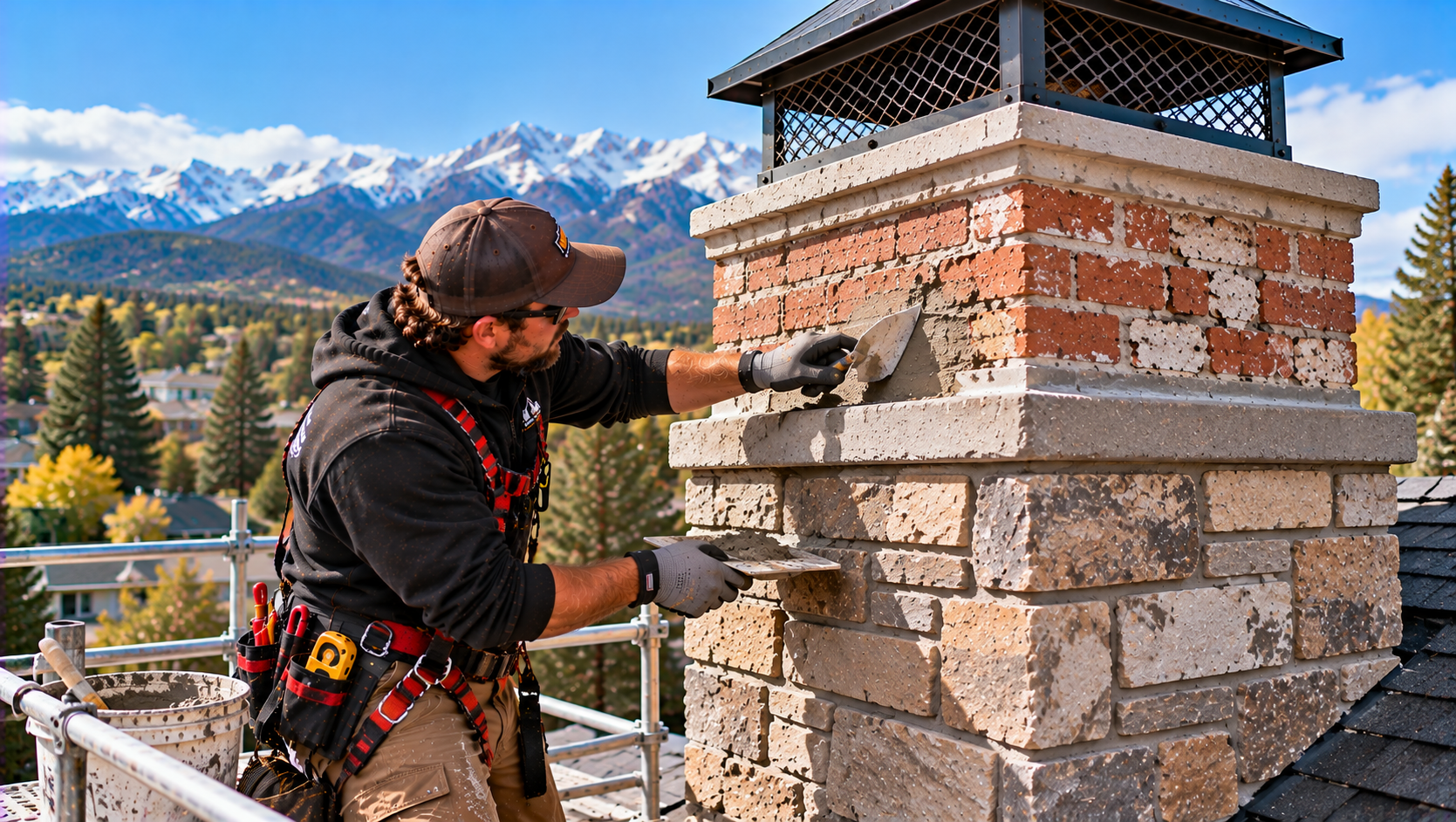
What Chimney Exterior Restoration Actually Covers
Chimney exterior restoration is one coordinated project - not a collection of separate repairs.
Most homeowners see a crumbling chimney and assume they need to call several different people. A roofer for the flashing. A mason for the mortar. Someone else for waterproofing. That approach creates gaps - between schedules, between materials, between accountability.
Exterior chimney restoration (a coordinated, sequenced repair project addressing the crown, mortar joints, brick face, waterproofing, and cap as a unified scope) treats the whole system at once. Crown repair. Repointing. Brick replacement. Surface sealing. Cap installation. One crew. One documented result.
Here's what most homeowners don't realize about exterior chimney problems: every issue they see is usually connected to one water migration path - the route moisture travels through the masonry, entering at the crown or mortar joints and moving downward through the brick matrix. Fix the cap without fixing the crown and water keeps moving. Seal the surface without repointing and you trap moisture inside. Order matters.
At Chimney Sweep Colorado Springs, we scope restoration as one project and sequence the work correctly. That's the difference between a chimney that holds up and one that needs attention again in two years.
1 crewDiagnostics through cap installation
Why Colorado Springs Chimneys Take the Hardest Hits
Colorado Springs climate accelerates chimney exterior deterioration faster than most homeowners expect.
The elevation here averages just over 6,000 feet. Freeze-thaw cycles happen more often than in lower-elevation cities - sometimes multiple times in a single week during shoulder seasons. Water enters through a cracked crown or degraded mortar joint, freezes overnight, expands, and widens the opening. By spring, what started as a hairline crack is a visible gap.
Older neighborhoods like Stratmoor and the area around Old Colorado City see this constantly. Homes built in the 1950s through 1970s used softer brick grades and older mortar formulations. Those materials don't shed water the way modern masonry does. Upper brick courses - the horizontal rows of bricks nearest the crown - show deterioration first because they absorb the most direct exposure.
We also serve Monument to the north and Pueblo to the south. Pueblo's lower elevation brings different humidity patterns. But across the entire Pikes Peak region, the combination of sun, wind, and freeze-thaw stress means exterior chimney masonry wears faster than in warmer, lower-elevation markets.
How One Job Site Changed the Way I Scope Restoration Projects
Seeing a chimney from the ground never tells the full story - the real picture shows up on the roof.
I remember a job in Stratmoor a few seasons back.
- 1Three separate estimatesThe homeowner had already gotten three separate estimates - repointing, crown repair, and waterproofing - and the combined number felt high. She wasn't sure which one to start with, so she called us.
- 2A crown on failing coursesWhen I got on the roof, I could see immediately why the separate estimates didn't add up. The crown wasn't just cracked - it was sitting on degraded mortar at the top two brick courses.
- 3Repointing from the middleOne estimate had quoted repointing starting from mid-chimney down, but those upper courses needed partial brick replacement before any mortar work made sense. You can't point into courses that are going to move.
- 4Active efflorescence, west faceThe waterproofing quote was for a standard penetrating sealer applied to the full exterior surface. But the west-facing side had active efflorescence - white salt deposits forming on the chimney face, which indicate moisture is still migrating outward. Sealing over active efflorescence traps that movement inside the masonry. That would have made things worse, not better.
- 5The corrected sequenceHere's what I proposed instead: replace the compromised upper brick courses first, then rebuild the crown on that sound base and let it cure before touching the mortar below. Repoint from top to bottom after the brick was stabilized. Treat the efflorescence, let the face dry completely, and apply the vapor-permeable sealer - a breathable masonry waterproofing product - only after the surface was moisture-neutral. Cap installation last, once everything beneath it was solid.
Total project time: two days on-site. The homeowner paid less than the three combined quotes. The sequencing - masonry repair sequencing, meaning structural repairs before surface treatments and moisture source remediation before sealing - was the reason it worked.
One Crew Handles Everything - No Contractor Juggling
When one team does the full scope, the project stays on track from first visit to final cap.
A question we hear often from Colorado Springs homeowners: "I've already gotten quotes from three separate companies. How is hiring you different?" Here's the direct answer.
When separate contractors handle different parts of the same restoration, each one scopes their portion based on what they can see at the time they visit. Neither one has full context. Materials chosen by one may not be compatible with what the next applies.
With 10 or more crew members on staff, Chimney Sweep Colorado Springs assigns the right personnel to every stage of your restoration - diagnostics, masonry, waterproofing, cap installation - without handing the job off externally. CSIA certification backs our inspection and assessment work. The scope doesn't shift between visits because the team doesn't change.
That single-accountable-team structure is what makes a multi-step project feel like one job rather than four.
One coordinated crew
- Full context from the first visit
- Compatible materials stage to stage
- Scope doesn't shift between visits
Separate contractors
- Each scopes only what they see
- Materials may not be compatible
- No one owns the full sequence
Our Materials and Standards for Exterior Restoration
Every restoration material is selected for compatibility with what comes before and after it. Our exterior restoration standards reflect the specific conditions Colorado Springs masonry faces year-round:
- Crown repair mortar matched to the original mix density to prevent differential expansion during freeze cycles
- Replacement brick sourced to match existing face texture and hardness rating - cosmetic match matters, but so does thermal behavior
- Repointing mortar selected at a compressive strength slightly lower than the brick, so movement stress relieves through the joint rather than the face
- Efflorescence treatment applied before any sealer - never over it
- Vapor-permeable sealer applied as the final exterior step; breathable formulas allow interior moisture vapor to escape while blocking new water entry
- Chimney cap - the protective cover reinstalled at the conclusion of restoration - installed or replaced only after crown and mortar are fully cured
Three coats of sealer on exposed horizontal surfaces, not two. That's a detail that gets skipped on rushed jobs. We don't skip it.
Our Restoration Execution Protocol
Diagnostic Assessment First
We start on the roof before anything else. Full inspection of the crown, cap, and upper brick courses. Mortar joint condition is checked at every course, not just the visibly deteriorated sections. We identify active water migration paths and map where moisture has already traveled into the structure. Efflorescence locations are documented - they're diagnostic indicators, not just cosmetic issues.
Upper Brick Courses
Any compromised brick courses are addressed first - including the courses the crown sits on - before repointing begins beneath them. Replacing brick after repointing the courses below it damages fresh mortar work.
Crown Repair
Structural before surface, always. A rebuilt or patched crown is allowed to cure fully before anything below it is touched.
Repointing
New mortar is worked into joints from top down. Joints are packed, not surface-smeared - a filled joint resists freeze-thaw cycling; a smeared one cracks within one season.
Efflorescence Treatment
The chimney face is treated and allowed to normalize before any sealer is applied.
Vapor-Permeable Sealer
Applied in the correct number of coats to all exposed exterior masonry.
Cap Installation
The chimney cap goes on last - once everything underneath it is cured and documented.
Post-Service Documentation
The completed restoration is documented as a unit - photos, materials used, scope completed. Homeowners receive a written record of what was done, in what order, and with what materials. That documentation matters if a warranty question ever comes up, and it matters when you sell the house.
Areas We Serve in the Greater Colorado Springs Region
We restore chimney exteriors throughout Colorado Springs and the surrounding Pikes Peak Region.
- Stratmoor
- Rockrimmon
- Briargate
- Fountain
- Black Forest
- Monument
- Palmer Lake
- Castle Rock
- Pueblo
- Pueblo West
- Manitou Springs
- Woodland Park
- Divide
- Canon City
Our crews serve Colorado Springs neighborhoods including Stratmoor, Rockrimmon, Briargate, Fountain, and Black Forest. We extend service north to Monument, Palmer Lake, and Castle Rock. South coverage includes Pueblo and Pueblo West. We also work in Manitou Springs, Woodland Park, Divide, and Canon City. For full exterior restoration projects, we travel throughout the region.
Ready to Scope Your Restoration as One Project?
Full chimney exterior restoration in Colorado Springs - one crew, one sequence, one documented result.
If your chimney has multiple things wrong at the same time, that's exactly when a coordinated restoration makes sense. Call Chimney Sweep Colorado Springs at (720) 505-5030 or email info@chimneysweepscoloradosprings.com. Tell us what you're seeing and we'll put together a full-scope plan from crown to cap.
Frequently Asked Questions
Call and talk to the team directly.
Call (720) 505-5030Coordinated exterior restoration almost always costs less than separate service visits for the same scope. Each individual estimate carries its own mobilization cost, and separate contractors often discover overlapping work after the fact. Bundling crown repair, repointing, brick replacement, and waterproofing into one project eliminates redundant visits and material incompatibility issues. CSIA-certified crews assess the full scope upfront so the final number doesn't shift mid-project.
Most exterior restoration projects complete in two on-site days once the scope is confirmed. The first visit covers diagnostic assessment - crown, mortar joints, brick courses, efflorescence locations, and active water migration paths. Restoration work proceeds in sequence: upper brick replacement first, then the crown, repointing, efflorescence treatment, sealer application, and cap installation last. Cure time between stages is built into the schedule. You receive written documentation of completed work before the crew leaves.
Wrong sequencing makes repairs fail faster. Sealing over active efflorescence traps moisture inside the masonry. Repointing beneath unstable brick courses means fresh mortar shifts before it cures. Vapor-permeable sealer applied before the surface is moisture-neutral locks in damage rather than protecting against it. Masonry repair sequencing - structural corrections before surface treatments, moisture source remediation before sealing - is the reason a restoration holds. Skipping it is why many chimneys need the same work redone within two seasons.
Single-team accountability eliminates the gaps that form between separate contractors. When different crews handle crown work, repointing, and waterproofing independently, no one owns the full sequence. Materials chosen by one contractor may not be compatible with what the next applies. With 10-plus crew members, Chimney Sweep Colorado Springs completes every stage - diagnostics through cap installation - without external handoffs. The scope doesn't shift between visits because the team doesn't change.
Full restoration makes sense when multiple failure points share a single water migration path. If the crown, mortar joints, brick face, and cap all show deterioration, they are connected problems - not independent ones. Treating only one or two components leaves the remaining moisture entry points active. During the diagnostic visit, we map water migration paths and identify which repairs can stand alone and which require full-scope coordination before recommending an approach.
No - the sealer is always applied last, after all masonry work has fully cured and the surface has reached moisture-neutral condition. Applying a vapor-permeable sealer - a breathable waterproofing product - over fresh mortar or damp masonry traps vapor inside the system and accelerates deterioration. Efflorescence is treated and allowed to dry completely before any sealer coat is applied. Three coats go on exposed horizontal surfaces. That final step closes the restoration only after every preceding stage is stable.