
Flue Cleaning & Maintenance in Colorado Springs
Your Fireplace Chimney Gets Cleaned - Your Furnace Flue Also Needs It
A shared mechanical flue that goes years between cleanings accumulates real soot
- CSIA-certified technicians
- Appliance type identified first
- Draft tested after cleaning
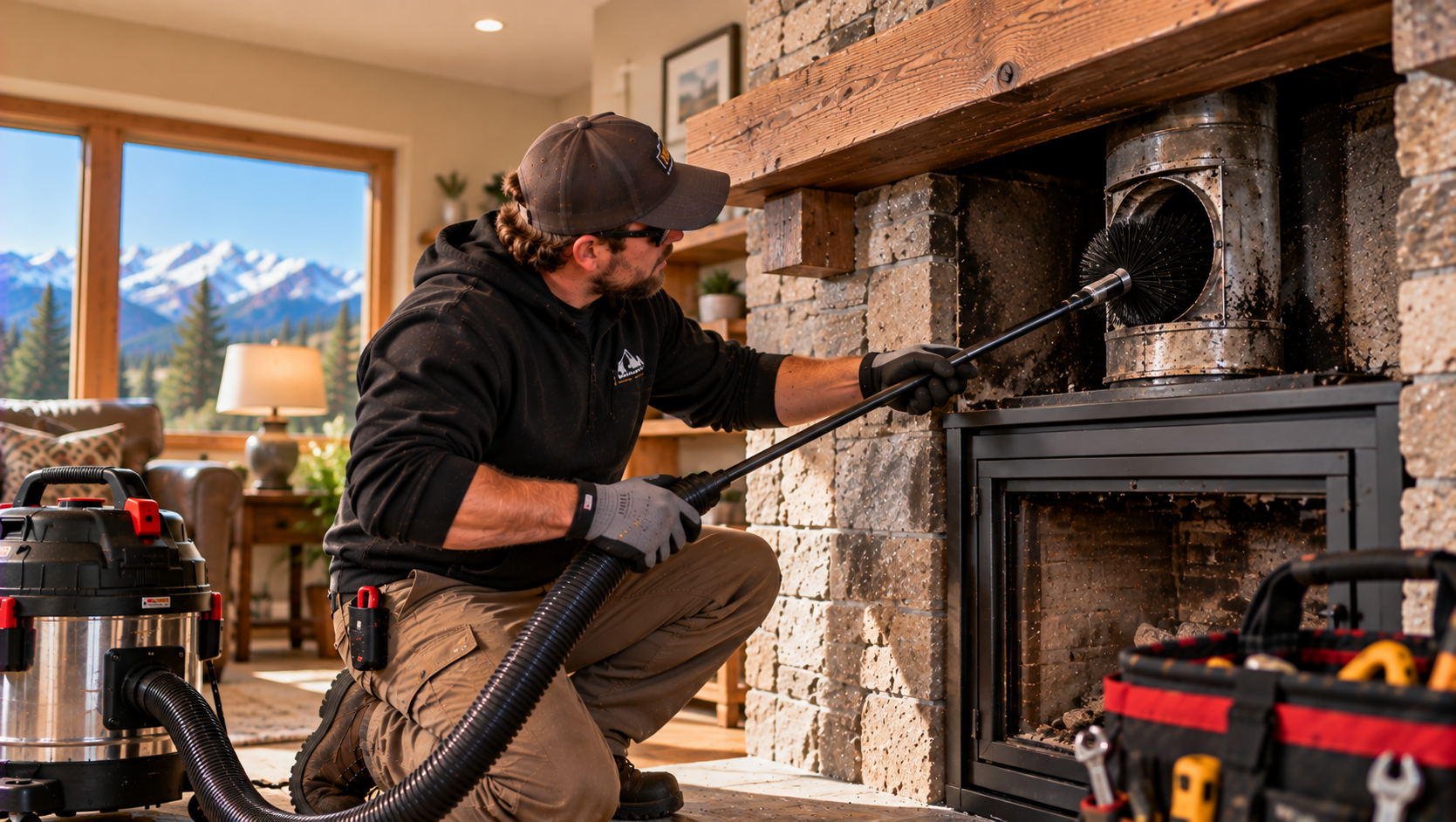
This Page Is for Homeowners With a Furnace, Boiler, or Water Heater - Not a Fireplace
Flue cleaning in Colorado Springs isn't only about wood-burning fireplaces. This page covers something most homeowners overlook: the separate flue system serving your furnace, boiler, or water heater.
If you heat your home with a gas furnace or have a water heater in a mechanical room, there's a dedicated venting path carrying combustion exhaust out of your house. That path needs cleaning, just like a fireplace chimney does.
A shared flue - a single masonry or metal passageway serving more than one heating appliance - is especially common in older Colorado Springs construction. Each connected appliance pushes combustion byproduct through the same passageway. Over time, that adds up.
Soot accumulation - dry, powdery residue that builds at low-velocity sections of the flue, particularly at bends and horizontal connectors - can restrict airflow without producing any visible warning inside your home.
This is different from chimney sweeping for a fireplace. Same category of work. Different tools, different cleaning criteria, different failure points.
10 yrsSince anyone touched the Austin Bluffs flue
Northeast Colorado Springs Homes Are Built Around This Flue Configuration
The Woodmen Road and Austin Bluffs area is full of homes with shared mechanical flues. That's not a guess - it's what our technicians see week after week on service calls.
Homes built along those corridors in the 1970s and 1980s were commonly designed with a single masonry flue handling both furnace and water heater exhaust. It was standard practice then. It's still present now, decades later, in countless Colorado Springs neighborhoods from Rockrimmon to Stratmoor.
Here's what most homeowners don't realize about those systems: the horizontal connector section - the section between the appliance and the vertical flue run - sits at a low angle where exhaust slows. That's exactly where soot accumulation happens first. It's not visible from the exterior. It rarely triggers a carbon monoxide alarm in early stages. But it reduces draft efficiency steadily over time.
Our dispatch location on Fountain Blvd puts us a direct drive from Black Forest, Cimarron Hills, Security-Widefield, and the full northeast quadrant of Colorado Springs. Flue cleaning appointments in these neighborhoods are a regular part of our weekly schedule.
What Turns Up Inside a Mechanical Flue After Ten Years of Service
Most homeowners are surprised by what a mechanical flue looks like inside after a decade of use. The details change how you think about heating system maintenance.
We got a call from a homeowner off Austin Bluffs Pkwy - a 1978 split-level that had been in the same family for over 30 years.
- 1A decade untouchedThe furnace had been serviced regularly by an HVAC company. The water heater was relatively new. The fireplace chimney had been swept twice. Nobody had touched the mechanical flue in at least a decade.
- 2Soot at every elbowWhen the inspection camera went into the horizontal connector section, the first thing visible was a color change - darker than expected for a gas system. That's soot accumulation. Not creosote; the combustion source is gas, not wood. Powdery, dry buildup at every elbow, layered against the inner wall at the low point of the connector run.
- 3Flue scale in the vertical runThe vertical section had a line of flue scale - hardened mineral deposits from sulfur compounds in combustion gases - about four inches deep along the lower interior wall. That's a boiler exhaust signature.
- 4A boiler nobody mentionedSure enough, this home had a small boiler for the radiant baseboard system that hadn't been mentioned during booking. The distinction mattered immediately. Boiler flues and furnace flues don't get cleaned the same way. Boiler exhaust carries sulfuric compounds that create scale, not just soot. The removal method, brush selection, and inspection criteria all shift.
- 5Connector first, camera lastWe identified the correct approach before starting. Cleaned the horizontal connector first, then the vertical run. Camera confirmation at the end. The homeowner hadn't known there was a difference between appliance types - that's completely normal. Sorting that out before the cleaning begins is exactly what a CSIA-certified technician is trained to do.
Annual flue service - a scheduled yearly cleaning and inspection of non-fireplace heating vents per NFPA 211 guidance - should have been on that home's maintenance calendar from the start. It is now.
The Right Cleaning Method Depends on the Appliance Type
We identify your venting system before we select any tools. That distinction determines the entire scope of the job.
A gas water heater flue is typically a B-vent: double-wall metal, moderate temperature exhaust, relatively low soot output. A mid-efficiency furnace uses a Category I or II natural draft or fan-assisted vent, often routed through a masonry flue with a liner. A high-efficiency condensing furnace uses Category IV venting - a positive-pressure, condensing exhaust system that requires separate PVC or stainless steel venting, not a masonry flue at all.
Here's what matters practically: cleaning a Category IV system using masonry flue methods means cleaning the wrong surface. That venting type requires a completely different inspection and cleaning protocol. We identify what you have before we start.
The combustion appliance zone - the area of the home where fuel-burning equipment operates - also gets tested during the visit. That confirms whether the flue is drawing correctly relative to interior house pressure, particularly in tightly built or recently weatherized homes.
Flue cleaning
- Connector sections and elbows camera-inspected
- Soot and scale removed from the flue passageway
- Draft tested at the combustion appliance zone
Annual HVAC service
- Burner, heat exchanger, filter, controls
- The flue passageway is outside that scope
- Connector soot builds regardless
Our Standards for Mechanical Flue Cleaning
Every flue cleaning job follows the same pre-work identification protocol. Here's what that looks like in practice:
- Appliance-type identification: gas water heater, mid-efficiency furnace, high-efficiency furnace, boiler, or combination confirmed before tools are selected
- Connector inspection: horizontal sections and elbows camera-inspected for soot accumulation, scale, and joint integrity
- Correct brush and tool selection: diameter, bristle type, and method matched to flue lining material and exhaust type
- Draft testing at the combustion appliance zone: confirms draw is functioning after cleaning
- Post-cleaning camera confirmation: visual verification of interior flue condition before the technician leaves
- NFPA 211-aligned scope: our flue maintenance visits are calibrated to national venting safety standards, not surface sweeping alone
Vent types we identify first
- Gas water heater: B-vent, double-wall metal, relatively low soot output
- Mid-efficiency furnace: Category I or II, often through a lined masonry flue
- High-efficiency condensing furnace: Category IV, PVC or stainless, not a masonry flue
Mechanical room venting - the routing of exhaust from furnaces, boilers, and water heaters through horizontal connectors and vertical flues - is treated as a distinct inspection category from fireplace chimney work. Different forms, different checklist.
How a Flue Cleaning Appointment Works
Appliance and System Identification First
The appointment starts with the appliance, not the flue. We confirm make and model, vent category, connector routing, and flue type. This takes 10 to 15 minutes and determines everything that follows. We also confirm whether a shared flue configuration is present - meaning whether multiple appliances vent into the same passageway. If so, each connector branch gets individual inspection before the main flue run is cleaned.
Cleaning Sequence
Camera goes in first on older systems or any setup where previous maintenance history is unknown. Cleaning begins at the horizontal connector sections - the lowest-velocity zones where soot accumulation concentrates. We work toward the vertical run and up through the flue termination. For systems with flue scale from boiler exhaust, we use appropriate scaling tools and confirm material removal with the camera before moving on. Three passes on connector elbows. Elbows are where buildup concentrates, and a single pass leaves material behind.
Post-Service Testing
Before we close out, we run the appliance. Draft is measured at the combustion appliance zone under operating conditions. If draft performance doesn't meet the expected range for that appliance type, we diagnose the gap before marking the job complete. You get a plain-language summary of what was found, what was cleaned, and what condition the system is in.
Neighborhoods We Serve in the Greater Colorado Springs Area
Chimney Sweep Colorado Springs provides flue cleaning and maintenance service throughout the region.
- Colorado Springs
- Manitou Springs
- Fountain
- Security-Widefield
- Cimarron Hills
- Rockrimmon
- Briargate
- Falcon
- Black Forest
- Stratmoor
- Woodmen Hills
- Monument
- Palmer Lake
- Pueblo
- Pueblo West
- Canon City
- Woodland Park
- Divide
- Castle Rock
- Parker
- Highlands Ranch
- Lone Tree
- Centennial
- Aurora
- Denver
We serve Colorado Springs, Manitou Springs, Fountain, Security-Widefield, Cimarron Hills, Rockrimmon, Briargate, Falcon, Black Forest, Stratmoor, and Woodmen Hills. Our service area also includes Monument, Palmer Lake, Pueblo, Pueblo West, Canon City, Woodland Park, Divide, Castle Rock, Parker, Highlands Ranch, Lone Tree, Centennial, Aurora, and Denver.
Schedule Your Annual Flue Service in Colorado Springs
Flue cleaning in Colorado Springs is a one-call process - identification, cleaning, and post-service testing handled in a single visit.
If your furnace, boiler, or water heater is venting through a shared or dedicated flue that hasn't been cleaned in the last 12 months, this appointment is overdue. Call us at (720) 505-5030 or email info@chimneysweepscoloradosprings.com to schedule your annual flue service. We'll confirm your appliance type during booking so the right tools arrive at your door.
Frequently Asked Questions
Call and talk to the team directly.
Call (720) 505-5030Mechanical flue cleaning is priced separately from fireplace chimney work. The scope differs - appliance-type identification, connector inspection, and post-service draft testing add steps a standard sweep doesn't include. Pricing depends on whether you have a single dedicated flue or a shared flue serving multiple appliances. Our CSIA-certified technicians confirm the full scope during booking so there are no surprises on the day of service.
Most single-appliance flue cleanings take 60 to 90 minutes. Shared flue systems with multiple connector branches run closer to two hours. Appliance identification and pre-cleaning camera work add time upfront, but post-service draft testing is included before the technician leaves - not skipped to meet a faster clock.
Standard HVAC maintenance does not include flue cleaning. HVAC technicians service the appliance - burner, heat exchanger, filter, controls. The flue passageway carrying exhaust out of your home is outside that scope. Soot accumulation in the connector section builds regardless of how well the furnace itself is maintained.
We identify the venting category before selecting any tools. A gas water heater B-vent, a mid-efficiency furnace flue, and a boiler exhaust all require different brushes and cleaning criteria. Using fireplace sweep tools on a boiler flue with scale buildup leaves hardened mineral deposits behind. Appliance-type identification is step one - not an afterthought.
High-efficiency condensing furnaces use Category IV venting - PVC or stainless pipe, not a masonry flue. That system does not require the same mechanical flue cleaning. If you have a newer high-efficiency furnace and no boiler or standard water heater running through masonry, this service may not apply to your home. We confirm during booking rather than scheduling a visit you don't need.
Blocked flue connectors can cause carbon monoxide to spill back into living spaces. Soot accumulation at horizontal elbows restricts draft - when draft fails, combustion gases don't exit. In Colorado Springs homes with shared masonry flues, this risk is real and detectable only by inspection. Our CSIA-certified technicians test draft at the combustion appliance zone after every cleaning.