
Fireplace Odor Removal in Colorado Springs - Ash, Creosote & Smoke Smells
Fireplace Odor Removal Gets the Smell Out - For Good
Fireplace odor removal identifies and eliminates the exact source of smoke, ash, and creosote smells.
- CSIA-certified technicians
- Source-first, never masking
- Airflow confirmed before we leave
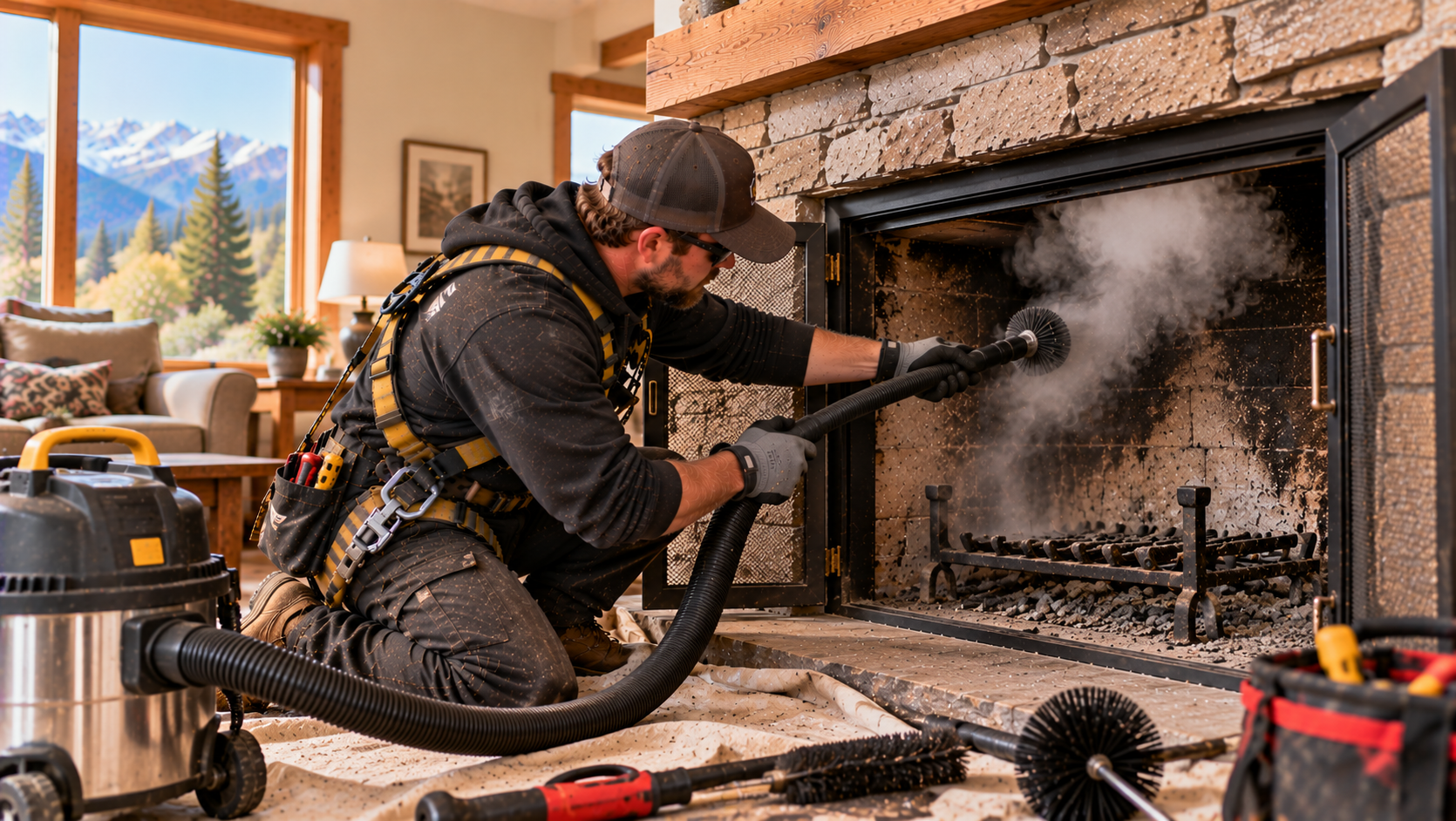
The Smell Hits Hardest in June
That's not a coincidence. It's Colorado Springs doing exactly what it does every summer.
The windows are shut, the air conditioning kicks on, and suddenly the living room smells like a campfire - even though nobody has used the fireplace in months.
This isn't a masking service. Chimney Sweep Colorado Springs locates whether the odor is coming from creosote off-gassing, ash residue in the firebox, animal debris in the flue, or draft reversal - a condition where flue air flows downward into your home instead of up and out. Each source requires a different fix. Getting the right one matters.
JuneWhen fireplace smells hit hardest
Colorado Springs Humidity Turns a Dormant Fireplace Into an Odor Source
Colorado Springs summers activate fireplace odors that sat dormant all winter.
Here's what most homeowners don't realize about this city's climate. The Pikes Peak Region runs dry through winter, then hits spring snowmelt followed by summer monsoon humidity - all within a few months. That shift matters inside your chimney.
Creosote off-gassing - the process where accumulated creosote deposits release volatile compounds when humidity rises - happens fast here. The deposits sit dry and inert through January and February. Then late spring moisture moves in. Those deposits start releasing a sharp, acrid odor. It pushes into your home through the stack effect: a pressure-driven airflow dynamic where warm air rises and exits the building, pulling flue air downward through lower openings.
We serve homes from Manitou Springs and Old Colorado City down to Fountain and Security-Widefield. These neighborhoods sit at elevations where the stack effect runs stronger than most homeowners expect. That altitude makes draft reversal more common - and makes summer odor complaints more intense.
How We Actually Find the Source of a Fireplace Smell
Every odor has a specific source - and we find it before we treat anything.
A technician visited a home in the Briargate area last July. The homeowner had already tried two air freshener products and a bag of fireplace deodorizer crystals. The smell kept coming back within a week. She thought she needed a full chimney rebuild.
What she actually needed was a proper source assessment.
- 1A cracked crownMoisture was getting in through a cracked crown.
- 2Wet ash on the smoke shelfThe smoke shelf - a horizontal ledge inside the chimney just above the firebox that collects ash, soot, and debris - had two seasons of accumulated ash sitting in standing moisture from the cracked crown. That wet ash was producing a cold, musty odor that the crystals couldn't touch because the source was still active.
- 3Ash residue in the fireboxFrom there, the firebox itself was checked. Firebox ash residue - unremoved ash left in the firebox that absorbs ambient moisture - was adding a second layer of smell.
- 4Creosote in the lower flueThe creosote layer in the lower flue was cleaned as part of the treatment.
- 5Negative pressure from the HVACThen airflow was tested. The home had a newer HVAC system creating a negative pressure zone - an interior air pressure condition common in tightly sealed Colorado Springs homes where exhaust fans or HVAC creates a pressure deficit that pulls flue air inward. That's why the smell traveled so far from the fireplace.
Three separate contributors. Three separate treatments. The smoke shelf was cleared, the ash residue removed, the creosote layer in the lower flue cleaned, and the draft issue addressed with a top-sealing damper. The smell didn't come back. She texted the following spring to say the house smelled clean through the entire monsoon season. That's what source-first odor removal actually looks like.
Multiple Odor Sources in One Chimney - Handled in One Visit
Multiple odor sources in one chimney are common - and we handle all of them in one visit.
Some homeowners wonder whether the job will take multiple appointments to fully resolve. In most cases, it doesn't.
Our technicians work through a structured source-identification protocol before any treatment begins. If more than one contributor is identified - creosote, ash residue, and draft reversal together, for example - we address all of them during the same visit. The visit is designed to be complete.
Source-first odor removal
- Every odor source identified first
- Each one treated directly
- All contributors handled in one visit
Store deodorizer products
- Mask the smell
- The source stays active
- The smell comes back
Our Standards for Fireplace Odor Removal
We apply the right treatment for each odor source - nothing more, nothing less.
- CSIA-certified technicians lead every odor assessment
- Source-first protocol - no treatment applied before the odor type is confirmed
- Creosote removal targets all three levels of creosote buildup when present
- Ash clearing addresses both firebox and smoke shelf deposits
- Vapor-permeable odor sealer - a topcoat applied to interior masonry surfaces to block residual odor permeation while still allowing moisture vapor to pass through - used where persistent absorption is confirmed
- Draft correction included when airflow testing reveals a negative pressure zone or draft reversal as a contributing factor
- Camera documentation provided for any structural finding identified during the assessment
The visit follows a clear sequence: find the source, clear it, test airflow, and confirm results.
How the Odor Removal Visit Works
Diagnostics First - Firebox, Smoke Shelf, and Airflow
We begin with a structured walk-through - firebox, smoke shelf, lower flue, and damper. The technician checks for moisture, ash accumulation, creosote stage, and signs of animal intrusion. Airflow is tested to identify any draft reversal or negative pressure zone pulling flue air into the living space. This step determines exactly which treatments apply.
Cleaning and Treatment, Top to Bottom
Cleaning starts from the top down. Creosote deposits are cleared first. Ash residue is removed from the firebox and smoke shelf. If a vapor-permeable odor sealer is appropriate, it's applied after surfaces are clean and dry. Draft corrections - damper adjustment, cap inspection, or airflow optimization - happen last.
Post-Service Airflow Confirmation
After treatment, we run an airflow check to confirm the draft is moving correctly. The technician walks the homeowner through what was found, what was treated, and what to expect through the coming season. If a structural issue is identified that requires a separate repair, we note it clearly and explain the options.
Areas We Serve in and Around Colorado Springs
We cover the full Pikes Peak Region - from downtown Colorado Springs to the surrounding communities.
- Colorado Springs
- Manitou Springs
- Fountain
- Security-Widefield
- Cimarron Hills
- Rockrimmon
- Briargate
- Falcon
- Black Forest
- Stratmoor
- Woodmen Hills
- Monument
- Palmer Lake
- Pueblo
- Pueblo West
- Castle Rock
- Parker
- Denver metro
Service areas include Colorado Springs, Manitou Springs, Fountain, Security-Widefield, Cimarron Hills, Rockrimmon, Briargate, Falcon, Black Forest, Stratmoor, Woodmen Hills, Monument, Palmer Lake, Pueblo, and Pueblo West. We also serve Castle Rock, Parker, and the Denver metro corridor.
Ready to Clear That Fireplace Smell for Good?
Call Chimney Sweep Colorado Springs and get the source identified - not just treated.
Dial (720) 505-5030 or email info@chimneysweepscoloradosprings.com to schedule your fireplace odor removal visit. Our CSIA-certified technicians serve all of Colorado Springs and the surrounding region. Book online at chimneysweepscoloradosprings.com and get the smell handled before peak humidity season arrives.
Frequently Asked Questions
Call and talk to the team directly.
Call (720) 505-5030Contact Chimney Sweep Colorado Springs at (720) 505-5030 for current rates. Cost varies based on how many odor sources are identified - creosote, ash residue, draft reversal, or a combination - and which treatments are required to resolve each one.
Colorado Springs humidity activates creosote deposits that sat dry all winter. Spring snowmelt and summer monsoon moisture cause those deposits to off-gas - releasing sharp, acrid compounds into your living space. Your HVAC system makes it worse. Sealed homes create a negative pressure zone that pulls flue air downward, carrying the smell straight into the room.
One visit handles all identified odor sources in most cases. Technicians run a full source assessment before any treatment starts. If creosote, ash residue, and draft reversal are all contributing, all three get addressed the same day. A follow-up is only scheduled if a structural repair - like a cracked crown - is found and requires separate work.
Store products mask the smell. They don't remove the source. Our CSIA-certified technicians identify whether the odor is coming from creosote off-gassing, ash on the smoke shelf, animal debris, or draft reversal - then treat each one directly. A vapor-permeable odor sealer is applied only after surfaces are clean, so the seal holds against residual absorption rather than trapping active moisture.
Most visits run two to three hours from arrival to airflow confirmation. Diagnostics come first - firebox, smoke shelf, damper, and airflow testing. Cleaning and treatment follow. The visit ends with a post-service airflow check and a technician walkthrough of findings. Timeline extends if heavy creosote buildup or multiple odor sources require additional treatment steps.
Draft correction is included when airflow testing confirms reversal as a contributing factor. Damper adjustment or airflow optimization is applied before the technician leaves. If a top-sealing damper is the right fix, it's measured on that visit so it can be fitted to your flue. If the underlying cause is structural - like a collapsed flue section - that finding is documented and explained with repair options.