
Chimney Cap Installation & Replacement in Colorado Springs
Cap Measured, Selected in Stainless & Secured Against Wind Load
Galvanized starts corroding within years - stainless or copper is the correct spec
- CSIA-certified technicians
- Stainless or copper only
- Pull-tested before we leave
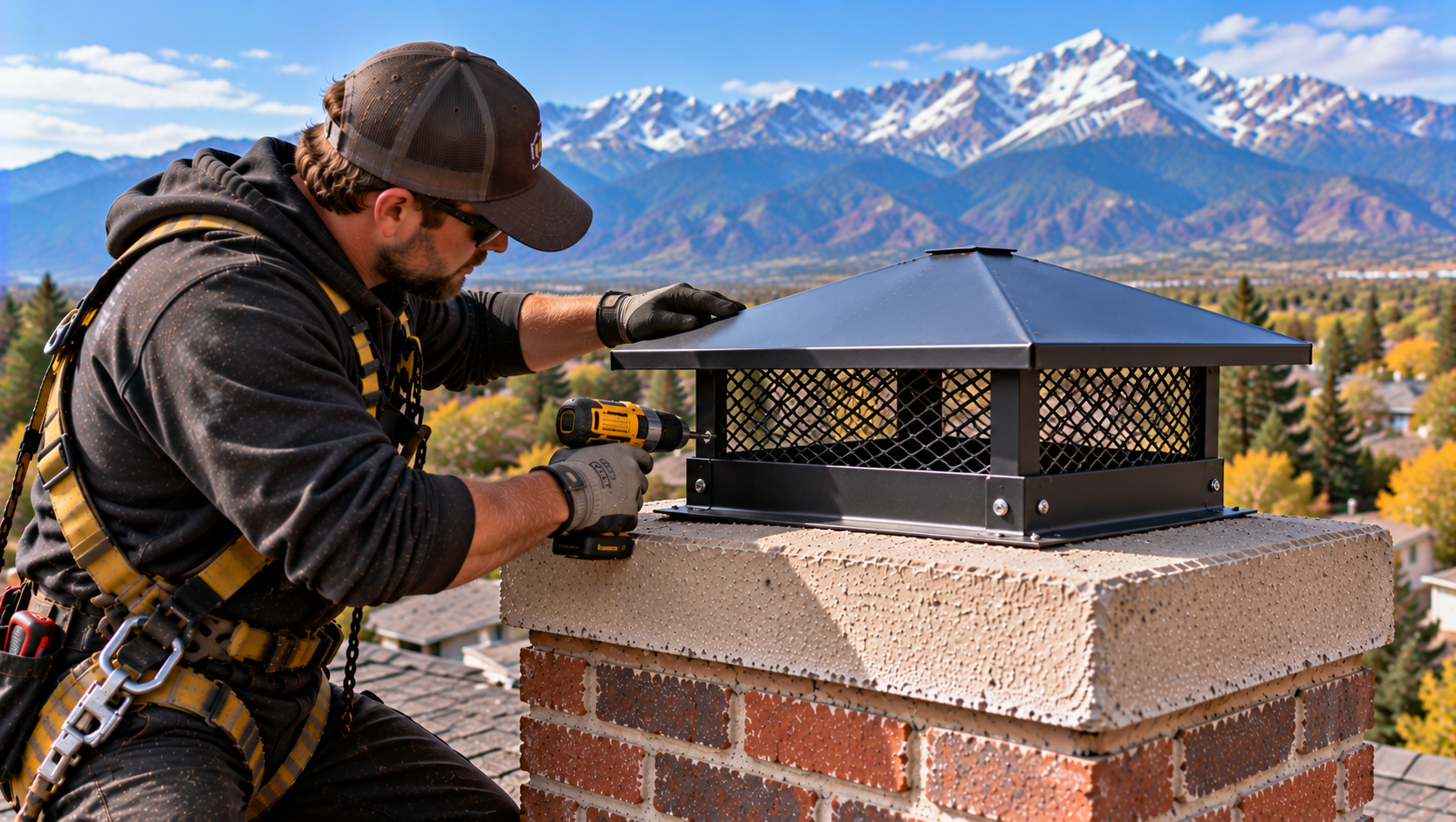
A Single Uncapped Winter Changes What You're Working With
A chimney cap is a protective cover mounted directly over the flue opening - and without one, Colorado winters are unforgiving.
One season without a chimney cap in Colorado Springs means rain, snow, hail, and debris moving straight into the flue. It also means animals. A chimney cap - the metal cover mounted directly over the flue opening on top of the chimney crown, with a solid lid and open mesh sides - is what keeps all of that out while letting combustion gases exit safely.
The spark arrestor mesh (the screen surrounding the cap's sides) does double duty. It blocks burning embers from landing on your roof. It also keeps birds, squirrels, and raccoons from treating your flue like a nesting site.
A missing or shifting cap isn't always obvious from the ground. Homeowners usually find out one of two ways: a fire that won't draw right because there's a nest partially blocking the flue, or water showing up at the firebox floor after a heavy rain. Both are preventable. One cap, installed correctly and fastened to handle wind load, handles all of it.
6,035 ftColorado Springs elevation
Colorado Springs Wind Does Specific Things to Chimney Caps
The Palmer Divide creates sustained wind patterns that chimney caps in other regions simply don't face.
Here's what most homeowners don't realize about cap failure in this area. It's rarely a one-storm event. Wind dislodgement - where a cap lifts, tilts, or blows off entirely due to sustained load or inadequate fastening - happens gradually. The cap gets nudged over two or three seasons. Then one day it's crooked, or gone.
The Highway 24 corridor west toward Manitou Springs and Woodland Park is where we see this most. That stretch sits in a wind channel between Pikes Peak and the plains. Caps that were installed but never properly secured to the crown don't survive long out there.
We serve all of those areas as part of our standard route. When we get a cap call from Monument, Falcon, or Black Forest, we arrive prepared for elevated wind exposure - because those locations demand it.
What a Cap Call Actually Looks Like in the Field
I've pulled loose caps off chimneys in every part of Colorado Springs - and the cause is almost always the same.
Every chimney cap replacement call in Colorado Springs follows a similar path. The homeowner has noticed something - smoke smell, animal sounds, a cap that's visibly tilted - or they haven't noticed anything and we're flagging it during a Level 1 inspection.
Last spring I got out to a home in the Rockrimmon area. The owners had bought the house two years prior. The cap was still there - technically.
- 1Rotated about 45 degreesIt had rotated about 45 degrees.
- 2Screws pulled from the crownThe mounting screws had pulled loose from the crown.
- 3Galvanized, rusted throughThe original cap was galvanized steel. A galvanized cap is zinc-coated steel - lower upfront cost, but in Colorado's altitude, temperature cycling, and UV intensity, galvanized products begin corroding within a few years. This one had. The mesh on one side had rusted through completely.
- 4Measured, then stainlessWe measured the flue tile dimensions before pulling anything. Single-flue cap - a chimney cap sized to cover one flue opening - is the standard for that style of masonry chimney. We went with a stainless steel cap, fabricated from corrosion-resistant stainless alloy. That's the material that holds up against Colorado's temperature cycling and high-UV environment.
- 5Anchored and pull-testedThe mount went through the crown with stainless hardware and a masonry anchor rated for wind load. We tested pull strength before coming off the roof. The cap doesn't move.
That's the standard. Not just set in place - secured.
Multi-Flue Situations Are Handled Differently
A multi-flue cap covers two or more flue openings on a single chimney - and sizing it wrong defeats the purpose entirely.
Older Colorado Springs homes built with both a fireplace and a gas furnace or boiler often vent through the same chimney structure. That means two flue openings sitting side by side on the same crown.
A multi-flue cap - a larger chimney cap designed to cover two or more flue openings - needs to be sized based on the exact spacing and dimensions of both tiles. A cap that spans too wide creates a wind-trapping pocket. One that's too narrow leaves a gap.
We measure crown geometry before specifying anything. The number of flues, tile dimensions, and crown surface area all factor in. If you have a multi-flue chimney and you're not sure what you have, our CSIA-certified technicians assess that on arrival. The CSIA (Chimney Safety Institute of America) certification confirms training in chimney cap standards and proper flue coverage requirements - not just general chimney work.
Single-flue cap
- Covers one flue opening
- Fitted to the specific tile dimensions
Multi-flue cap
- Covers two or more flue openings
- Sized to the spacing of both tiles and the full crown
- Too wide traps wind, too narrow leaves a gap
Our Standards for Chimney Cap Installation in Colorado Springs
Every cap we install is specified by material, sized by measurement, and fastened to handle what Colorado weather delivers.
- We do not stock one-size-fits-all caps and retrofit them on site
- Stainless steel caps are our standard specification for Colorado Springs installations
- Copper caps are available for older masonry chimneys and historic homes where aesthetics matter
- Every cap is fastened with corrosion-resistant hardware - not friction-fit or set with caulk alone
- Spark arrestor mesh is confirmed intact before the job is closed
- Wind dislodgement resistance is tested on the roof before we come down
Expected lifespan in Colorado
- Galvanized steel: 3-7 years - surface rust, mesh deterioration from UV and temperature cycling
- Stainless steel: 20+ years - corrosion-resistant alloy holds against high altitude and UV
- Copper: 50+ years - patina develops but structural integrity remains; premium option
Measure, anchor, confirm - in that order, every time.
How the Installation Actually Works
Crown and Flue Assessment
We start at the top. That means getting eyes on the crown, the existing cap (if any), and the flue tile openings before anything is ordered or specified. Crown condition matters - a cracked or deteriorating chimney crown (the sloped concrete surface that seals the top of the chimney structure) won't hold fasteners reliably. If the crown needs repair first, we say so before proceeding. We measure flue tile dimensions directly. External measurements of the chimney don't substitute for actual flue sizing.
Cap Selection and Anchoring
Cap selection comes after measurement - not before. Single-flue caps are fitted to the specific tile dimensions. Multi-flue caps are sized to the full crown geometry. Mounting hardware goes through the crown material with masonry anchors. Stainless screws. No zinc-coated or mixed-metal hardware that will react with the cap material and fail ahead of schedule.
Post-Installation Verification
After fastening, we test pull force on the cap before leaving the roof. We also confirm mesh integrity - both the spark arrestor function and the animal exclusion function. A cap that passes both checks is documented. You get a record of what was installed, what material was used, and how it was anchored. That documentation matters if a wind event shifts anything later and you need to reference the original installation spec.
Areas We Serve
Chimney cap installation and replacement available across the Greater Colorado Springs area.
- Colorado Springs
- Manitou Springs
- Rockrimmon
- Briargate
- Falcon
- Black Forest
- Monument
- Palmer Lake
- Woodland Park
- Fountain
- Security-Widefield
- Cimarron Hills
- Stratmoor
- Pueblo
- Castle Rock
- Parker
We serve Colorado Springs, Manitou Springs, Rockrimmon, Briargate, Falcon, Black Forest, Monument, Palmer Lake, Woodland Park, Fountain, Security-Widefield, Cimarron Hills, Stratmoor, Pueblo, Castle Rock, Parker, and surrounding communities in the Pikes Peak Region. If you're along the Highway 24 corridor or in the foothills, we're already running routes through your area regularly.
Schedule Your Chimney Cap Installation
The right cap, installed in stainless, anchored to handle Colorado wind - that's what this visit delivers.
Call us at 720-505-5030 or email info@chimneysweepscoloradosprings.com to schedule your chimney cap installation or replacement in Colorado Springs. Tell us whether you have a single flue or multiple flues - if you're not sure, we'll figure it out on arrival. One visit covers measurement, installation, and confirmed fastening before we leave the roof.
Frequently Asked Questions
Call and talk to the team directly.
Call (720) 505-5030Specific pricing requires an on-site assessment. Cap material, flue count, and crown condition all affect final cost. Stainless steel caps cost more upfront than galvanized but outlast them by 15 or more years in Colorado's climate. Our CSIA-certified technicians confirm the correct spec on arrival before any pricing is finalized.
Most chimney cap replacements complete in under two hours. Measurement, cap selection, fastening, and pull-test verification all happen in one visit. Multi-flue chimneys with crown damage may require a follow-up if the crown needs repair before anchors can hold. We confirm scope on arrival so you know what to expect before work begins.
A cap that shifts even slightly creates an open gap for rain and animals. Wind dislodgement rarely means the cap disappears entirely - it usually tilts or rotates until the mesh no longer covers the flue. We check alignment, fastener integrity, and mesh condition at roof level, because ground-level inspection misses all three failure points.
Stock caps are sized for average flue dimensions - not your specific tile measurements. A cap that's even slightly oversized sits loose on the crown and lifts in wind. Every cap we install is selected after direct measurement of your flue tile opening and crown geometry. Stainless steel is our standard specification; we do not install galvanized caps.
Yes, if the crown is cracked or deteriorating, anchor points won't hold under wind load. Crown condition gets assessed before any cap is specified or ordered. If repair is needed first, we document it and explain the sequence before any work begins - so you're not surprised by a two-step process on the day of the visit.
One multi-flue cap can cover two or more flue openings on the same chimney. Sizing it correctly requires measuring both tile dimensions and the full crown width. A cap that spans too wide creates a wind-trapping gap. We confirm flue count and crown geometry on arrival and specify accordingly - single-flue or multi-flue, not guesswork.