
Efflorescence Removal from Chimneys in Colorado Springs
Salt Deposits Cleaned, Surface Neutralized & Sealed in One Visit
Vapor-permeable sealer applied after removal - so staining doesn't return
- CSIA-certified technicians
- Clean, neutralize, dry, seal
- No film-forming products
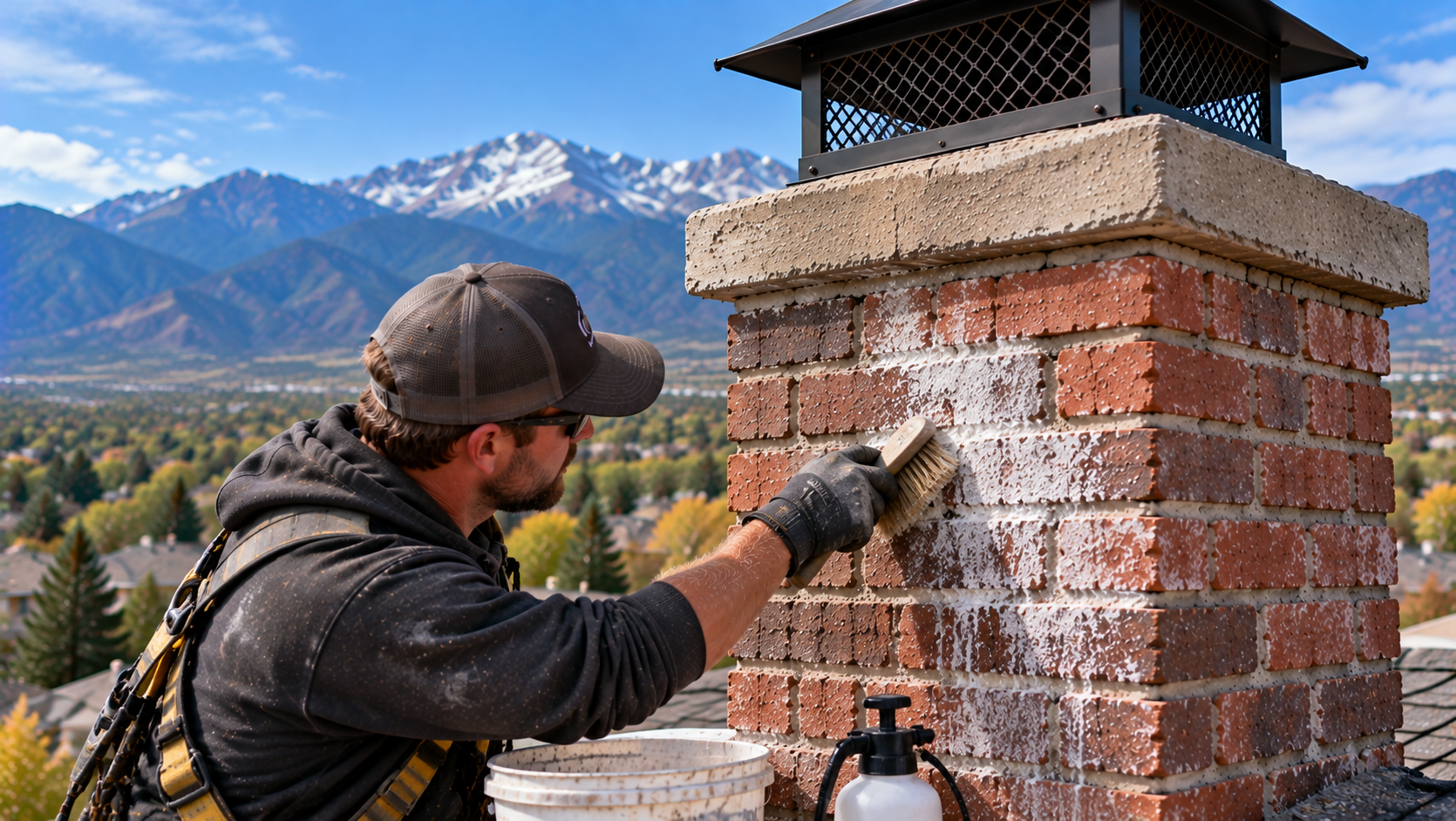
Chimney Efflorescence Removal in Colorado Springs Gets the Full Sequence Right
Efflorescence removal done correctly means clean, neutralize, dry, and seal - in that order, every time.
Efflorescence - the white or gray salt crust that forms on chimney brick and mortar - doesn't wipe off once it's hardened. The salts carbonize over time and bond to the masonry surface. That crust needs chemical treatment, not just scrubbing.
Our CSIA-certified technicians remove hardened salt deposits, neutralize the surface, and apply a vapor-permeable water repellent - a sealant that lets moisture vapor escape outward while blocking liquid water from entering. That's the step surface-cleaning approaches frequently skip. Without it, the same wet-dry cycle (the alternating pattern of moisture absorption and evaporation in masonry) pushes new salts to the surface in the next wet season.
If you've already gone through our efflorescence diagnostics process and the moisture source has been identified, this page covers exactly what happens next.
2-3Wet-dry cycles before deposits harden
Colorado Springs Chimneys Face a Specific Staining Cycle
The Pikes Peak region's snowmelt timing creates a compounding efflorescence pattern unique to this area.
Colorado Springs gets only around 16 to 17 inches of precipitation a year. But the elevation gradient between downtown and the western neighborhoods - Rockrimmon, Manitou Springs, and the communities climbing toward Woodland Park and Divide - means snowmelt timing differs by weeks across the same metro area.
Chimneys at higher elevations stay wet longer in spring. Then July and August bring short, intense monsoon rain events. That combination - extended spring saturation followed by rapid summer drying - is exactly the wet-dry cycle that concentrates soluble salts and pushes them to the masonry surface in layers.
By late summer, chimneys that have gone through two or three of these cycles often have hardened salt deposits - efflorescence that has undergone carbonation, forming a dense crust - that require chemical treatment, not brushing alone.
We dispatch removal crews from our Colorado Springs office and cover the full Pikes Peak region, including Woodland Park, Divide, and the higher-elevation western neighborhoods where this extended snowmelt exposure is most common.
What the Removal Process Actually Looks Like
Acid washing, neutralizing, and sealing are three separate steps - skipping any one of them changes the outcome.
Here's something worth knowing about chimney efflorescence removal: the cleaning product used matters as much as the application sequence.
A masonry cleaner applied without a complete neutralizing rinse can make staining worse. If an acidic cleaner dries before the surface is neutralized, residual acid keeps reacting with the masonry. That can pull more calcium to the surface - sometimes within days.
One job in the Briargate area illustrates why the sequence matters. The homeowner had a two-story chimney with about four seasons of layered staining.
- 1Dry brushing on the powdery sectionsThe lower two feet of brick had soft, powdery deposits. We started with dry mechanical brushing on the powdery sections.
- 2Diluted phosphoric acid on the crustAbove that, the crust was hard - clearly carbonated, probably two or three years old. We moved to a diluted phosphoric acid treatment (acid washing of masonry - the controlled application of diluted muriatic or phosphoric acid to dissolve hardened salt deposits) on the carbonated sections.
- 3The neutralizing rinseThe neutralizing rinse step took longer than the cleaning itself. Masonry is alkaline by nature. After acid treatment, the surface has to return to a neutral pH before sealing - otherwise, sealant adhesion is compromised and vapor transmission is uneven.
- 4Dry, then sealWe let the brick dry fully over two days before applying the vapor-permeable sealant.
The homeowner called the following spring to say the chimney looked exactly the same as the day we finished. That's the outcome the sequence is designed to produce.
Why a Vapor-Permeable Sealant - Not a Film-Forming One
The right sealant on clean masonry protects the brick through the next wet season and beyond.
There's a clear answer to why we use a vapor-permeable water repellent and not a surface-coating product. Film-forming sealants - the kind that sit on top of the brick and create a visible sheen - trap water vapor inside the masonry. When that vapor can't escape, it builds pressure behind the sealed surface. In Colorado Springs winters, that trapped moisture freezes, and freeze-thaw expansion pops brick faces and spalls mortar.
A vapor-permeable sealant (a water repellent that blocks liquid water from entering masonry while allowing water vapor to pass outward) penetrates into the brick rather than coating the surface. Liquid water is repelled. Vapor moves out freely. The masonry breathes, and the next wet season doesn't push new salts to the surface at the same rate.
This is why masonry surface preparation matters so much. If the brick isn't fully dry and clean when the sealant is applied, penetration depth is shallow and adhesion is inconsistent.
Vapor-permeable water repellent
- Penetrates into the brick
- Liquid water is repelled
- Vapor moves out freely
Film-forming sealant
- Sits on top with a visible sheen
- Traps water vapor inside the masonry
- Trapped moisture freezes and spalls brick
Our Standards for Chimney Efflorescence Removal
Every removal job follows the same documented sequence - no shortcuts, regardless of staining severity.
- CSIA-certified technicians confirm moisture source documentation before removal begins
- Dry mechanical brushing used first to clear loose, powdery surface deposits
- Diluted phosphoric acid applied to hardened, carbonated salt crusts - concentration matched to deposit age and density
- Full neutralizing rinse after acid treatment - surface pH confirmed before drying begins
- Masonry dried completely before vapor-permeable sealant is applied
- Vapor-permeable water repellent penetrates into masonry - no film-forming products used
- Post-application inspection confirms even penetration and no missed sections
- Recurrence expectations reviewed with homeowner before crew departs
From first brush to final seal - the full process on every chimney efflorescence removal visit.
The Removal Sequence, Step by Step
Diagnostics and Surface Assessment
The technician reviews the moisture source documentation from the diagnostics phase. Surface deposits are categorized: powdery versus hardened crust, location relative to mortar joints and brick faces, and any areas where staining has migrated from a secondary source like flashing or a crown. This step determines which cleaning approach applies to which sections.
Chemical Treatment and Neutralization
Loose deposits are removed by dry brushing. Hardened deposits receive diluted phosphoric acid, applied section by section. Dwell time is controlled - we don't let the cleaner dry on the surface. After treatment, a complete neutralizing rinse brings the masonry pH back to baseline. Technicians confirm pH before moving to the drying phase. The brick must reach full surface dryness before any sealant contact.
Sealing and Post-Service Review
Vapor-permeable water repellent is applied to all treated surfaces. Penetration is checked by visual inspection. The technician confirms coverage of all mortar joints and brick faces in the stained zone. Before leaving, we walk the homeowner through honest recurrence expectations: sealing slows future salt migration significantly, but it does not eliminate it permanently if an active moisture source remains. Monitoring for new deposits in the following spring is still recommended.
Areas We Serve
Our Colorado Springs crew covers the full Pikes Peak region for efflorescence removal.
- Colorado Springs
- Manitou Springs
- Rockrimmon
- Briargate
- Woodland Park
- Divide
- Monument
- Palmer Lake
- Falcon
- Black Forest
- Fountain
- Security-Widefield
- Pueblo
- Canon City
- Castle Rock
- Parker
We serve Colorado Springs, Manitou Springs, Rockrimmon, Briargate, Woodland Park, Divide, Monument, Palmer Lake, Falcon, Black Forest, Fountain, Security-Widefield, Pueblo, Canon City, Castle Rock, Parker, and surrounding communities throughout the greater Colorado Springs area.
Schedule Your Chimney Efflorescence Removal
Clean masonry, sealed and ready for the next wet season - one visit handles the full sequence.
If your chimney's staining source has been identified, we're ready to schedule removal. Call us at (720) 505-5030 or email info@chimneysweepscoloradosprings.com. You can also reach us at 3595 E Fountain Blvd Suite 108, Colorado Springs, CO 80910. We'll confirm the removal scope before the crew arrives.
Frequently Asked Questions
Call and talk to the team directly.
Call (720) 505-5030Pricing for efflorescence removal depends on deposit severity, surface area treated, and sealing scope. Hardened, carbonated crusts require more treatment time than powdery surface deposits. Our technicians assess your chimney's condition before quoting. Call (720) 505-5030 for an estimate tied to your chimney's actual condition.
Yes - removal, neutralization, and sealing are completed in a single visit when conditions allow. The masonry must reach full surface dryness before sealant goes down. In cooler months or after heavy saturation, drying time may extend across two days. We confirm the timeline before scheduling based on your chimney's current moisture level.
Film-forming sealants trap moisture vapor inside the brick. Trapped vapor freezes in winter and causes spalling from the inside out. A vapor-permeable water repellent blocks liquid water while letting vapor escape outward. That means the masonry stays protected without building pressure behind the sealed surface - which matters especially during Colorado Springs freeze-thaw cycles.
Sealing significantly slows future salt migration - it does not eliminate recurrence permanently. If an active moisture source remains, some redepositing is still possible over time. We review recurrence expectations honestly before leaving every job. Monitoring for new deposits the following spring is always recommended, regardless of how clean the masonry looks after removal.
Yes - CSIA-certified technicians confirm the moisture source is documented before removal begins. Removing salt deposits without addressing the source means the same wet-dry cycle produces new staining in the next wet season. If you've already completed our efflorescence diagnostics visit, we're ready to schedule removal based on that documentation.
Treatment targets all confirmed staining zones plus adjacent masonry sections at risk. Spot-treating one visible area while leaving untreated brick next to it creates uneven absorption when sealant is applied. Our technicians map the full stained zone during the assessment phase and confirm the treatment area before chemical work begins.