
Chimney Crown Repair in Colorado Springs, CO
Sealing, Patching, and Rebuilding Cracked Crowns Across the Pikes Peak Region
Repair approach matched to actual crown condition - not a one-size patch every time
- CSIA-certified technicians
- Crack severity assessed
- Full rebuild when needed
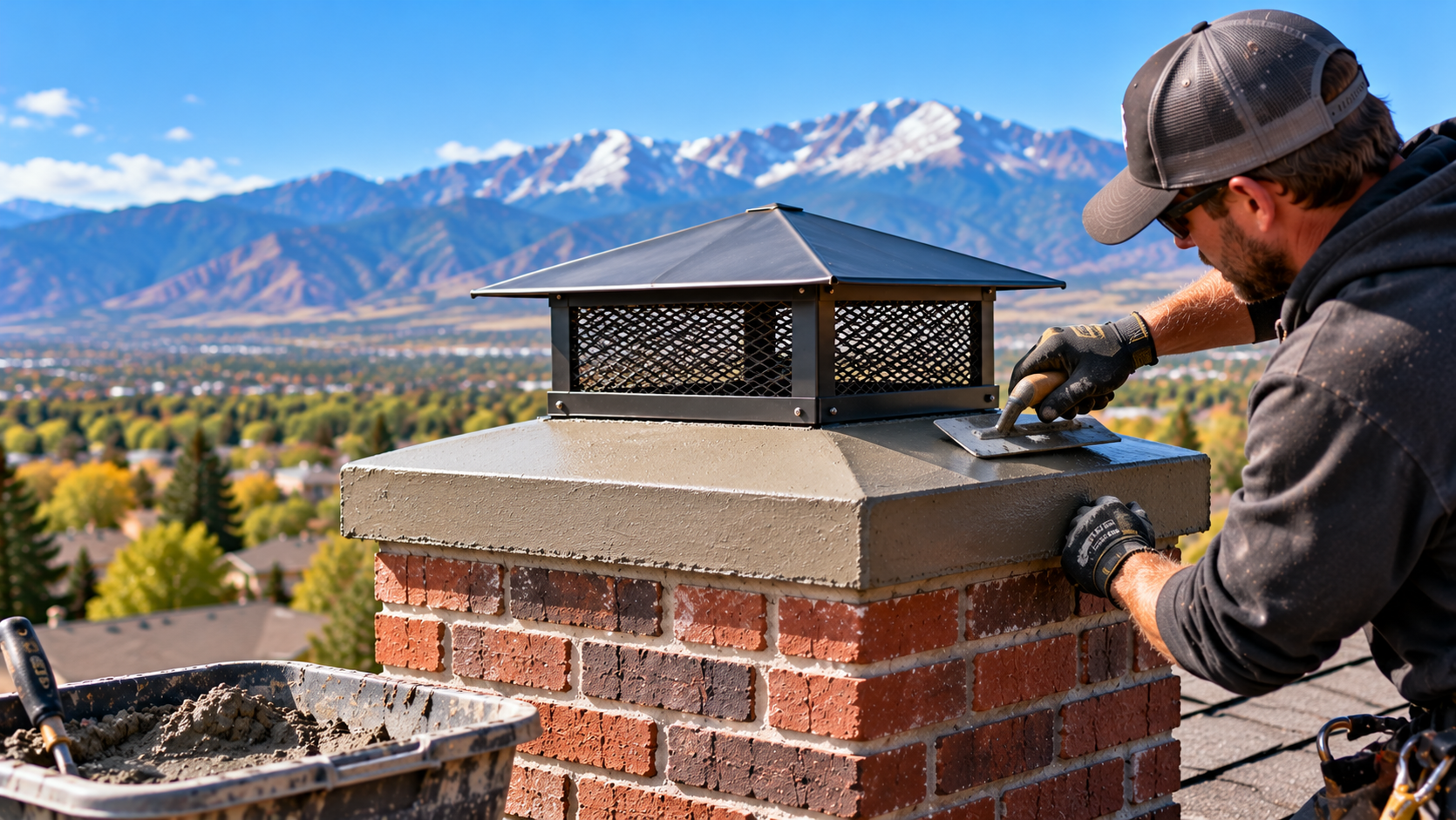
What a Cracked Chimney Crown Is Actually Telling You
Cracks in a chimney crown are not just a cosmetic issue. They are the entry point for the water damage that works through everything below.
The chimney crown is the concrete slab that caps your masonry chimney and surrounds the flue opening. Its job is to shed water away from the brick and mortar below. When the crown cracks, water gets in. In Colorado Springs, that water freezes, expands the crack, thaws, and pulls in more water. After several cycles, what started as a hairline becomes a gap wide enough to let water run directly into the masonry.
The crown-to-flue seal - the joint between the concrete surface and the top of the flue liner tile - is often the first place cracking shows up. That joint has to flex with temperature changes. When it fails, water tracks down inside the flue as well as outside.
Most cracked crowns in Colorado Springs were either poured flat without adequate overhang, used a mix not suited to the freeze-thaw range here, or were never sealed after installation. Any of those conditions accelerates cracking.
That's the problem chimney crown repair in Colorado Springs is built to address before water damage spreads further into the masonry.
Assessed firstCrack width and depth determine whether sealing, patching, or rebuilding is the right call
Why Colorado Springs Crowns Crack Faster Than Most
Altitude and freeze-thaw frequency are the main drivers of crown deterioration here.
Our crew dispatches from 3595 E Fountain Blvd and regularly works in Monument, Black Forest, and Woodmen Hills. Those neighborhoods sit higher than the city floor. They see more freeze-thaw cycles per season - not just cold winters, but repeated daily swings in late winter and early spring where temperatures cross the freezing point multiple times a week.
Here's what that means for a chimney crown: every time water enters a crack and freezes, it expands and widens the crack. At 6,000 to 8,000 feet, that cycle happens far more frequently than at lower elevations. A small hairline crack that might stay stable for years in a milder climate can open significantly in a single Colorado Springs winter. Crowns poured without air-entrained mixes or applied without sealer are especially vulnerable to this pattern.
That's not a minor detail. It's why crown cracks here tend to progress faster than homeowners expect, and why early repair matters.
Hairline Crack vs. Full Fracture: What the Difference Means for Repair
Two chimneys of similar age on the same street can need very different repairs.How to tell them apart
Not every cracked crown needs the same fix. The condition of the existing crown determines the right approach.
A hairline crack - narrow, surface-level, with the crown still intact as a single slab - can often be cleaned out and filled with a flexible elastomeric sealant. That seals the entry point before freeze-thaw cycling widens it further. The key is catching it early, before the crack has worked through the full depth of the crown.
A crown with multiple fractures, sections that have shifted or separated, or significant spalling is a different situation. Patching over structurally compromised concrete doesn't hold. In those cases, a partial patch or full crown rebuild is the right call. Same neighborhood, same winters, but the repair scope has to match what's actually there.
- 1Hairline crackNarrow, surface-level, crown still one piece: elastomeric sealant applied into the cleaned crack.
- 2Moderate crackingCrack has depth but substrate is sound: patch with compatible repair mortar and reseal.
- 3Crown-to-flue seal failureJoint between crown and flue tile open or rigid: old material removed and flexible sealant reapplied.
- 4Multiple fractures or shifted sectionsCrown no longer structurally sound: partial or full rebuild required.
- 5Surface spalling with no geometry correctionRepair only delays the same outcome: rebuild with correct overhang and drip edge.
That's what determines the scope of chimney crown repair. We're not patching every crack the same way. We're matching the repair to the actual condition we find.

When Repair Is No Longer the Right Answer
Repair is only viable when the existing crown has a stable base to bond to.
A lot of homeowners ask about repair first. That's reasonable, and in many cases repair is exactly the right call. But when freeze-thaw cycling has broken the original pour into multiple sections - or when the crown geometry was never correct to begin with - repair doesn't address the underlying cause of the damage.
Here's how we handle that determination: CSIA-certified technicians assess the crown's condition and geometry before recommending anything. If the crown is structurally compromised, or if the lack of overhang or drip edge means water will keep running onto the upper masonry regardless of what we patch, we recommend a full crown installation instead. We explain exactly what we found and why. No guesswork.
Chimney crown installation in Colorado Springs is the better path when the existing crown can't provide a stable bond or when the geometry has never been right.
New installation
- Original pour broken into multiple sections
- Overhang geometry was never correct
- Chronic water contact with the upper masonry
Repair
- Only viable when the existing crown has a stable base to bond to
Our Standards for Every Crown Repair We Do
Every repair on every chimney gets the same assessment and the same materials - no shortcuts.
- Crack depth and width evaluated before any material is applied
- Crown-to-flue seal inspected and resealed with flexible, waterproof material if compromised
- Existing surface cleaned and prepared before any patch or sealant is applied - bonding depends on it
- Repair material selected to be compatible with the existing concrete and rated for freeze-thaw exposure
- Surface slope checked after repair to confirm water still drains toward the drip edge
- Chimney cap fit verified before reinstallation - repairs to the crown surface can affect how the cap seats
- CSIA-certified review at each stage: assessment, repair execution, and final inspection
Full surface sealer applied over completed repairs. Not skipped because the rest of the crown looks okay.
How We Approach a Crown Repair Visit
Assessment First
We access the crown directly and evaluate the full slab - not just the visible crack. We measure crack width and probe depth, check the crown-to-flue seal, and inspect the upper masonry courses for signs that water has already moved through. We look at overhang geometry and drip edge condition. This gives us an accurate picture of what repair scope is actually needed before we recommend anything.
Repair Execution
Cracks are cleaned out before any material goes in. For hairline cracks, we apply elastomeric sealant into the prepared crack. For deeper damage, we use a repair mortar compatible with the existing crown concrete. Crown-to-flue seal failures are cleared of old material and resealed with a flexible waterproof sealant. Surface slope is confirmed after repair work is complete.
Final Inspection and Sealing
We inspect the completed repair before the chimney cap goes back on. Sealer is applied over the repaired crown surface. We verify the drip edge is clean and unobstructed, and we reinstall the chimney cap and confirm it seats correctly. If we identified geometry problems during assessment that repair cannot fix, we walk through what a full crown installation would involve.
Areas We Serve in and Around Colorado Springs
We serve the full Greater Colorado Springs area and surrounding communities.
- Colorado Springs
- Monument
- Black Forest
- Woodmen Hills
- Briargate
- Rockrimmon
- Falcon
- Manitou Springs
- Fountain
- Security-Widefield
- Cimarron Hills
- Stratmoor
- Palmer Lake
- Pueblo
- Castle Rock
- Parker
- Highlands Ranch
Our crews cover Colorado Springs, Monument, Black Forest, Woodmen Hills, Briargate, Rockrimmon, Falcon, Manitou Springs, Fountain, Security-Widefield, Cimarron Hills, Stratmoor, and Palmer Lake. We also serve Pueblo, Castle Rock, Parker, Highlands Ranch, and the broader Pikes Peak Region. Call to confirm service to your specific address.
Ready to Schedule Your Crown Repair Assessment?
Catching a cracked crown early is the most cost-effective way to protect the masonry below it.
A properly repaired crown keeps water out of the brick and mortar joints, the flue liner connection, and the upper chimney courses below. Call us at (720) 505-5030 or email info@chimneysweepscoloradosprings.com to schedule your assessment. We'll evaluate the crown condition and tell you honestly whether repair or a full chimney crown installation in Colorado Springs is the right call before any work begins.
Frequently Asked Questions
Call and talk to the team directly.
Call (720) 505-5030Specific pricing requires an on-site assessment, as repair cost varies by crown size, crack severity, and whether the crown needs spot sealing, a surface patch, or a full rebuild. Larger crowns and more extensive damage affect material and labor. Call (720) 505-5030 for an accurate estimate after assessment.
Hairline cracks that haven't opened past the surface can often be sealed with a flexible, waterproof elastomeric sealant. Wider cracks or areas where sections have shifted or separated need a structural patch or full crown rebuild. Our CSIA-certified technicians assess the crack depth and substrate condition before recommending any course of action.
Colorado Springs sits above 6,000 feet, where freeze-thaw cycles are more frequent and severe than at lower elevations. Water enters small pores in the crown, freezes, expands, and forces the crack wider with each cycle. A crown that might last decades elsewhere can deteriorate quickly here if the concrete mix or repair material isn't suited to this climate.
A crown that is cracked but still in one piece and structurally sound is often a candidate for sealing or patching. A crown that has broken into separate sections, is missing large pieces, or was never formed with a proper drip edge and overhang usually warrants a full replacement. We assess the substrate condition first and tell you honestly what we find.
Yes - the crown-to-flue joint is inspected and resealed as part of a thorough crown repair. That joint must flex with thermal movement without reopening. A rigid or deteriorated seal at that connection is a common water entry point. We use a flexible, waterproof material at every crown-to-flue seal joint when that area is compromised.
A surface coating applied over a structurally sound crown with minor cracking is a valid repair approach. Applied over a crown with deeper cracks or shifting sections, a coating masks the problem without fixing it. Our technicians check the crown structure first. If the damage is too extensive for a surface repair to hold, we will explain why and what the right next step is.