Chimney Chase Cover Repair in Colorado Springs
Rust Extent, Collar Seal & Chase Top Assessed Before Any Work Starts
Roof-level inspection documents scope so you know repair vs. replace upfront
- CSIA-certified technicians
- Roof-level assessment
- Scope documented in writing
Chimney Chase Cover Repair Keeps Water Out of Your Prefab Fireplace System
A damaged chase cover is the most common water entry point on a prefab fireplace - and the most overlooked.
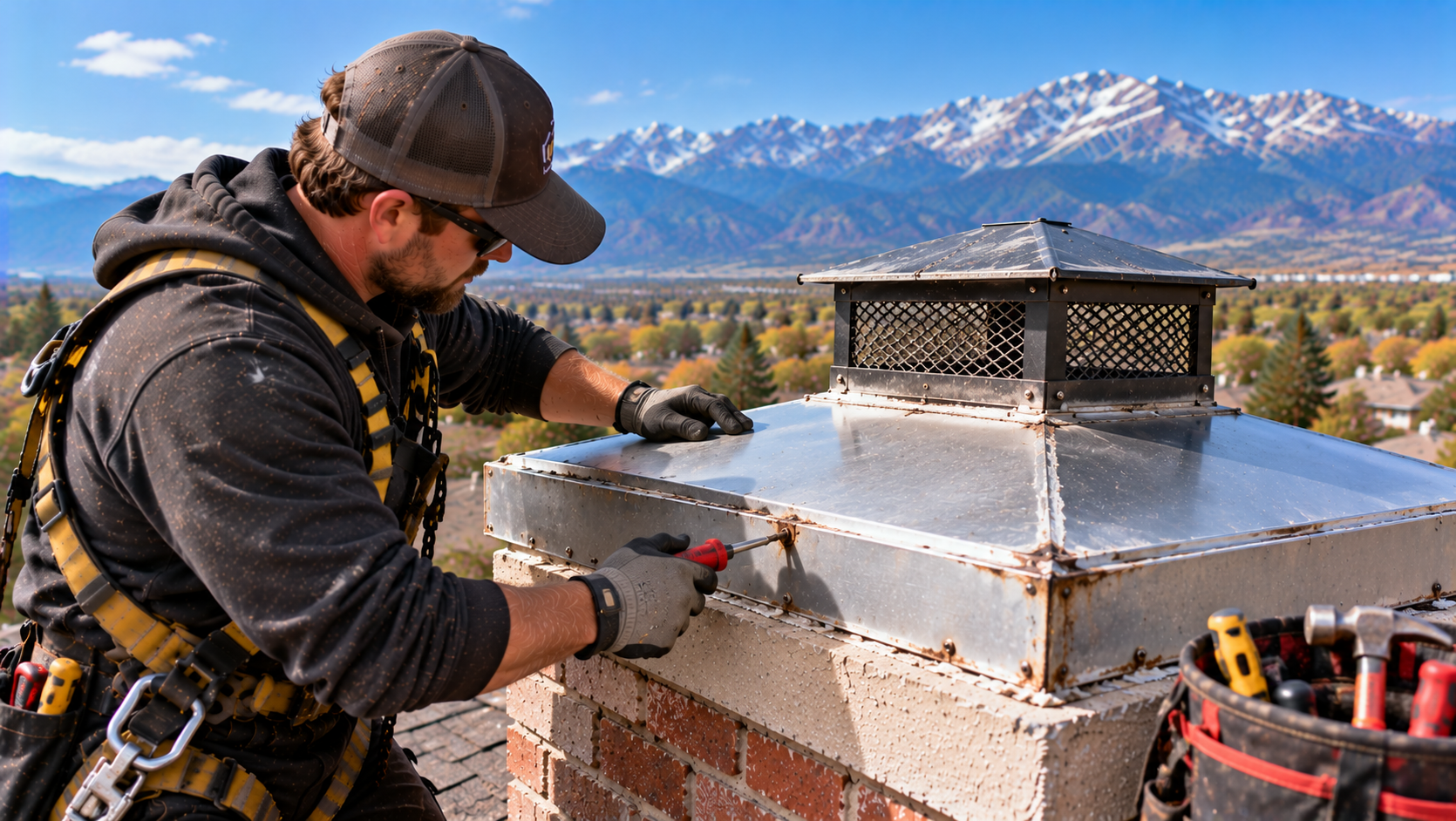
The chimney chase cover is a flat or sloped sheet metal lid that caps the top of a prefabricated fireplace chase. It sits directly exposed to Colorado Springs weather. When it begins to rust, warp, or crack at the flue pipe collar - the opening in the center of the cover through which the metal flue pipe passes - water gets into the chase framing below.
That means rot. That means rust staining on your chase siding - the exterior cladding on the sides of your chimney chase. That means a metallic smell drifting into your living room.
We assess the full scope of damage before touching anything. You find out whether a patch, a re-seal, or a full chimney chase cover replacement in Colorado Springs is the right answer. No guessing. No work scheduled before you understand the scope.
1992-2008Build years worth a look before next winter
Colorado Springs Prefab Homes Make Chase Cover Wear a Local Reality
The north end of Colorado Springs has more aging prefab chase covers per square mile than most technicians see anywhere.
Here's what most homeowners don't realize about chase cover failures in Colorado Springs - the timeline matters more than the damage you can see.
Briargate and Woodmen Hills both saw heavy residential construction through the 1990s and 2000s. Those prefab fireplace systems are now 20 to 30 years old. The original galvanized steel chase covers installed with those homes were not built for multi-decade exposure to Colorado's UV index and freeze-thaw cycle.
Colorado Springs sits at over 6,000 feet elevation. That altitude increases UV radiation intensity significantly. Combined with winters that push metal through repeated freeze-thaw stress, galvanized covers that would last longer at lower elevations are often showing rust perforation - a through-hole in the cover caused by oxidation - within eight to twelve years up here.
If your Briargate or Woodmen Hills home was built between 1992 and 2008, your chase cover is worth a look before next winter.
What Gets Checked When the Technician Gets on the Roof
The damage visible from the ground tells maybe 20% of the story.
A homeowner will call about rust streaks running down the chase siding. That's usually what starts the conversation. The streaks are real evidence - they confirm the cover is oxidizing and that rust water is sheeting down the exterior. But the full picture only shows up at roof level.
Everything found gets documented. You see the scope. Then we talk about what makes sense.
- 1Surface rust or perforationRust spread is mapped - surface oxidation versus confirmed rust perforation are recorded separately.
- 2WarpingWhen the cover has warped away from the chase top, full replacement is the call.
- 3Collar sealantSealant failure at the collar - deterioration of the caulk or flashing collar where the flue pipe exits the chase cover - is a separate failure point from rust perforation. It's responsible for a surprising number of localized leaks in homes where the cover itself looks mostly intact.
- 4The chase top framingWater damage to chase framing, which is structural degradation of the wood framing inside the chase caused by prolonged water entry, changes the repair scope entirely. A rotted chase top needs to be addressed before any new cover goes on.
- 5FastenersFailed fasteners allow cover lift in high wind. Colorado Springs gets gusts above 50 mph - fastener integrity matters.
- 6Rust streaks on the sidingThe streaks are real evidence - they confirm the cover is oxidizing and that rust water is sheeting down the exterior.
You'll Know the Repair-vs-Replacement Answer Before We Start
Knowing the repair vs. replacement threshold upfront protects your budget and your timeline.
Can a rusted chase cover be repaired? Yes, if the rust is surface-level and hasn't perforated the metal. Sheet metal patching - a repair method for small rust areas that haven't yet broken fully through the cover surface - combined with a fresh sealant application can extend the life of a cover that still has structural integrity. That's a real repair option, not a placeholder. When rust perforation is confirmed, when the cover has warped away from the chase top, or when the flue pipe collar seal has failed in multiple locations, patching costs more long-term than installing a properly fitted replacement cover.
The repair vs. replacement threshold - the point at which the extent of rust, warping, or perforation makes patching less practical than full replacement - isn't always obvious from the ground. It requires a roof-level assessment with eyes on the metal directly.
We document that threshold in writing before any work begins. You'll know whether we're patching a section, resealing the collar, or ordering a full replacement cover sized specifically to your chase dimensions.
If replacement is the right call, we'll also tell you what cover material makes sense for your situation. Standard galvanized covers have a shorter lifespan in Colorado Springs given the altitude and UV exposure. Material choice directly affects how long your next cover lasts - that's why we walk you through the options before any decision is made.
Can be repaired
- Rust is surface-level, not perforated
- Sheet metal patching plus fresh sealant
- The cover still has structural integrity
Needs full replacement
- Rust perforation is confirmed
- The cover has warped away from the chase top
- The collar seal has failed in multiple locations
Our Standards for Chase Cover Repair
Every chase cover repair or replacement follows a documented process - no shortcuts on the roof.
- Roof-level condition assessment first: Rust spread, perforation depth, collar seal integrity, and chase top condition all checked and documented before repair begins.
- Sheet metal patching only where viable: Covers with confirmed rust perforation are not patched. If the metal is through, we tell you.
- Collar reseals use elastomeric, UV-rated sealant: Standard caulk fails quickly at Colorado Springs elevation. We use materials rated for UV exposure and temperature extremes.
- Chase top inspection included: Water damage to chase framing is assessed as part of every repair job - not added later as a separate conversation.
- Fastener condition checked and replaced as needed: Failed fasteners allow cover lift in high wind. Colorado Springs gets gusts above 50 mph - fastener integrity matters.
- CSIA-certified technicians on every job: Roof access, chimney system assessment, and repair work all performed by trained, certified crew members.
Replacement covers are sized to the specific chase dimensions - not generic fits that leave gaps at the edges.
Our Chase Cover Repair Process
Diagnostic Phase
We start every chase cover job with a full roof-level assessment - not an estimate from the driveway. The technician accesses the roof safely and inspects the chase cover from above. Rust spread is mapped - surface oxidation versus confirmed rust perforation are recorded separately. The flue pipe collar is checked for sealant failure at the collar. The chase top framing is assessed for water damage where possible. Photo documentation accompanies every diagnostic.
Implementation Phase
Repair scope is confirmed with the homeowner before any work begins. For patch-eligible covers, sheet metal patching is applied to affected areas, followed by a full elastomeric reseal. For collar reseals, old sealant is removed completely, the collar is cleaned, and fresh UV-rated sealant is applied in proper bead width for thermal movement. For replacement jobs, the old cover is removed, the chase top is inspected again with the cover off, and the new cover is fitted and fastened to prevent wind lift.
Post-Service Verification
Every repair gets a visual verification pass before the technician comes off the roof. Sealant coverage is checked at all joints and the collar. Fastener points are confirmed secure. A water test is applied to the collar seal on replacement jobs to confirm no active bypass. The homeowner receives a summary of what was found, what was done, and what to watch for going forward.
Colorado Springs Neighborhoods We Serve
We serve chimney chase cover repair customers across Colorado Springs and the surrounding region.
- Briargate
- Woodmen Hills
- Rockrimmon
- Cimarron Hills
- Falcon
- Black Forest
- Stratmoor
- Security-Widefield
- Manitou Springs
- Fountain
- Monument
- Palmer Lake
- Peyton
- Pueblo
- Canon City
- Castle Rock
- Parker
- Highlands Ranch
- Denver
We regularly work in Briargate, Woodmen Hills, Rockrimmon, Cimarron Hills, Falcon, Black Forest, Stratmoor, Security-Widefield, Manitou Springs, Fountain, Monument, Palmer Lake, and Peyton. We also travel to Pueblo, Canon City, Castle Rock, Parker, Highlands Ranch, and Denver for chase cover repair jobs.
Schedule Your Chase Cover Assessment in Colorado Springs
A roof-level inspection is the only way to know exactly what your chase cover needs.
Call Chimney Sweep Colorado Springs at (720) 505-5030 or email info@chimneysweepscoloradosprings.com to schedule your assessment. You'll get a documented scope - repair or replacement - before any work begins. Our office is at 3595 E Fountain Blvd Suite 108, Colorado Springs, CO 80910.
Frequently Asked Questions
Call and talk to the team directly.
Call (720) 505-5030Cost depends on rust extent, collar seal condition, and whether chase framing damage is found. Call (720) 505-5030 for a roof-level assessment and documented scope before any cost commitment is made.
Surface rust and collar seal failure are invisible from ground level. Rust staining on the chase siding confirms oxidation is happening, but only a roof-level view shows whether the metal has perforated or whether the flue pipe collar has failed. Technicians document both separately before any repair decision is made. Perforation and collar failure require different fixes.
Most patch-and-reseal repairs complete in a single visit. Collar reseals require full removal of old sealant, surface cleaning, and cure time before the fireplace can be used. Full replacement takes longer if the chase top framing shows water damage - that structural issue gets addressed before the new cover goes on.
Confirmed rust perforation means full replacement is the better call. Sheet metal patching only works on surface rust that hasn't broken through the metal. Patching a perforated cover costs more over time than replacing it. The roof-level assessment documents exactly which situation you have before any work is scheduled.
CSIA-certified technicians assess the flue pipe collar, chase framing, and fastener condition - not just the visible metal surface. Roofers typically address water entry at the shingle level, not the chimney system level. Collar seal failure and water damage to chase framing require chimney-specific diagnosis. Every finding is documented in writing before repairs begin.
Chase top framing inspection is included on every visit - not an add-on. Water damage to the wood framing beneath the cover changes the entire repair scope. Installing a new cover over rotted framing fails quickly. Finding that damage before the new cover goes on protects the repair long-term.