Emergency Chimney Animal Removal in Colorado Springs
Species Identified, Legal Status Confirmed & Removal Completed Correctly
Chimney swifts are federally protected - we confirm species before any work begins.
- CSIA-certified technicians
- Species checked first
- Cap installed to stop return entry
You Hear It Before You See It
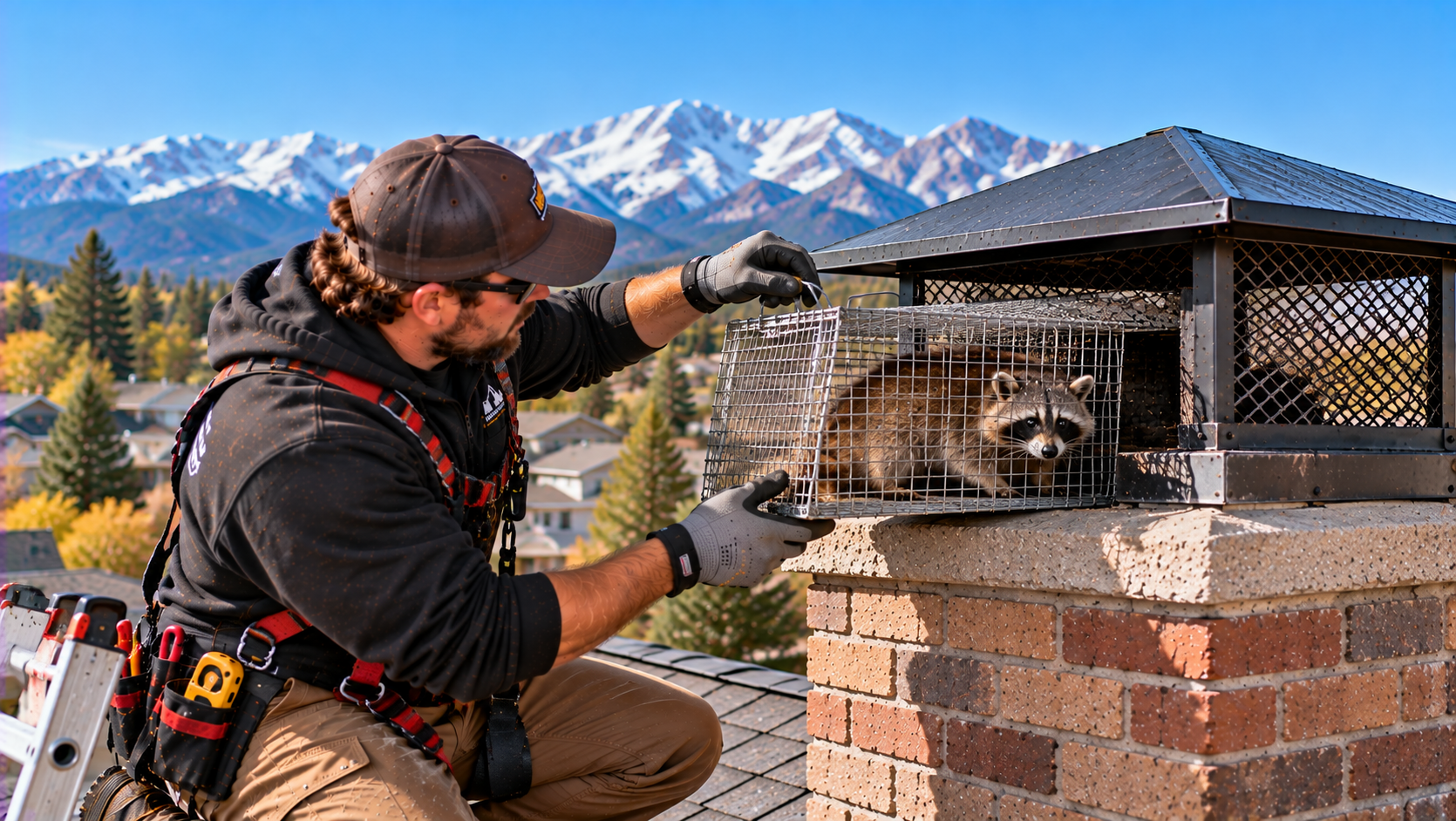
Chimney animal removal starts with correctly identifying what's inside - before anything else happens.
Scratching. Fluttering. A low hum that vibrates through the firebox. Sometimes it's faint at first. Then it gets louder. That's typically how Colorado Springs homeowners discover they have an uninvited resident in the flue.
What most homeowners don't realize about chimney animal situations: the correct response depends entirely on the species. A raccoon with a litter, a chimney swift nest, a paper wasp colony - each one requires a completely different approach. Some require federal legal review before a single piece of nest material gets touched.
Chimney animal removal refers to the identification, safe extraction, and post-removal restoration of a chimney flue after wildlife or insects have entered and nested inside. Done correctly, it ends with a permanent chimney cap or chase cover installation so the problem doesn't repeat.
We handle the full scope: species ID first, legal compliance verified, then removal, nest debris clearing, liner check, and cap installation.
Mid-AugWhen swift fledglings typically leave
Why This Happens More in Colorado Springs
Colorado Springs sits at the edge of open land - and open flues are prime nesting real estate.
Our dispatch location at 3595 E Fountain Blvd puts us close to the neighborhoods where this comes up most: Black Forest, Woodmen Hills, Falcon, and the Pikes Peak foothills communities. These areas back up to open space, pine forest, and rural land. Wildlife pressure on residential structures is higher here than in fully urban neighborhoods.
Chimney swifts (Chaetura pelagica) - a federally protected migratory bird species that nests inside masonry chimney flues - pass through the Colorado Springs region during spring and summer migration. Raccoons and squirrels move into uncapped flues in early spring, ahead of nesting season. Paper wasps build colonies inside chimney chases and flue interiors from late spring through summer.
Open flues also pull a steady draft. That airflow makes them attractive to birds and insects alike. Without a chimney cap - the metal cover fitted over the flue opening that allows exhaust to exit while blocking animal entry - the flue is essentially an open invitation.
What We've Found Inside Colorado Springs Chimneys
Every chimney animal call teaches you something - here's one that covers most of what we see.From our CSIA-certified lead technician
A call came in from a home in Black Forest described as "some kind of bird situation."
- 1Two weeks of chirpingThe homeowner had heard chirping for about two weeks and assumed it would resolve on its own. Opening the cleanout at the base and shining a light up the flue made the problem immediately clear - and it wasn't simple.
- 2Nest debris eight feet upNest debris sat about eight feet up: sticks, leaves, dried grass packed into a partial blockage. Classic nest debris - the organic material deposited inside the flue by nesting animals - that had been building for a full season.
- 3Starlings, not swiftsThe species call mattered enormously here. The sounds had stopped before the visit, which indicated the birds had likely fledged. Confirming this wasn't an active chimney swift situation was required before anything got touched. The nest structure and flue entry point identified European starlings - not protected under the Migratory Bird Treaty Act - so removal could proceed.
- 4Cleared, inspected, documentedWe cleared the nest debris, inspected the liner for cracks and organic staining, and documented the blockage with photos. The flue had developed a partial chimney flue blockage - an obstruction restricting draft and posing a carbon monoxide risk if the fireplace had been lit.
- 5A cap the same dayA stainless steel chimney cap went in the same day.
The homeowner had been about two weeks away from lighting a fire with a blocked, debris-filled flue. The species ID step is the one most people want to skip. We don't.
Chimney Swifts: What Federal Protection Means for Your Removal Timeline
Active swift nests cannot be disturbed - full stop.
The Migratory Bird Treaty Act - federal legislation protecting designated bird species and their active nests from disturbance or removal - makes swift nest removal a federal offense while the nest is active. Chimney swifts (Chaetura pelagica) are federally protected migratory birds that nest exclusively in vertical, dark interior spaces. Masonry flues are ideal habitat.
When our technician confirms an active swift nest, the nest stays in place. What we do instead: document the nest location, advise on the timeline, and schedule a return visit after the fledglings leave - typically by mid-August in the Colorado Springs region. Once the nest is abandoned for the season, we clear the debris and install a chimney cap before the following spring migration window opens.
This is how CSIA-certified work is supposed to be done. Every call gets a species check first.
Active swift nest
- Nest stays in place
- Location documented, timeline advised
- Return visit after fledging, cap before spring migration
Raccoons, squirrels, starlings, wasps
- Removed the same visit in most cases
- All nest debris cleared, liner checked
- Cap installed before we leave
Our Standards for Every Animal Removal Call
Species ID, legal review, full debris clearing - these aren't optional steps.
- Species identification before any disturbance of nest material
- Legal status review for all bird species under the Migratory Bird Treaty Act
- Humane approach for live mammals - squirrels and raccoons handled appropriately
- Paper wasp colony removal handled distinctly from wildlife - a paper wasp colony is a wasp nest built inside a chimney chase or flue, requiring a specialized removal approach separate from standard wildlife extraction
- Complete nest debris clearing after animal extraction - no partial cleanouts
- Chimney liner inspection after removal to assess staining, cracking, or blockage damage
- Chimney cap or chase cover installation as the final step on every removal visit
Complete debris out before cap installation. No partial cleanouts, no deferred steps.
How the Removal Process Works
Diagnostics
We start with a top-down and bottom-up visual inspection. The technician identifies the species, confirms whether a nest is active or abandoned, and determines the legal status of any birds present. Everything is documented before anything is touched. When a camera scan of the flue is needed to locate blockage depth, we run it.
Implementation
For abandoned or non-protected nests: we extract the animal if alive, clear all nest debris from the flue, and confirm the liner is intact. For paper wasp colonies: the colony is treated separately, then the flue is cleared after elimination. For active swift nests: we schedule a return visit post-fledge and cap before the next migration window. For raccoons or squirrels: humane methods, no exceptions.
Post-Service Testing
After debris clearing, we run a draft check to confirm the chimney flue blockage is fully resolved. The liner is inspected visually for staining, cracking, or organic damage. The chimney cap or chase cover goes on, fit and seal confirmed. Before we leave, the flue is clear, capped, and ready for use.
Areas We Serve
We cover the greater Colorado Springs area and surrounding communities.
- Colorado Springs
- Black Forest
- Woodmen Hills
- Falcon
- Monument
- Manitou Springs
- Fountain
- Security-Widefield
- Cimarron Hills
- Rockrimmon
- Briargate
- Stratmoor
- Palmer Lake
- Peyton
- Woodland Park
- Divide
- Pueblo
- Pueblo West
- Canon City
- Castle Rock
- Parker
- Highlands Ranch
We serve Colorado Springs, Black Forest, Woodmen Hills, Falcon, Monument, Manitou Springs, Fountain, Security-Widefield, Cimarron Hills, Rockrimmon, Briargate, Stratmoor, Palmer Lake, Peyton, Woodland Park, Divide, Pueblo, Pueblo West, Canon City, Castle Rock, Parker, and Highlands Ranch. Call us to confirm your zip code.
Get Your Chimney Cleared and Capped Today
One call handles identification, removal, debris clearing, and permanent cap installation.
If you're hearing sounds from your fireplace or chimney, call Chimney Sweep Colorado Springs at (720) 505-5030 or email info@chimneysweepscoloradosprings.com. We'll identify the species, handle removal correctly, and install a cap so it doesn't happen again.
Frequently Asked Questions
Call and talk to the team directly.
Call (720) 505-5030Cost varies by species, nest location, debris volume, and whether a cap installation is included. Our CSIA-certified technicians assess the full scope on the first visit and provide a written estimate before any work begins. Call (720) 505-5030 to describe what you're hearing and get a same-day estimate.
Same-day removal happens in most cases - but not all. Legally protected species like chimney swifts require a confirmed nest-activity check before anything is touched. For raccoons, squirrels, starlings, and wasps, removal, debris clearing, and cap installation typically complete in one visit. Active swift nests stay in place by federal law until fledglings leave.
A top-down visual inspection and camera scan of the flue identifies the species before any work begins. Most cases resolve without opening masonry. The species ID step determines legal status, removal method, and whether same-day action is possible. Nothing gets disturbed until that step is complete.
Removing an active chimney swift nest is a federal offense under the Migratory Bird Treaty Act. Chimney swifts are a federally protected migratory bird that nests exclusively in dark, vertical spaces like masonry flues. CSIA-certified technicians confirm species and legal status before touching any nest material. Skipping that step exposes the homeowner - and the contractor - to federal liability.
Yes - cap installation is the final step on every completed removal visit. Once debris is cleared and the liner is inspected, the stainless steel chimney cap goes on before the technician leaves. A chimney cap is the metal cover fitted over the flue opening that blocks animal re-entry while allowing exhaust to exit. No cap means the problem repeats.
Return entry happens when the cap is skipped or undersized after removal. Our process ends every visit with a fitted, secured chimney cap - not a deferred recommendation. We also inspect the liner for damage after debris clearing, so hidden entry points inside the flue don't go undetected. Debris out, liner checked, cap installed - all three before the job is closed.