
Custom Concrete Chimney Crown Installation in Colorado Springs
Formed Overhang, Drip Edge & Flue Seal Built to Colorado Specs
Concrete mix matched to Pikes Peak freeze-thaw range - not a bag-mix pour
- CSIA-certified technicians
- 2"+ formed overhang
- Three coats of sealer
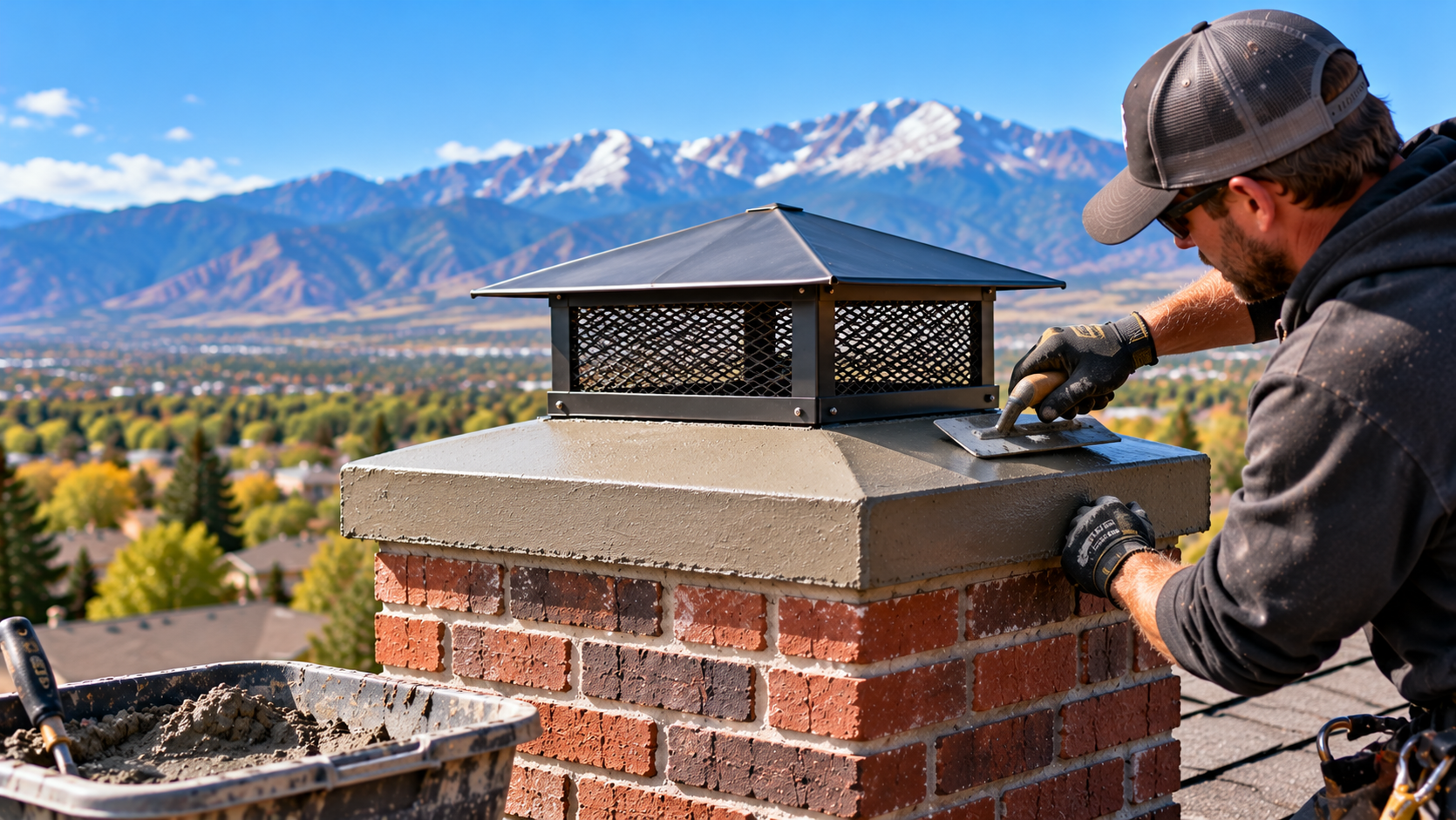
What a Properly Built Crown Actually Looks Like
A correctly formed chimney crown has three features working together at once.
The chimney crown - the solid concrete slab that caps your masonry chimney and surrounds the flue opening - should extend past the outer brick face by at least two inches. That extension is the crown overhang geometry, and it matters more than most homeowners realize. The outer edge carries a drip edge: a small lip built into the form that kicks water clear of the chimney face below.
Then there's the crown-to-flue seal - the joint between the concrete surface and the top of your flue liner tile. That joint has to be flexible enough to handle thermal movement without cracking open during temperature swings.
Most crowns in Colorado Springs were poured without any of this. Flat slabs, no drip edge, minimal overhang. Snowmelt ran straight down the chimney face into the mortar joints just below the crown line. After a few freeze-thaw cycles, that moisture worked into the brick.
That's the architectural problem a new custom concrete chimney crown installation in Colorado Springs is built to solve.
2"+Overhang past the outer brick face
Why Colorado Springs Crowns Take More Punishment Than Most
Altitude and freeze-thaw frequency change what a crown needs to survive.
Our crew dispatches from 3595 E Fountain Blvd and regularly works in Monument, Black Forest, and Woodmen Hills. Those neighborhoods sit higher than the city floor. They see more freeze-thaw cycles per season - not just cold winters, but repeated daily swings in late winter and early spring where temperatures cross the freezing point multiple times a week.
Here's what most homeowners don't realize about concrete at elevation: standard bag mixes aren't specified for this level of freeze-thaw exposure. The water-cement ratio, air-entrainment, and admixture selection all need adjustment for the freeze-thaw range you get at 6,000 to 8,000 feet. A concrete mix specification tuned for these conditions holds up. A generic pour becomes permeable faster and fractures earlier under freeze-thaw stress.
That's not a minor detail. It's the difference between a crown that lasts twenty years and one that's crumbling in eight.
Flat Slab vs. Formed Crown: What the Difference Looks Like in Practice
I've seen both on the same block in Briargate, and again in Rockrimmon. Two chimneys, similar age, different crown geometry.- Chimney Sweep Colorado Springs technician, CSIA Certified
Every flat slab crown tells the same story after a Colorado winter.
The flat slab crown had no overhang to speak of. Water sat on the surface, pooled toward the edges, and ran directly down the brick. The mortar joints in the top two courses were soft. There was staining halfway down the chimney face. The homeowner thought it was an age issue.
The formed crown on the neighboring chimney had a two-and-a-half-inch overhang with a clean drip edge. The brick below it was in excellent shape. Same neighborhood, same winters, better geometry.
- 1OverhangFlat slab: minimal or none. Formed crown: 2"+ past the brick face.
- 2Drip edgeFlat slab: absent. Formed crown: built into the form.
- 3Crown-to-flue sealFlat slab: rigid, often cracked. Formed crown: flexible, movement-tolerant.
- 4Water pathFlat slab: down the chimney face. Formed crown: clear of masonry.
- 5Colorado Springs lifespanFlat slab: 8-12 years typical. Formed crown: 20+ years when properly mixed.
That's what drives the scope of a custom concrete chimney crown installation. We're not just replacing failed material. We're correcting the geometry that caused the failure.

When New Installation Is the Right Call
Repair is only viable when the existing crown has a stable base to bond to.
A lot of homeowners ask about chimney crown repair first. That's reasonable. When freeze-thaw cycling has broken the original pour into multiple sections - or when the overhang geometry was never correct - repair doesn't address the underlying problem.
Here's how we handle that determination: CSIA-certified technicians assess the crown's substrate condition and geometry before recommending anything. If the crown is structurally compromised or the geometry is causing chronic water contact with the upper masonry, we recommend full replacement. We explain exactly what we found and why. No guesswork.
New chimney crown replacement in Colorado Springs is a better long-term investment than repeated patching on a crown that was never built correctly in the first place.
New installation
- Original pour broken into multiple sections
- Overhang geometry was never correct
- Chronic water contact with the upper masonry
Repair
- Only viable when the existing crown has a stable base to bond to
Our Standards for Every Crown We Build
Every pour on every chimney gets the same specification - no shortcuts.
- Concrete mix specification selected for Colorado altitude and freeze-thaw range
- Crown overhang geometry measured and confirmed before formwork is set - minimum 2" past the outer brick face
- Drip edge profile built into every form, not added as an afterthought
- Crown-to-flue seal applied with a flexible, waterproof material that allows thermal movement
- Surface slope confirmed to direct water toward the drip edge on all sides
- Chimney cap integration verified before cap is reinstalled - new crown geometry affects cap fit
- CSIA-certified review at each stage: assessment, form check, and post-cure inspection
Three coats of surface sealer on every completed crown. Not two.
How We Execute a Custom Crown Installation
Diagnostics First
Assessment starts at the top, not at the problem you can see from the ground. We access the crown directly and evaluate the existing slab's condition, overhang measurement, drip edge status, and crown-to-flue seal integrity. We check the upper masonry courses for moisture absorption and mortar softening. This gives us an accurate picture of what geometry correction is needed.
Setting the Form
Formwork is set and confirmed before any concrete is mixed. The old crown is removed and the chimney top is prepped. Forms are built to the correct overhang dimension for this chimney's specific footprint. The concrete mix specification is confirmed for altitude and freeze-thaw performance. The pour is placed, struck, and finished with a slope that carries water toward the drip edge on all four sides.
Post-Pour Inspection
The crown doesn't leave our hands until the cure is verified. Cure time is respected before cap reinstallation - rushing that step is how crowns crack early. We inspect the crown-to-flue seal, confirm the drip edge profile is clean and unobstructed, and reinstall the chimney cap. We verify cap integration so the cap seats correctly on the new geometry.
Areas We Serve in and Around Colorado Springs
We serve the full Greater Colorado Springs area and surrounding communities.
- Colorado Springs
- Monument
- Black Forest
- Woodmen Hills
- Briargate
- Rockrimmon
- Falcon
- Manitou Springs
- Fountain
- Security-Widefield
- Cimarron Hills
- Stratmoor
- Palmer Lake
- Pueblo
- Castle Rock
- Parker
- Highlands Ranch
Our crews cover Colorado Springs, Monument, Black Forest, Woodmen Hills, Briargate, Rockrimmon, Falcon, Manitou Springs, Fountain, Security-Widefield, Cimarron Hills, Stratmoor, and Palmer Lake. We also serve Pueblo, Castle Rock, Parker, Highlands Ranch, and the broader Pikes Peak Region. Call to confirm service to your specific address.
Ready to Schedule Your Crown Assessment?
A new concrete chimney crown is one of the highest-return upgrades on a masonry chimney.
Correct overhang geometry and a drip edge protect the crown-to-flue seal, the upper mortar joints, and the brick courses below - all in one installation. Call us at (720) 505-5030 or email info@chimneysweepscoloradosprings.com to schedule your assessment. We'll confirm whether new chimney crown replacement in Colorado Springs is the right call before any work begins.
Frequently Asked Questions
Call and talk to the team directly.
Call (720) 505-5030Specific pricing requires an on-site assessment, as crown cost varies by chimney footprint, overhang dimension, and concrete mix specification required. Larger chimneys and altitude-adjusted mixes affect material and labor time. Call (720) 505-5030 for an accurate estimate after assessment.
Most installations are completed in one day, but cap reinstallation happens after cure time is respected. Rushing the cure is how crowns crack early. Our CSIA-certified technicians confirm the surface is fully cured before any cap goes back on - that step can add one to two days depending on temperature.
Standard bag mixes aren't specified for Colorado's freeze-thaw range. At 6,000 to 8,000 feet, water-cement ratio and air-entrainment need adjustment. A generic pour becomes permeable faster and fractures earlier under repeated freeze-thaw stress. Our concrete mix specification is selected specifically for Pikes Peak region conditions - not the same formula used at lower elevations.
A formed crown includes a built-in drip edge and a minimum two-inch overhang past the brick face. Flat slabs have neither. Water on a flat slab runs straight down the chimney face into the mortar joints below. A formed crown kicks water clear of the masonry entirely - that geometry difference determines how long your upper brick stays intact.
Yes - the crown-to-flue seal is applied during every new installation, not left from the old pour. That joint must allow thermal movement without cracking open. We use a flexible, waterproof material at every crown-to-flue seal joint. A rigid seal at that connection is a common failure point on older crowns across Colorado Springs.
Adding a drip edge or overhang to an existing flat slab isn't structurally viable - the bond between new and fractured concrete won't hold through a Colorado freeze-thaw season. If the current crown is broken into sections or the geometry was never correct, full replacement is the right call. Our technicians assess substrate condition first and explain exactly what they find before recommending anything.