
Chimney Liner Installation & Relining in Colorado Springs
Liner Type Selected, Sized for Altitude & Installed to NFPA 211
Flue diameter calculated at 6,035 ft - not a sea-level default
- CSIA-certified technicians
- Installed to NFPA 211
- Draft tested, not assumed
Your Chimney Liner Is the System - Everything Else Supports It
A functioning chimney liner is what separates a safe fire from a carbon monoxide risk.
The liner - whether it's a stainless steel flexible liner, a cast-in-place liner, or the original clay tile flue liner - is the only barrier between combustion gases and your living space. Combustion gas containment is the liner's primary job: keeping carbon monoxide, smoke, and byproducts moving up and out, not sideways into your home.
When that liner cracks, separates, or degrades, the fireplace can still draw. Fires still light. Nothing looks wrong from the firebox. That's what makes liner failure so easy to miss without a camera inspection. Chimney liner installation in Colorado Springs isn't just a repair - it's restoring the one component your entire chimney system depends on.
6,035 ftWhere your flue size gets calculated
Colorado Springs' Elevation and Freeze-Thaw Pattern Make Liner Condition Critical
Liner failure happens faster here than in most other parts of the country.
Here's what most homeowners don't realize about chimneys in Colorado Springs: the freeze-thaw cycle attacks from outside the flue while combustion gases work on it from inside. Clay tile flue liners - installed in most homes built between the 1950s and 1980s - sit behind masonry that contracts and expands through dozens of freeze cycles per year at this elevation. Mortar joints between tile sections crack open over time. Once a joint opens, combustion gases migrate through it.
At 6,035 feet, high-altitude draft calculation also matters. Thinner air produces less natural draft than a sea-level chimney of the same dimensions. A liner that's even slightly oversized for its appliance can produce sluggish draft, incomplete combustion, and faster creosote buildup. That's a compounding problem - and it starts with flue sizing, not just liner material.
Homes in Divide, Woodland Park, and Cripple Creek sit even higher. Liner sizing adjustments at those elevations are more significant, not minor.
What We Found in a Black Forest Home - and Why Liner Type Matters
The wrong liner for an appliance creates a new problem even when it's brand new.Field account from the Chimney Sweep Colorado Springs technical team
We were called out to a Black Forest property after the homeowner's inspection flagged a deteriorated clay tile liner in a chimney that vented a gas insert.
- 1An 8-inch flue for a 5-inch ventThe existing liner was a standard 8-inch clay tile flue. The insert manufacturer spec'd a 5-inch vent. That gap matters enormously.
- 2Exhaust cooling too fastWhen a gas appliance vents through an oversized flue, the exhaust cools too quickly before it exits. Cooled exhaust from a gas appliance is acidic. It condenses on the liner walls and accelerates deterioration - especially in the upper sections of the flue where temperatures drop fastest. This chimney had a newer insert but a flue that was failing faster because of the size mismatch.
- 3A 5-inch stainless flexible linerWe installed a 5-inch stainless steel flexible liner - a corrugated stainless liner routed through the existing flue without demolition - sized to match the insert's BTU output and flue height.
- 4Collar to capThe liner ran from the appliance collar to a new rain cap above the crown.
- 5Tested, not assumedThen we ran a combustion gas test at the appliance. Draft was measured. Exhaust temperatures at the cap were within spec.
A flexible chimney liner in Colorado Springs can't just be cut to length and dropped in. Liner diameter is calculated - BTU output, appliance type, flue height, and elevation all go into that number. Get the sizing wrong and you've installed a new liner that still performs like a failing one. That's the difference between liner installation done by calculation and liner installation done by guesswork.
Stainless Steel, Cast-in-Place, or Clay Tile - How We Select Your Liner
Every liner recommendation is matched to your appliance, your flue, and your elevation.
The most common question after an inspection that recommends relining is: "Which liner do I need?" The answer isn't one-size.
Clay tile liner replacement is handled when the existing tile has failed and the flue dimensions are correct for the appliance. In some cases, relining over the tile is the right approach. In others, the tile comes out.
All of these are governed by NFPA 211 liner standards - the national standard that defines liner material, sizing, and installation requirements. Our CSIA certification means our technicians are trained on those standards and apply them to every liner recommendation.
Stainless steel flexible
- Right call for most gas inserts, wood stoves, and retrofits
- Routes through the existing flue without opening the masonry
- Sized to the appliance, insulated when needed
Cast-in-place
- Poured insulating liner, formed with an inflated form
- For flues with significant structural irregularities
- Seamless flue that can stabilize a compromised chimney
Our Standards for Chimney Relining in Colorado Springs
Every liner we install meets NFPA 211 and is sized for Colorado's elevation and your specific appliance.
- Liner diameter calculated from BTU output, flue height, and elevation - not a standard table
- Stainless liners sourced in 316-alloy or 304-alloy stainless, with the alloy matched to the fuel the appliance burns
- Insulation wrap installed where appliance type or flue geometry requires it
- Top termination (rain cap, chimney cap) included and properly secured
- Draft tested after installation - not assumed
- NFPA 211 compliance confirmed before job is closed
- Camera documentation of the completed liner available on request
We don't close the job until draft is confirmed.
How a Chimney Liner Installation Appointment Works
Camera Inspection and Diagnostics
The appointment starts with a camera inspection before anything else is ordered. A video camera runs the full length of the flue. We document existing liner condition, flue dimensions, offset angles, and the current appliance connection. Flue sizing is confirmed from that data - not from a visual estimate. If the appliance specs are available, we pull them. If not, we read the BTU input directly from the unit's data plate.
Liner Installation
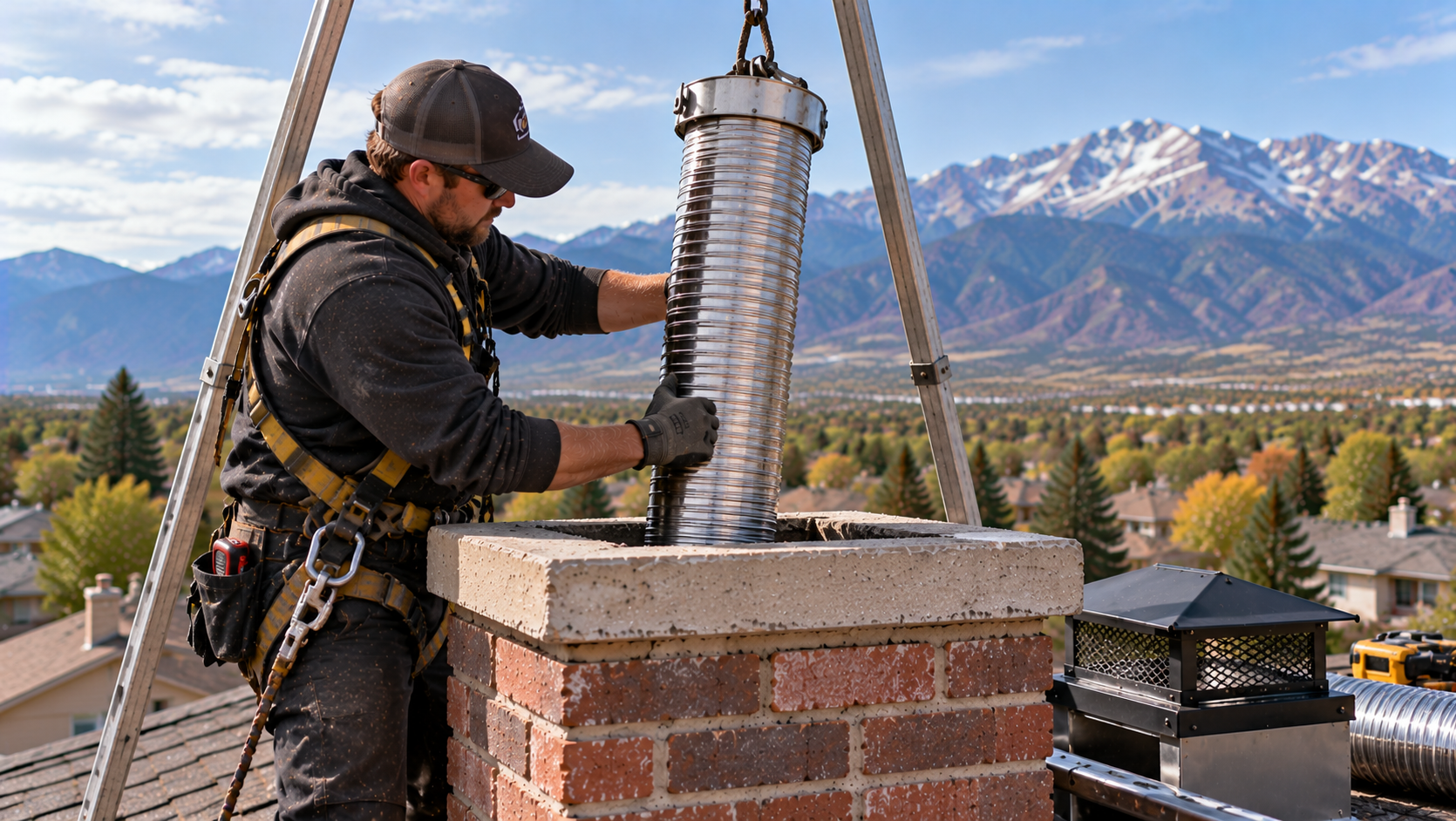
Liner installation is a contained process - usually completed in a single visit. The liner assembly is built at the chimney top and lowered through the flue. For flexible stainless liners, the assembly includes the liner itself, a top plate that seals the flue at the crown, and insulation wrap when required. Connection to the appliance collar is made at the firebox end. Penetrations are sealed. The cap is set. No masonry is opened in a standard flexible liner installation. Cast-in-place liner work follows a different process - the form is inflated inside the flue, material is poured from above, and cure time is required before the appliance can be used.
Post-Installation Testing
After the liner is connected and the appliance is running, we measure draft at the appliance and check exhaust temperature at the cap. Both need to be within the expected range for the fuel type and appliance output. A thermal camera pass on the exterior chimney confirms there's no heat migration through the masonry. Documentation is left with the homeowner.
Neighborhoods and Communities We Serve
We install chimney liners across Colorado Springs, the Pikes Peak region, and the greater metro.
- Colorado Springs
- Manitou Springs
- Rockrimmon
- Briargate
- Black Forest
- Falcon
- Fountain
- Monument
- Palmer Lake
- Woodland Park
- Divide
- Cripple Creek
- Pueblo
- Castle Rock
- Parker
- Denver
Our crews serve Colorado Springs, Manitou Springs, Rockrimmon, Briargate, Black Forest, Falcon, Fountain, Monument, Palmer Lake, Woodland Park, Divide, and Cripple Creek. We also cover Pueblo, Castle Rock, Parker, and Denver. If you're in the greater Colorado Springs area, we come to you.
Ready for a Liner That's Built for This Elevation?
A properly sized, properly installed chimney liner is what makes every other chimney component work.
Stainless, cast-in-place, or tile - we select the right liner for your appliance and your flue. Call (720) 505-5030 or email info@chimneysweepscoloradosprings.com to schedule your inspection. We'll start with a camera run, give you a clear recommendation, and install to NFPA 211 from the first connection to the cap.
Frequently Asked Questions
Call and talk to the team directly.
Call (720) 505-5030Pricing varies by liner type (stainless flexible or cast-in-place), flue length, and whether insulation wrap is required. Elevation-specific sizing adds a calculation step that affects material selection before any number is final. Call (720) 505-5030 for a quote after your camera inspection.
Your appliance type and flue condition determine the liner. A gas insert venting through an oversized clay tile flue needs a sized-down stainless flexible liner. A flue with significant structural irregularities needs a cast-in-place liner instead. We confirm the recommendation from camera footage and your appliance's BTU data plate - not a visual estimate from the firebox.
Yes - elevation directly affects liner diameter. At 6,035 feet, thinner air produces less natural draft. An oversized liner at this altitude causes exhaust to cool too fast, creating acidic condensation and faster creosote buildup. Liner sizing here follows a high-altitude draft calculation, not a standard sea-level table.
Most stainless flexible liner installations complete in a single visit. The camera inspection, liner assembly, connection to the appliance collar, and draft testing all happen the same day. Cast-in-place liner work requires cure time before the appliance can be used, so that process spans more than one visit.
Draft is measured at the appliance and exhaust temperature is checked at the cap before the job closes. Both readings must fall within the expected range for your fuel type and appliance output. A thermal camera pass on the exterior chimney confirms no heat is migrating through the masonry around the new liner.
Yes - standard flexible stainless liner installation requires no masonry demolition. The liner assembly is lowered through the existing flue from the chimney top. Penetrations are sealed, the cap is set, and the firebox connection is made from inside. The chimney exterior stays intact throughout the entire process.