
Top-Sealing Damper Installation in Colorado Springs
Top-Sealing Damper Installed and Tested Before Winter's First Cold Snap
Cable control routed and tested inside the firebox before we leave
- CSIA-certified technicians
- Sized to your flue
- Seal tested on install day
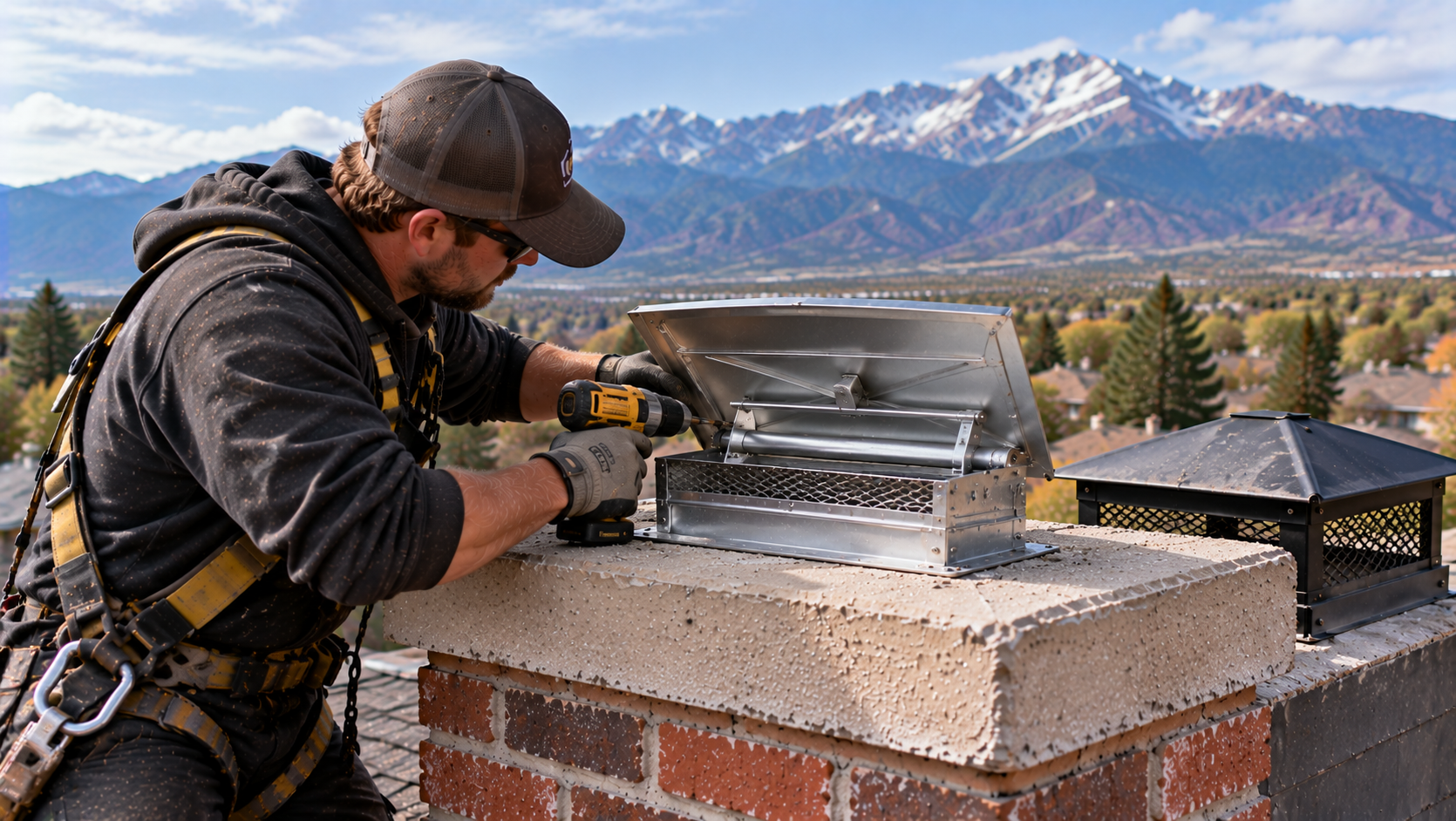
What a Top-Sealing Damper Actually Does for Your Home
A top-sealing damper closes your flue at the chimney top - not just at the firebox.
That distinction matters more than most homeowners expect. A top-sealing damper is a damper mounted at the very top of the chimney that seals the entire flue opening with a rubber gasket when closed. The result: no outside air enters the flue column at all. When it's open, it operates like any damper. When it's closed, the seal is at the source - right where cold air tries to enter.
Compare that to a throat damper - the traditional cast-iron or steel damper located just above the firebox opening. It seals at the bottom of the flue, leaving the entire column of air above it exposed to outside temperature. Even a throat damper in perfect condition can't change that. Every hour your fireplace sits unused, that open column above the throat acts as a direct exchange point between outside cold and your heated interior.
A top-sealing damper removes that exchange entirely.
Nov-MarOvernight lows below freezing are routine
Colorado Springs Winters Make Flue Sealing a Real Energy Issue
Cold air infiltration through an open flue column is a measurable heat loss source in Colorado Springs.
Sustained overnight lows below freezing are routine from November through March here. October and April can drop hard too - sometimes without warning. That temperature pattern creates a specific and persistent problem for homes with failing or unupgraded throat dampers.
Here's what most homeowners don't realize about cold drafts near the fireplace: that chill near the firebox opening often isn't a window or door issue. It's flue column heat loss - the energy lost when a column of cold outside air occupies the flue during non-use. Cold air doesn't sit politely inside the flue. It migrates. It pulls down into the firebox and radiates outward into the living space.
Our crews serve the full Pikes Peak region, including Monument, Palmer Lake, and Woodmen Hills - neighborhoods where elevation adds wind exposure and makes an uninsulated open flue column harder on your heating system. Properties along the I-25 corridor from Colorado Springs toward Castle Rock see consistent winter wind pressure that can amplify draft reversal through a poorly sealed flue.
Top-sealing damper installation in Colorado Springs isn't a luxury upgrade. In this climate, it's a straightforward fix for a real energy problem.
A Cold Draft That Turned Out to Be the Damper
This situation comes up more than most homeowners expect - and the diagnosis usually points to the damper.
A homeowner in Briargate called us after a cold winter. She'd had a weatherstripping company out twice. They found nothing significant. She was still feeling cold air near the fireplace wall every morning, even with the gas heat running overnight.
- 1A warped throat damperWhen our technician inspected her fireplace and chimney, the issue was immediately clear. She had a standard throat damper - the original cast-iron unit from when the home was built. It was warped along one edge. Not broken. Not stuck open. Just warped enough that it no longer compressed flush against the seat. That small gap was enough.
- 2The cold column above itEven if that throat damper had been sealing perfectly, the flue above it would still have been sitting open to outside air. The entire flue column above it - several feet of cold air sitting in a vertical shaft - was still in direct contact with outside temperature at the top. The cold she was feeling wasn't just coming through the warped damper. It was also radiating from that cold air mass sitting above it all night.
- 3Sized to her flueWe installed a top-sealing damper sized to her specific flue opening. The rubber gasket seal seated flush on the first test.
- 4Cable to the fireboxCable actuation routed clean inside the firebox.
- 5Seal integrity testWe ran the damper seal integrity test before closing up - pressed the damper closed, assessed the flue from below for any bypass draft around the unit.
She called two weeks later. The cold spot near the fireplace was gone. Her heating bill for that month came in noticeably lower. That's the straightforward outcome of sealing the flue at the source - not just at the throat.
Your Installation Is Verified Before We Leave
Every top-sealing damper installation includes a damper seal integrity test - that's not optional, it's the standard.
A damper seal integrity test is the verification step performed after installation to confirm the damper closes flush and no bypass draft exists around the unit. In Colorado Springs, where wind pressure differentials are real and frequent, a small gap around the damper is enough to let cold air in. We test for it before we pack up.
Here's how we handle the sizing question: the damper is measured and fitted to your specific flue opening at the chimney top. Not to a standard-size bracket that "probably fits." To your flue. That matters because chimney dimensions vary - even within the same neighborhood, the same builder, the same decade of construction. A damper that doesn't seat perfectly against the flue opening will not pass the seal test. We don't leave until it does.
The cable actuation system - the stainless steel cable and latch mechanism used to open and close the damper from inside the firebox - is also routed and secured before we finish. It needs to operate cleanly without interfering with fire building or cleaning access. That routing step determines whether you'll actually use the damper correctly every time.
Measured to your flue
- Fitted to your specific flue opening
- Seats flush against the flue
- Passes the seal test before we leave
Standard-size bracket
- "Probably fits"
- Doesn't seat perfectly
- Won't pass the seal test
Our Installation Standards for Top-Sealing Dampers
Every installation follows a fixed standard - not a "good enough" threshold.
- Damper sized to the specific flue opening, measured at the chimney top before ordering
- Rubber gasket seal inspected for condition before installation begins
- Cable actuation system routed inside the firebox for clean, unobstructed operation
- Damper seated and closed on installation day - not assumed to seal, tested to seal
- Flue assessed from below during seal test for any bypass draft around the unit
- CSIA-certified technician on every installation - not a general handyman assignment
- All work documented so you have a record for future inspections or home sale disclosure
One detail worth knowing: the rubber gasket seal on a top-sealing damper is rated to maintain seal integrity through Colorado's temperature swings - from single-digit overnight lows to 70-degree spring afternoons. That range of thermal cycling would destroy a poor-quality seal within a season or two. We use dampers built for that kind of temperature variation.
How the Installation Works, Start to Finish
Chimney Top Assessment
We start at the chimney top. The flue opening is measured directly - width, depth, and the condition of the existing flue liner and crown edge where the damper will seat. We also check the existing throat damper situation. If there's a throat damper in place, we address the cable routing so both aren't in conflict. Most installs in Colorado Springs involve removing or pinning open the old throat damper so it doesn't interfere with operation. We also assess for stack effect - the natural tendency for a tall column of air inside a building to rise and exit at the top. If your home has a strong stack effect, the installation may involve a short conversation about ventilation balance. That's rare, but it comes up in tighter, newer construction sometimes.
Installation and Cable Routing
The damper is set at the flue top and secured to the flue tile or liner. The cable runs down the inside of the flue and enters the firebox where it connects to a latch bracket mounted inside. That bracket position matters. It needs to be accessible when you're loading wood, adjusting logs, or reaching in for cleaning. We position it so it's functional without being in the way.
Seal Verification Before We Leave
Once the cable is secured and the damper operates correctly - open and close tested from inside the firebox - we run the seal integrity test. The damper is pressed fully closed. We assess airflow from below. If there's any bypass draft around the unit, we identify where and address it before finishing. A damper that passes the seal test on installation day performs reliably through the Colorado heating season.
Areas We Serve in and Around Colorado Springs
We install top-sealing dampers across the greater Colorado Springs area.
- Colorado Springs
- Manitou Springs
- Fountain
- Security-Widefield
- Rockrimmon
- Briargate
- Cimarron Hills
- Woodmen Hills
- Monument
- Palmer Lake
- Black Forest
- Falcon
- Peyton
- Pueblo
- Pueblo West
- Canon City
- Woodland Park
- Divide
- Castle Rock
- Parker
- Highlands Ranch
- Aurora
- Littleton
- Centennial
Our crews reach Colorado Springs, Manitou Springs, Fountain, Security-Widefield, Rockrimmon, Briargate, Cimarron Hills, Woodmen Hills, Monument, Palmer Lake, Black Forest, Falcon, and Peyton. We also serve Pueblo, Pueblo West, Canon City, Woodland Park, Divide, Castle Rock, Parker, Highlands Ranch, and the Denver metro including Aurora, Littleton, and Centennial.
Ready to Seal Your Flue and Stop the Cold Draft?
Top-sealing damper installation in Colorado Springs starts with a measurement - call us to schedule.
We size the damper to your flue, route the cable clean, and verify the seal before we leave. That's the full installation - no follow-up required to confirm it worked. Call Chimney Sweep Colorado Springs at (720) 505-5030 or email info@chimneysweepscoloradosprings.com to schedule.
Frequently Asked Questions
Call and talk to the team directly.
Call (720) 505-5030Pricing range for top-sealing damper installation is not published - call (720) 505-5030 for a current quote. Pricing varies by flue size, since each damper is measured and ordered for your specific opening. A correctly sized unit that passes the seal integrity test on installation day costs less than repeated heating bills from an unsealed flue.
Most top-sealing damper installations are completed in a single visit. The technician measures the flue top, sets the damper, routes the cable inside the firebox, and runs the seal integrity test - all before leaving. No second appointment is needed to confirm the seal worked.
A functioning throat damper still leaves the entire flue column above it exposed to outside air. That column holds cold air all winter, even when the throat damper is closed tight. A top-sealing damper closes the flue at the chimney top, eliminating that cold air column entirely. The throat damper's condition is separate from the heat loss problem.
Every installation includes a damper seal integrity test run before the technician leaves. The damper is sized to your specific flue opening - not assumed to fit. CSIA-certified technicians handle every job. A handyman install with no seal verification leaves you unable to confirm the damper is actually stopping draft bypass.
You don't need to remove the old throat damper yourself. During installation, the technician addresses the existing throat damper - pinning it open or removing it so it doesn't interfere with cable routing or operation. That step is part of the installation sequence, not a separate job.
Yes. The rubber gasket seal on a top-sealing damper is rated for wide temperature variation. Colorado Springs temperatures can swing from single-digit overnight lows to 70-degree afternoons in the same week. Dampers used in these installations are selected specifically for that thermal cycling range. A low-grade gasket would fail within one or two heating seasons under those conditions.