
Custom Copper Chimney Pots in Colorado Springs
Improve Draft and Add Lasting Character to Your Colorado Springs Chimney
Copper develops its patina slowly in Colorado's dry climate - stays bright for years
- CSIA-certified technicians
- Measured to your flue
- Stock or custom-fabricated
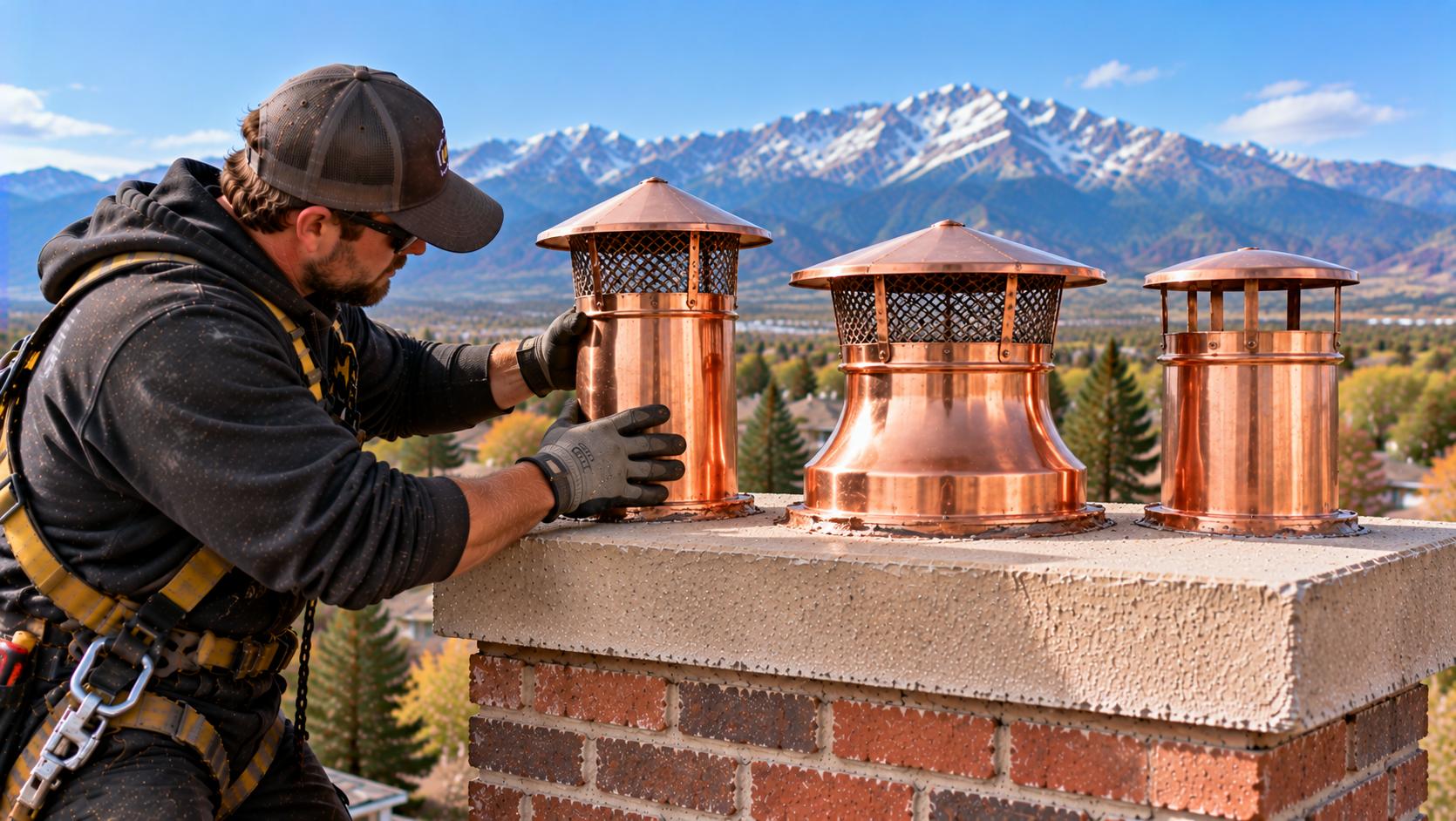
Custom Copper Chimney Pots Serve Two Jobs at Once
A copper chimney pot improves draft and protects your flue - while looking exceptional doing it.
A chimney pot - a cylindrical or tapered metal extension placed directly over the flue opening - does something a standard cap cannot. It extends the effective height of the flue stack. That added height amplifies the stack effect: the pressure differential between warm interior air and cooler outside air that pulls combustion gases up and out. More height means stronger pull. Stronger pull means cleaner draws.
And copper? In Colorado's high-altitude, UV-intense climate, raw copper holds its bright orange-red tone far longer than it would on a coastal property. Humid air speeds oxidation. Colorado's dry climate slows it. The copper patina - the natural blue-green color that develops as copper oxidizes - takes years to fully settle here. For homeowners who want that warm metallic finish to last, Colorado is actually the right place for it.
6,035 ftColorado Springs elevation
Why Colorado Springs Properties Are Well-Suited for Chimney Pot Installation
Older masonry chimneys in Colorado Springs are exactly what copper chimney pots were designed for.
Properties in Manitou Springs and Old Colorado City - some of the oldest residential masonry in the greater Colorado Springs area - often have wide, exposed flue openings at the chimney top. These chimneys were built before standard cap hardware became common. On windy Front Range days, an uncapped or flat-capped flue can pull outside air down instead of letting combustion gases exit cleanly.
Here's what most homeowners don't realize about Front Range wind patterns: wind doesn't blow in a single horizontal direction across a roofline. It swirls. It drops. Around chimney stacks, that turbulence creates negative pressure at the flue opening. A chimney pot's tapered geometry redirects that swirling air upward - turning wind that would otherwise push back down the flue into additional draft pressure.
Around the Broadmoor area and the older neighborhoods near Monument Valley Park, the combination of elevation and exposed ridgeline position makes chimney pot performance measurable, not just decorative.
How Sizing Makes or Breaks a Chimney Pot Installation
A chimney pot only improves draft when its dimensions match the flue opening diameter exactly.
The flue opening diameter - the inside measurement of your flue at the chimney top - is the primary sizing variable for any chimney pot. This isn't an approximation. A pot that's too wide for the flue creates an airflow gap at the base. Outside air pulls in around the edges, which undercuts the stack effect instead of supporting it.
- 1Two inches off at the baseWe've measured pots on Colorado Springs properties that looked right from the street but were oversized by two inches at the base. The homeowner contacted us because the fireplace was still smoking on windy evenings.
- 2Floating, not seatedWhen we measured the flue opening and compared it to the pot's internal diameter, the mismatch was immediate. The geometry was wrong. The pot wasn't seating flush against the flue liner at the top - it was floating above it.
- 3Measured, then replacedWe pulled the pot, measured the actual flue opening diameter, and sourced a replacement sized to those exact dimensions.
- 4At least 12 inches tallWe also evaluated the pot height relative to the chimney's overall stack height. For this particular chimney - a two-story structure in Old Colorado City - we needed a pot with a minimum 12-inch height to meaningfully extend the draft column. The replacement seated flush, the height was correct, and the draw problem resolved.
Custom fabrication - producing a chimney pot to specific non-stock dimensions - is the right call when the flue geometry or the roofline aesthetic doesn't match standard product ranges. It's not always necessary. But when it is, the result is a pot that functions rather than just sits there.
Chimney Pot vs. Chimney Cap - Here's the Actual Difference
A chimney pot and a chimney cap are not the same product and don't serve the same purpose.
This comparison matters because homeowners often ask whether they need one or the other.
If your primary goals are animal exclusion and basic rain protection, a standard cap handles that. If your goals include draft improvement and a visual statement that works with a period masonry chimney, a copper chimney pot is the correct specification. Some installations use both - a pot for draft and height, with a mesh spark arrestor installed inside the pot base.
We confirm which approach is right for your chimney before any hardware is ordered.
Copper chimney pot
- No solid lid - geometry deflects rain
- Airflow path completely unobstructed
- Extends the flue height for stronger draft
Standard chimney cap
- Solid metal lid blocks rain and debris
- Mesh sides block animals
- Practical for most chimneys, no added height
Our Standards for Copper Chimney Pot Sourcing and Installation
Every copper chimney pot we install is matched to the chimney before it's sourced or fabricated.
- Flue opening diameter confirmed by direct measurement at the chimney top
- Pot height selected based on stack height and draft requirements - not aesthetics alone
- Copper gauge evaluated for Colorado's freeze-thaw cycle and UV exposure
- Base seating method confirmed before installation - mortar bed, lead wedge, or mechanical anchor depending on the chimney top condition
- Rain exclusion geometry verified: pot geometry must deflect water away from the open flue center
- Chimney crown condition assessed before installation - a cracked or deteriorating crown affects how the pot seats and seals
Three coats of sealant where the pot base meets the crown. Not one, not two.
Execution Protocol: Chimney Pot Sizing, Sourcing & Installation
Chimney Top Diagnostics
We access the chimney top and measure the flue opening diameter directly. We also assess the chimney crown - the concrete or mortar cap that surrounds the flue opening. If the crown is cracked or deteriorating, we note it. A compromised crown affects how the pot seats. We document overall stack height and note any architectural features - corbels, existing chimney caps, decorative brick profiles - that affect installation approach.
Sourcing and Installation
Based on the measurements, we confirm the correct pot dimensions. If a standard-stock copper pot fits, we source it. If the flue geometry or aesthetic requirements fall outside standard sizes, we initiate custom fabrication. Installation anchors the pot using the method best suited to the crown material and condition. We ensure the base sits flush - no gaps, no airflow bleed at the perimeter. Sealant is applied at the base joint.
Post-Installation Verification
After installation, we evaluate the visible draft column under ambient conditions where possible. We confirm the pot's geometry is oriented correctly relative to the prevailing wind direction on that roofline. Before leaving, we photograph the completed installation for documentation.
Areas We Serve in and Around Colorado Springs
We install custom copper chimney pots throughout the greater Colorado Springs area.
- Manitou Springs
- Old Colorado City
- The Broadmoor
- Rockrimmon
- Briargate
- Falcon
- Black Forest
- Monument
- Woodland Park
- Pueblo
- Pueblo West
- Castle Rock
- Parker
- Denver
- Aurora
- Centennial
Our service area includes Manitou Springs, Old Colorado City, the Broadmoor, Rockrimmon, Briargate, Falcon, Black Forest, Monument, Woodland Park, Pueblo, Pueblo West, Castle Rock, Parker, and the broader Pikes Peak Region. We also serve Denver, Aurora, Centennial, and surrounding Front Range communities.
Ready to Add a Copper Chimney Pot to Your Colorado Springs Chimney?
We size, source, and install copper chimney pots that work - and look the part for decades.
Call us at (720) 505-5030 or email info@chimneysweepscoloradosprings.com to schedule a chimney top measurement and sizing consultation. Tell us your chimney type and we'll confirm dimensions before anything is fabricated or ordered.
Frequently Asked Questions
Call and talk to the team directly.
Call (720) 505-5030Pricing for copper chimney pot fabrication, sourcing, and installation varies based on flue dimensions and whether custom fabrication is required. A sizing consult is part of the process. Call (720) 505-5030 for a measurement-based estimate before any fabrication is ordered.
A correctly sized chimney pot improves draft by extending the effective flue height. That added height strengthens the stack effect - the pressure differential that pulls combustion gases upward. Decorative value is real, but it's secondary. If the pot dimensions don't match the flue opening diameter, draft performance won't improve regardless of how the pot looks.
Most installations complete in a single visit once sizing is confirmed. The first step is a chimney top measurement - that takes roughly 30 to 45 minutes. If a standard stock pot fits, sourcing is quick. Custom fabrication adds lead time. We confirm the timeline before any work is scheduled.
They are not the same product. A standard cap uses a solid lid with mesh sides to block rain and animals. A chimney pot has no solid lid - its tapered geometry deflects rain while leaving the airflow path fully open. A pot also extends flue height, which a flat cap cannot do. Each serves a different functional purpose.
A pot sized too wide creates an airflow gap at the base. Outside air pulls in around the edges, which undermines the stack effect instead of supporting it. We measure the exact flue opening diameter at the chimney top before sourcing or fabricating anything. Two inches of mismatch is enough to cancel the draft benefit entirely.
Copper handles freeze-thaw cycling better than terra cotta or standard galvanized steel. It expands and contracts without cracking. Colorado's dry climate also slows oxidation, so raw copper holds its bright finish longer here than in humid regions. We evaluate copper gauge during the assessment to confirm it suits the specific roofline exposure and elevation.