
Fireplace Installation in Colorado Springs - Wood, Gas & Electric
Choose the Right Fireplace for Your Colorado Springs Home With Confidence
Wood, gas, or electric - each has different venting, cost, and permit implications.
- CSIA-certified technicians
- Permit handled for you
- Test fire before sign-off
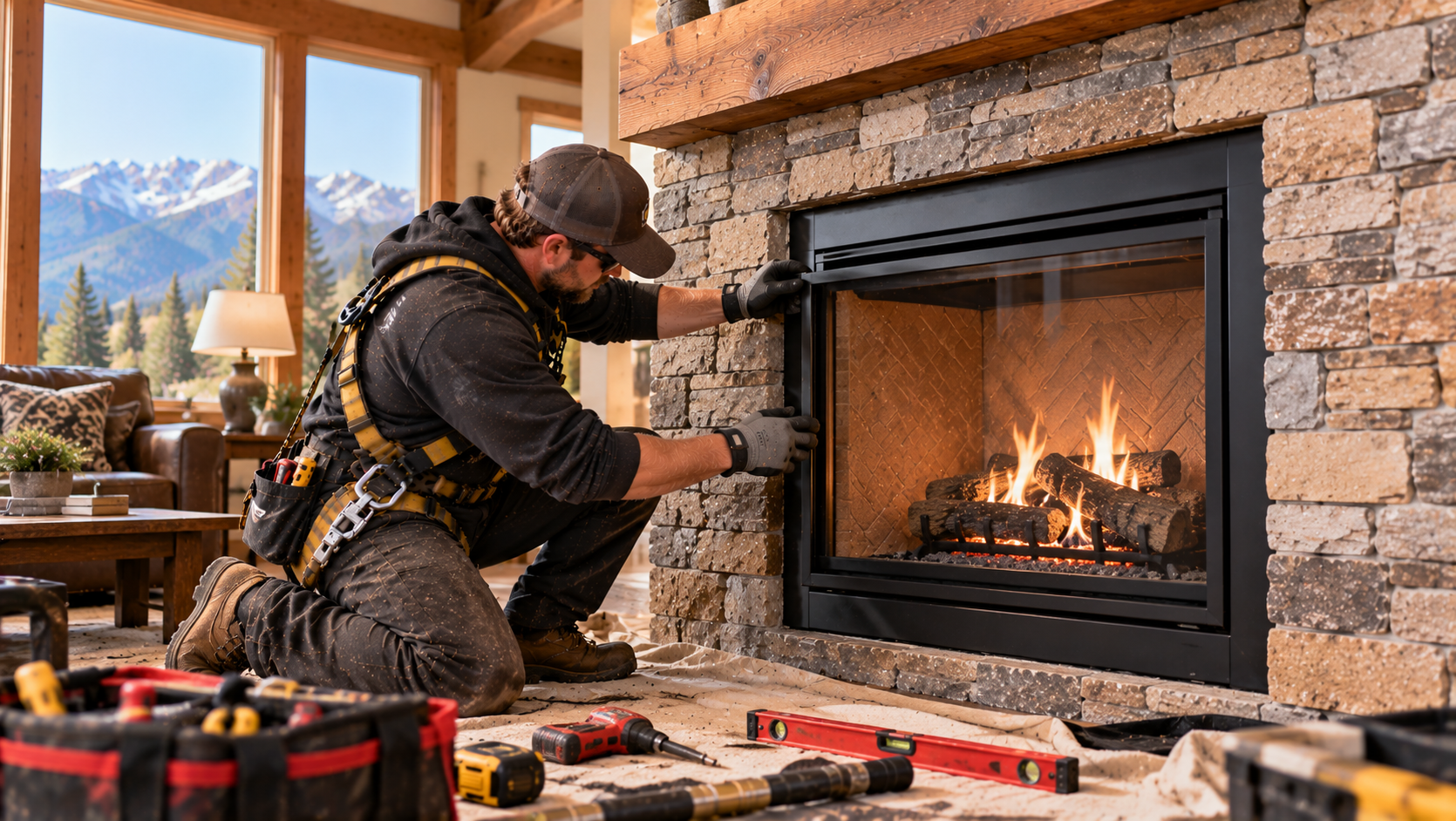
What Fireplace Installation in Colorado Springs Actually Involves
Getting a fireplace installed means more than picking a unit off a shelf.
Fireplace installation in Colorado Springs starts with a real site assessment. That means looking at your room dimensions, existing framing constraints, available fuel lines, and what venting path is physically possible before any system gets recommended.
You have three core fuel types to choose from. Each one has different venting requirements, BTU output ranges, and building permit implications. Making the wrong call for your space creates performance problems - and sometimes code problems - down the road.
Here's what most homeowners don't realize about adding a fireplace to an existing home: the framed opening in the wall tells you almost nothing about which appliance will actually fit safely. Clearance-to-combustibles requirements - the minimum distance between your firebox framing and any heat-producing component - vary significantly by system type. That's the first thing we check.
Wood. Gas. Electric. Each one earns its place in the right home.
6,035 ftWhere BTU output can read lower
Colorado Springs Homes and the Fireplace Decision You're Facing
New construction in Colorado Springs regularly leaves homeowners with a framed opening and no finished system.
Neighborhoods like Falcon, Briargate, and Woodmen Hills have seen strong new construction activity over the last decade. Builders in those areas often include a fireplace rough-in - a framed chase or wall opening - but the finished appliance, venting, and gas connection are left for the buyer to complete. That's how spec construction works. But it means you move in, find the framed opening, and suddenly face a three-way fuel choice with venting implications you haven't had to think about before.
Older Colorado Springs homes present a different situation. Many homes west of I-25 and throughout older Manitou Springs-adjacent neighborhoods were built without any fireplace at all. Adding one means evaluating both the framing constraints and what venting path the structure can realistically support.
In both cases, the altitude matters. At 6,035 feet, combustion appliances in Colorado Springs behave differently than they would at sea level. BTU output - the heat output rating of a fireplace appliance - can read lower at elevation, which affects correct system sizing for your room volume.
A Site Walk-Through That Changed the System Recommendation
I've walked into new-construction homes in Falcon where the answer changed completely once I saw the framing.
I'm a technician with Chimney Sweep Colorado Springs, and one job from last fall stays with me. A homeowner had moved into a finished Falcon build with a framed opening on an exterior wall. They'd already picked out a B-vent gas fireplace - a gas appliance that draws combustion air from the room and vents vertically through a dedicated B-vent pipe - based on a recommendation from a friend.
- 1An exterior-wall openingWhen I got on-site, the problem was immediately visible. The chase framing was exterior-wall adjacent.
- 2Not enough indoor airThe home's tight modern construction had essentially sealed the interior air supply. A B-vent system needs adequate indoor air to support combustion. In a well-sealed home at this elevation, that's often not available in the volume required.
- 3A vertical run through a finished atticThe B-vent would have required running vertically through an already-finished attic.
- 4Direct-vent fit the spaceWhat actually fit the space was a direct-vent fireplace - a sealed-combustion gas fireplace that draws combustion air from outside and exhausts through a co-axial pipe. That configuration didn't require indoor air at all. It also worked with the lateral venting path available through the exterior wall.
- 5Permit handledWe handled the building permit - required for new fireplace installations in El Paso County - as part of the scope, so nothing was left open on the permit side.
The homeowner got more heat, less installation complexity, and a system that matched what the structure could support. Three visits total. First call to finished unit, ready before November.
What Happens When You Call About a New Fireplace Installation
Every installation inquiry at Chimney Sweep Colorado Springs starts with a site assessment, not a catalog conversation.
We know you may come in with a system already in mind. That's fine. What we want to confirm is whether that system works in your actual space. Sometimes it does. Sometimes the framing, venting path, or fuel availability points us in a different direction.
Vent-free gas fireplaces - appliances that burn without an exhaust flue, releasing their combustion products into the room - are a common choice homeowners bring up. They're subject to specific size and placement restrictions under the building codes that apply here. We'll walk you through exactly where they're permitted and where they're not, based on your room and jurisdiction.
For electric fireplace installation, venting isn't a factor. But BTU output ranges and correct sizing still matter for the room. We approach every fuel type the same way: match the appliance to the space, then execute the installation cleanly.
Vent-free gas
- Burns without an exhaust flue
- Size and placement restrictions apply
- We confirm where it's permitted
Electric
- Venting isn't a factor
- BTU output and room sizing still matter
Our Standards for Every Fireplace Installation
Every system we install meets NFPA 211 requirements for clearance, venting, and appliance placement.
- System selection matched to room volume and BTU output needs - not pulled from a default spec sheet
- Firebox framing clearance verified before the prefabricated fireplace unit - a factory-built system designed for a framed opening - is set
- Venting path confirmed for wood, direct-vent, B-vent, or vent-free configuration before any equipment is ordered
- Building permit coordination with the Pikes Peak Regional Building Department included as part of the installation scope
- Gas line connections coordinated through licensed tradespeople where required
- Post-installation test fire and inspection before we close out the job
Our CSIA certification covers fireplace system types, venting configurations, and installation standards. That training is directly relevant to specifying the right appliance and confirming the venting path meets code before any work begins.
How a Fireplace Installation Actually Gets Done
First: The Site Assessment
The site assessment is where the real specification work happens. We measure the room, evaluate the framing, identify available venting paths, and check fuel access. For gas systems, we confirm line pressure and proximity to the installation point. For wood-burning fireplace installation in Colorado Springs, we evaluate the chimney or chase condition and confirm draft potential given the home's elevation and layout.
Then: Selection, Permitting & Installation
System selection, permitting, and installation happen in a defined sequence. Once the appliance is selected and the building permit is in place, we set the prefabricated fireplace unit into the framed opening, connect the venting system, and coordinate gas or electrical connections. Surround installation, hearth extension, and trim details are handled to manufacturer specifications and local clearance requirements.
Finally: Testing Before Sign-Off
We don't walk away until the system performs correctly. Every installation ends with a test fire and airflow check. For gas fireplace installation in Colorado Springs, we verify ignition, flame pattern, and venting function under real operating conditions. For wood-burning systems, we check draft, smoke path, and damper function. Nothing gets signed off from behind a desk.
Areas We Serve for Fireplace Installation
We install fireplaces across the greater Colorado Springs area.
- Colorado Springs
- Falcon
- Briargate
- Black Forest
- Woodmen Hills
- Monument
- Manitou Springs
- Fountain
- Security-Widefield
- Pueblo
- Canon City
- Castle Rock
- Parker
Our installation crews work throughout Colorado Springs, Falcon, Briargate, Black Forest, Woodmen Hills, Monument, Manitou Springs, Fountain, Security-Widefield, Pueblo, Canon City, Castle Rock, Parker, and the broader Pikes Peak Region. Call (720) 505-5030 to confirm coverage for your address.
Ready to Add a Fireplace to Your Colorado Springs Home?
A site assessment gives you a real answer - not a catalog guess.
Call Chimney Sweep Colorado Springs at (720) 505-5030 or email info@chimneysweepscoloradosprings.com to schedule your assessment. We'll evaluate your space, match the right system, and handle the permit process from first call to finished unit.
Frequently Asked Questions
Call and talk to the team directly.
Call (720) 505-5030Specific pricing ranges for fireplace installation vary by appliance type, venting configuration, and site-specific framing conditions. Our CSIA-certified technicians assess your space before quoting - no estimate is issued without a site walk-through first.
Yes - new fireplace installations require a building permit. In El Paso County, permits are issued by the Pikes Peak Regional Building Department. Permit scope depends on appliance type and venting method. We coordinate the permit as part of the installation scope, so nothing is left open on your end.
Most installations run three visits: site assessment, permit and equipment coordination, then installation and test fire. Total timeline depends on permit processing and equipment lead times. Simple direct-vent gas installations in Colorado Springs have completed in under four weeks from first call.
We'll review your selection against your actual space before ordering anything. Fuel type, framing clearances, and available venting path all affect whether a specific unit will perform correctly and pass inspection. If your choice fits, we move forward. If it doesn't, we show you exactly why.
A direct-vent fireplace pulls combustion air from outside through a sealed co-axial pipe - no indoor air required. A B-vent fireplace draws combustion air from inside the room and vents vertically. Tightly built modern homes often can't support B-vent systems at Colorado's elevation without supplemental air supply.
Fireplaces can be added to homes with no existing framing, not just rough-in openings. The site assessment determines what venting path the structure can support and which fuel type fits the available space. Electric and direct-vent gas systems offer the most flexibility in homes without existing chases.