
Chimney Odor Sealing in Colorado Springs
Still Smelling Smoke Weeks After Cleaning? This Is the Next Step
Masonry absorbs combustion compounds - sealing after cleaning makes the difference
- CSIA-certified technicians
- Source confirmed before sealing
- Vapor-open sealers only
Chimney Odor Sealing: What It Is and Why Cleaning Alone Isn't Always Enough
Chimney odor sealing treats the surfaces that hold odor - not just the deposits on top of them.
You had the chimney cleaned. The technician swept the flue, cleared the firebox, and the job looked done. But a few weeks later - usually when you close the windows for summer - the smoke smell came back. Not faint. Noticeable.
Here's what most homeowners don't realize about chimney odor: cleaning removes visible creosote and soot deposits. It doesn't extract what's already been absorbed into the masonry.
Brick is porous. Refractory mortar - the heat-rated mortar and brick lining the firebox - is especially so. Over months and years of use, volatile organic compounds (VOCs) from creosote - the gas-phase compounds released by combustion deposits when temperature or humidity shifts - work their way into those surfaces. Cleaning the surface doesn't pull them out.
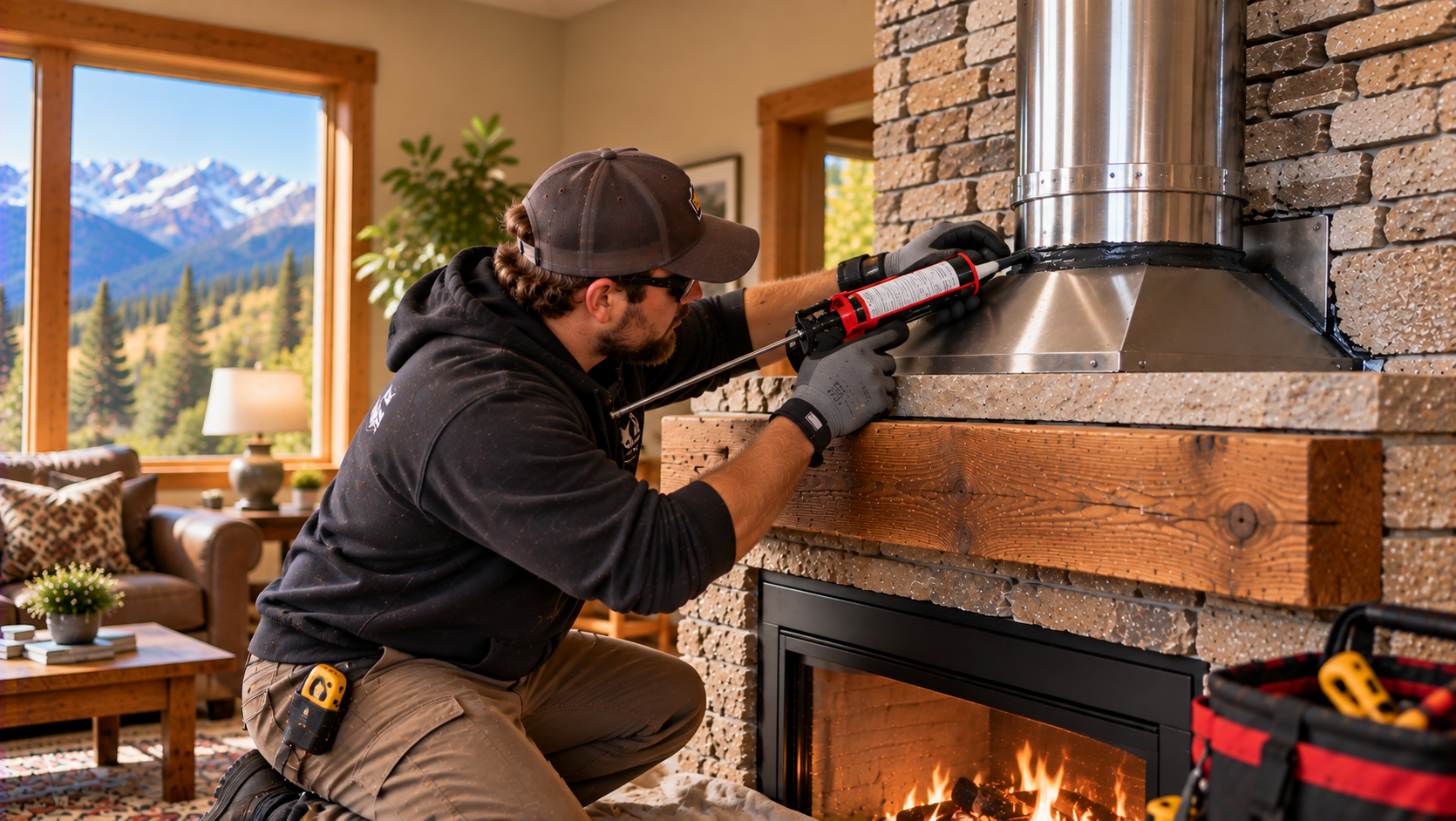
Chimney odor sealing in Colorado Springs applies an odor-blocking sealer - a product applied to interior masonry, refractory, and tile flue surfaces that forms a barrier against VOC off-gassing - directly to those interior masonry surfaces. That barrier stops the off-gassing. The smell stops reaching the living space.
6,035 ftColorado Springs elevation
Why Colorado Springs Homes Notice This Smell in Summer, Not Winter
Summer air movement in Colorado Springs pushes chimney odors directly into the living space.
Our office at 3595 E Fountain Blvd is close to the Fountain and Security-Widefield neighborhoods - areas where we get a consistent wave of odor calls starting in June. The pattern is almost always the same.
During heating season, the fireplace is in use. Warm flue gases rise naturally. The system has positive draft - air moves up and out. But in summer, that flue cools down. Windows close for air conditioning. Interior air pressure shifts. Warm summer air outside and a cooler, air-conditioned house inside here in the Pikes Peak region create conditions for air to reverse - pushing down the flue and into the room instead.
That reverse airflow is called draft reversal. It isn't always the cause of odor, but it makes existing surface odor far more noticeable. The VOCs off-gassing from creosote absorbed into chimney flue tile - the clay or ceramic liner tiles inside a masonry flue - get carried straight into the living space.
Colorado Springs sits at 6,035 feet. Elevation affects air density and pressure differentials inside a flue. That's a local factor that makes odor management here different from lower-altitude climates.
What We Look For Before Any Sealer Goes On
Every chimney odor sealing job starts with confirming that the surfaces are ready to be sealed.
Our lead technician handles the pre-treatment inspection personally on odor sealing calls. Here's how that conversation usually goes.
A homeowner in Briargate called us in late July. Her chimney had been swept in April. The smell came back strong in early summer. She assumed it needed to be cleaned again.
- 1The cap was intactWhen we got up on the roof and ran through our diagnostic sequence, the chimney cap was intact.
- 2The flue was cleanNo stage 2 or stage 3 creosote.
- 3No animal intrusionNo nesting material, no carcass, no wasp activity.
- 4The damper was seating properlySo active draft reversal wasn't the main driver.
- 5Refractory mortar absorptionWhat we found was refractory mortar absorption - the tendency of heat-rated mortar and brick in the firebox to hold combustion byproducts even after surface cleaning. The mortar joints in her firebox were visibly porous and darker than the brick faces, which confirmed they'd been absorbing flue gases for years.
Applying a sealer over an active problem - a draft issue, active buildup, or an animal situation - traps the problem. Confirming the cause first is what makes chimney odor sealing produce lasting results. Post-cleaning surface treatment, sequenced correctly and applied only after the source is confirmed, is the step that closes out the job.
In this case, the surfaces were clean and confirmed ready. We applied the odor-blocking sealer that afternoon. The homeowner called back in August to say the smell was gone.
One Question We Hear: Can a Sealer Trap Moisture in the Brick?
The right sealer is vapor-open - it blocks odor compounds while letting moisture pass through.
It's a fair question. Some film-forming sealers create a solid barrier on masonry. That sounds effective, but it traps moisture inside the brick and mortar - which accelerates spalling and freeze-thaw damage in Colorado's climate.
The products we use are vapor-open sealers - formulations that allow moisture vapor to move through the masonry while blocking the larger volatile organic compounds responsible for smoke odor. You get odor control without closing off the breathability the masonry needs.
This matters in Colorado Springs, where freeze-thaw cycles run from October through April. Sealing brick with a non-breathable product creates problems come winter.
Vapor-open sealer
- Blocks the larger odor compounds
- Lets moisture vapor move through the masonry
- Keeps the breathability brick needs
Film-forming sealer
- Creates a solid barrier on masonry
- Traps moisture inside brick and mortar
- Accelerates spalling and freeze-thaw damage
Our Standards for Chimney Odor Sealing
Every surface is confirmed clean, dry, and odor-source-identified before any product is applied.
- Full pre-treatment inspection before sealing - odor source confirmed, not assumed
- Draft reversal differentiation performed on every call - airflow ruled out before sealing begins
- Vapor-open sealer applied - moisture breathability preserved in treated masonry
- Chimney flue tile surfaces and refractory firebox surfaces both treated when indicated
- Post-cleaning surface treatment sequenced correctly - applied only after cleaning is complete
- CSIA-certified technicians who understand creosote compound chemistry, not just visible buildup
- All products selected for compatibility with Colorado's elevation and freeze-thaw conditions
Clean, dry, and source-confirmed. Only then does the sealer go on.
How We Execute a Chimney Odor Sealing Service
The Diagnostic Walkthrough
We start with a full walkthrough of the flue, firebox, and damper area. We rule out draft reversal as a primary driver. We confirm no active creosote stage 2 or 3 buildup remains. We check for animal intrusion indicators. Only after those conditions are cleared do we move to treatment.
Product Application
We apply odor-blocking sealer to the interior masonry surfaces where absorption is confirmed - typically the refractory mortar joints and brick faces in the firebox, and the chimney flue tile surfaces if the liner is clay or ceramic. Product selection is matched to the surface type and the current moisture condition of the masonry.
Post-Treatment Confirmation
After treatment cures, we check for even coverage and confirm there are no areas of untreated refractory surface that would continue off-gassing. We walk you through cure time expectations before the fireplace returns to normal use, and explain how summer air conditioning cycles may affect how quickly you notice the improvement.
Areas We Serve in and Around Colorado Springs
We serve Colorado Springs and the surrounding region from our office on E Fountain Blvd.
- Briargate
- Rockrimmon
- Manitou Springs
- Fountain
- Security-Widefield
- Black Forest
- Falcon
- Monument
- Palmer Lake
- Woodland Park
- Pueblo
- Pueblo West
- Canon City
- Castle Rock
- Parker
- Highlands Ranch
- Lone Tree
- Centennial
Odor sealing calls come in from across our service area - Briargate, Rockrimmon, Manitou Springs, Fountain, Security-Widefield, Black Forest, and Falcon. We also cover Monument, Palmer Lake, Woodland Park, Pueblo, Pueblo West, Canon City, Castle Rock, Parker, and the Denver metro area including Highlands Ranch, Lone Tree, and Centennial.
Ready to Stop the Smell? Here's How to Reach Us
Chimney odor sealing in Colorado Springs starts with a call and a confirmed diagnosis.
If your chimney was cleaned and the smoke smell came back, that's exactly the situation chimney odor sealing is designed to address. Call us at (720) 505-5030 or email info@chimneysweepscoloradosprings.com to schedule your inspection and treatment. We'll confirm the source first - then seal it.
Frequently Asked Questions
Call and talk to the team directly.
Call (720) 505-5030Chimney odor sealing is quoted per job - call (720) 505-5030 for current rates. Cost varies based on firebox size, flue tile surface area, and whether a pre-treatment diagnostic is required. Homes with heavily absorbed refractory mortar typically require more product coverage than recently built chimneys.
Cleaning removes surface deposits. It does not pull VOCs from inside the masonry. Porous refractory mortar and clay flue tiles absorb combustion compounds over years of use. Those absorbed compounds keep off-gassing after the visible buildup is gone. Sealing creates a barrier that stops that off-gassing at the surface level. Cleaning and sealing are two different steps addressing two different problems.
Most odor sealing visits are completed in a single appointment. The pre-treatment diagnostic runs first - typically 30 to 45 minutes. Product application follows if surfaces are confirmed ready. Cure time varies by product and masonry condition. Your technician will confirm when the fireplace can return to normal use before leaving.
Sealing can follow cleaning in the same visit only if surfaces pass the diagnostic first. The technician must confirm no active creosote buildup, no draft reversal issue, and no animal intrusion before applying any product. Rushing to seal over an unresolved condition traps the problem instead of solving it. Most same-day sequences are completed without issue when the cleaning was thorough.
We use vapor-open sealers - formulations that block odor compounds while allowing moisture to pass through the masonry. Hardware store products are often film-forming sealers that seal moisture inside brick. In Colorado Springs, trapped moisture leads to freeze-thaw spalling by winter. CSIA-certified technicians also confirm the odor source before any product goes on - something no off-the-shelf product can do.
No sealer corrects a draft reversal problem. Draft reversal - air moving down the flue into the living space - is a mechanical airflow issue, not a surface absorption issue. Our diagnostic step rules out active draft reversal before sealing begins. If draft reversal is identified as the primary driver, we address that first. Sealing is applied only when surfaces are confirmed as the odor source.