Post-Fire Chimney Inspection in Colorado Springs - Creosote & Structural Assessment
A chimney fire can happen silently - and leave damage you won't see from inside the house.
A structured, CSIA-guided assessment of the full flue system after a known or suspected chimney fire
- CSIA-certified technicians
- Full-length liner camera scan
- Written use status same day
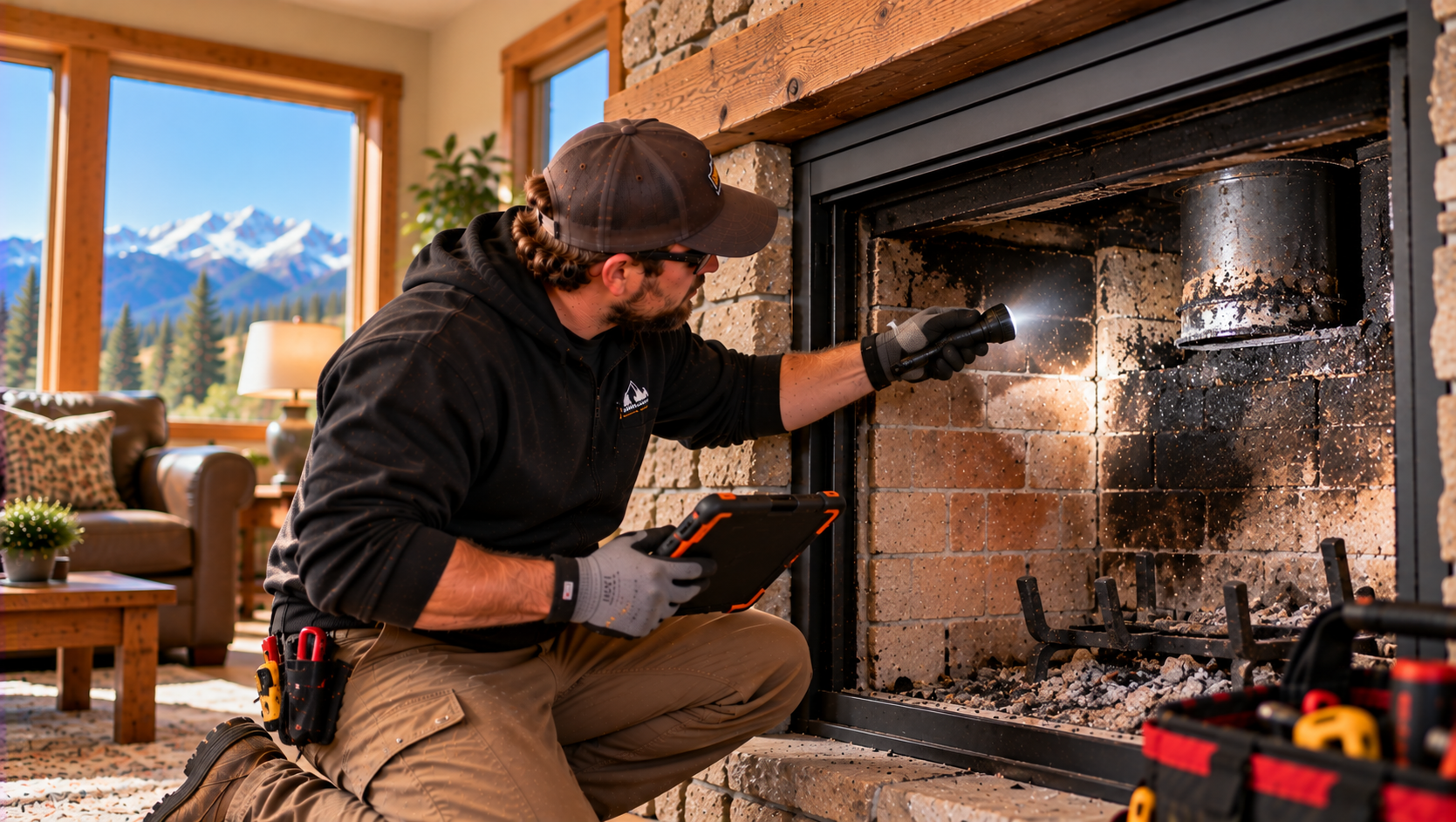
You Used the Fireplace Last Weekend. Nothing Seemed Wrong.
No roar, no visible flame shooting from the top, no smoke filling the room.
But many chimney fires are quiet events. They burn fast and intense - sometimes in under a minute - inside the flue where you can't see them.
A post-fire chimney inspection is a structured, CSIA-guided assessment of the full flue system after a known or suspected chimney fire. A chimney fire - a rapid, high-temperature combustion event inside the flue caused by ignited creosote deposits - can reach temperatures above 2,000°F inside the liner. That heat cracks tile, fractures mortar joints, and scorches smoke chamber surfaces. The inspection finds what the fire left behind before the chimney is used again.
2,000°FPossible inside the liner during a chimney fire
Colorado Springs chimneys face specific conditions that make post-fire assessment essential.
El Paso County's climate builds toward chimney fire risk across a long burn season.
Winters here run cold and long. Wood-burning fireplaces get used heavily from October through April - sometimes into May at elevations above 6,000 feet along the Ute Pass corridor.
That extended burn season means creosote builds quickly. Black Forest residents burning pine or mixed softwoods see faster accumulation than those burning seasoned oak. Fountain and Security-Widefield homes with factory-built fireplaces are especially susceptible because prefab units run cooler flue temperatures, which accelerates creosote layering.
Colorado's dry air also matters after a fire event. Clay tile liners that have been thermally shocked - meaning exposed to sudden, extreme temperature changes that cause rapid expansion and contraction - dry out unevenly at altitude. Hairline cracks that look minor at 6,000 feet can open further during the next freeze cycle. We dispatch post-fire inspection crews across El Paso County, from Woodmen Hills and Black Forest in the northeast to Fountain and Security-Widefield to the south.
What a CSIA-certified technician found in a Black Forest home after a "nothing happened" fireplace session.
She had no idea the fire had happened. That's the most common outcome on post-fire calls.From our lead CSIA-certified technician
I got a call from a homeowner in Black Forest. She'd been using her fireplace all season - no problems, or so she thought. She only called because her neighbor mentioned a "chimney fire checklist" and suggested she look into it.
- 1Firebox and damper looked normalWhen I arrived, I started at the firebox and worked up. The firebox looked normal. The damper moved fine. Nothing alarming from the outside.
- 2Smoke chamber scorchingThen I got into the smoke chamber - the space above the damper that funnels combustion gases into the flue. I found smoke chamber scorching, which is heat damage to the smoke chamber surface indicating that a fire event had reached the lower flue system. The parging on the smoke chamber walls had bubbled and cracked in a classic heat-bloom pattern. That's what thermal stress does to a smoke chamber surface not designed to absorb direct flame contact.
- 3Three liner fracturesMoving up the liner with the camera, I found three distinct liner fractures - cracks or breaches in the flue liner caused by thermal shock. Two were hairline at the joints. One had opened nearly a quarter inch and allowed a visible light gap between tiles. That gap means combustion gases and heat could reach the surrounding structural framing.
- 4Hot gases into the framingThe homeowner had used that fireplace twice more after the chimney fire. Neither use caused visible damage inside the house. But each time, hot gases were routing through that breach into the structural cavity.
- 5Glaze-cracked creosoteThe inspection also found creosote residue - glaze-cracked deposits with a shiny, swollen texture that indicates Stage 3 creosote involvement. That residue requires removal before the chimney can be safely relined.
Clearing your chimney for use is a documented process, not a visual judgment call.
CSIA-certified post-fire inspection follows a structured protocol, not a quick look up the flue. Here's how we handle the question homeowners ask most: "How do I know if I actually had a chimney fire?"
We document the evidence. Glaze-cracked creosote residue, distorted metal components inside the firebox, scorched smoke chamber surfaces, and liner fracture patterns are all physical indicators of a fire event. NFPA 211 post-fire protocol - the inspection standards governing what must be examined and documented after a known or suspected chimney fire - requires each of these zones to be assessed and recorded before a chimney is cleared for use.
We don't clear a chimney based on a visual pass from the firebox floor. We don't clear it because the homeowner reports normal-looking smoke behavior. We clear it when the camera images and physical inspection confirm the liner is intact, the smoke chamber is undamaged, and heat migration - the movement of combustion heat through cracked liner or mortar joints into adjacent framing - has not occurred.
That documentation also matters for insurance purposes and for any future sale of the home.
We clear a chimney when
- Camera images confirm the liner is intact
- The smoke chamber is undamaged
- Heat migration has not occurred
We don't clear it on
- A visual pass from the firebox floor
- Normal-looking smoke behavior
- Cleaning alone after a fire event
Our Post-Fire Inspection Standards
Every post-fire assessment meets NFPA 211 scope - no exceptions, no shortcuts.
- Full firebox visual inspection including grate, ash pit, and damper plate condition
- Smoke chamber surface examination for scorching, bubbled parging, and crack patterns
- CSIA-standard video scan of the full liner length - not just the lower segment
- Liner fracture mapping with photo documentation of crack location, width, and orientation
- Creosote residue assessment including stage identification (Stage 1, 2, or glaze-cracked Stage 3)
- Mortar joint integrity check at every accessible course
- External masonry review for heat migration indicators - efflorescence displacement, spall patterns, and joint separation above the roofline
- Crown and cap inspection for heat-related cracking or displacement
- Written assessment report delivered before we leave the property
Every chimney leaves with one use status
- Cleared for use
- Cleared pending repair
- Not cleared pending repair
Three zones of documentation. Not two. Every zone. Every time.
Our Execution Protocol
Diagnostics
The inspection begins below the firebox and moves upward in sequence. We start with the cleanout door and ash pit. Heat migration can travel downward through failed mortar joints in older Colorado Springs masonry chimneys, and the lower system shows it first. We examine the firebox floor, back wall, and side jambs for spalling brick or widening mortar joints - both signs the firebox absorbed abnormal heat levels. Next is the damper and smoke shelf. We check the damper plate for warping, which is a reliable physical indicator of a fire event even when other signs are subtle.
Implementation
Camera deployment covers the full liner from firebox to crown. We run a high-resolution camera system up the liner. Images are captured at each tile joint and at any point where surface texture changes. Liner fractures are documented by location - measured from the firebox floor - and classified by severity. We also assess the liner wall surface for glaze-cracked creosote residue, the swollen, shiny deposits that indicate Stage 3 involvement and require chemical treatment or mechanical removal before relining. The smoke chamber is inspected visually and by camera where geometry allows. Colorado Springs homes built between the 1970s and early 1990s frequently have smoke chambers that were corbeled - brick-stepped inward - rather than parged. That construction method creates more surface area for creosote to accumulate and more joint lines for heat to travel through. External masonry is checked last. We look for mortar joint separation along the chimney exterior, crown cracking, and displacement of the cap or chase cover - all of which can result from the thermal expansion that occurs during a chimney fire.
Post-Service
The inspection closes with a written findings report and a clear use status. Every post-fire inspection at Chimney Sweep Colorado Springs ends with a documented findings report. It identifies what we found, what zone it appeared in, what it indicates, and what the recommended next step is. The chimney receives one of three use statuses: cleared for use, cleared pending repair, or not cleared pending repair. No ambiguity. No verbal-only conclusions. If relining, smoke chamber repair, or creosote removal is needed, we outline the scope so the homeowner understands exactly what must happen before the fireplace is used again.
Areas We Serve
We run post-fire inspection calls across Colorado Springs and the surrounding region.
- Black Forest
- Woodmen Hills
- Briargate
- Rockrimmon
- Manitou Springs
- Fountain
- Security-Widefield
- Monument
- Palmer Lake
- Falcon
- Pueblo
- Canon City
- Woodland Park
- Divide
- Castle Rock
- Parker
Service reaches Black Forest, Woodmen Hills, Briargate, Rockrimmon, Manitou Springs, Fountain, Security-Widefield, Monument, Palmer Lake, and Falcon. We also serve Pueblo, Canon City, Woodland Park, Divide, Castle Rock, Parker, and communities throughout the Pikes Peak Region. If you're in El Paso, Pueblo, or Teller County, we can get to you.
Get a Documented Answer Before Your Next Fire
A post-fire chimney inspection in Colorado Springs gives you a documented answer - not a guess.
If you used your fireplace and noticed anything unusual - a brief smell, a subtle pressure change, or simply nothing at all - get the system inspected before the next fire. Call us at (720) 505-5030 or email info@chimneysweepscoloradosprings.com. Tell us your address and the type of fireplace system you have. We'll schedule your CSIA-certified post-fire assessment and get you a clear answer in writing.
Frequently Asked Questions
Call and talk to the team directly.
Call (720) 505-5030Post-fire chimney inspection is quoted directly - call (720) 505-5030 for current rates. Post-fire inspections are scoped differently than standard Level 1 or Level 2 visits. The assessment covers liner fracture mapping, smoke chamber scorching, creosote residue staging, and external masonry - all documented in a written report before we leave.
Most post-fire inspections take two to three hours on-site. Camera deployment across the full liner length takes time - we don't stop at the first sign of damage. CSIA-certified technicians document every zone before drawing conclusions. The written findings report is completed before we leave the property, so you have a clear use status in hand the same day.
Physical evidence inside the flue confirms a chimney fire - not the homeowner's memory of the event. Glaze-cracked creosote residue, warped damper plates, scorched smoke chamber surfaces, and liner fractures are all documented indicators. Many chimney fires burn fast and silent. Our CSIA-certified technicians apply NFPA 211 post-fire protocol to confirm or rule out a fire event with camera documentation, not guesswork.
No - cleaning a chimney after a suspected fire event without structural assessment first is unsafe. Brushing a fractured liner can dislodge tile fragments and worsen existing cracks. A post-fire inspection documents liner integrity, smoke chamber condition, and heat migration before any cleaning or relining begins. Sequence matters. Our CSIA-certified technicians will not clear a chimney for use based on cleaning alone after a fire event.
Scope and sequence separate a post-fire inspection from a standard visit. Standard inspections assess general condition. Post-fire inspections follow NFPA 211 protocol - mapping liner fractures by location and width, staging creosote residue, checking the smoke chamber for heat-bloom patterns, and reviewing external masonry for heat migration indicators. Every zone is documented in a written report. The chimney receives a formal use status: cleared, cleared pending repair, or not cleared.
Yes - stop using the fireplace until a CSIA-certified inspection confirms the liner is intact. A fractured liner routes combustion gases and heat into surrounding framing. That risk does not resolve on its own between fires. Each use after an undetected chimney fire increases structural exposure. Call (720) 505-5030 to schedule your post-fire assessment before the next burn.