
Emergency Chimney Leak & Storm Damage Repair in Colorado Springs
Storm Damage Assessed, Entry Points Identified & Weatherproofed Same Visit
Hail cracks crowns, perforates chase covers, and pulls flashing in one event
- CSIA-certified technicians
- Every entry point documented
- Same-visit weatherproofing
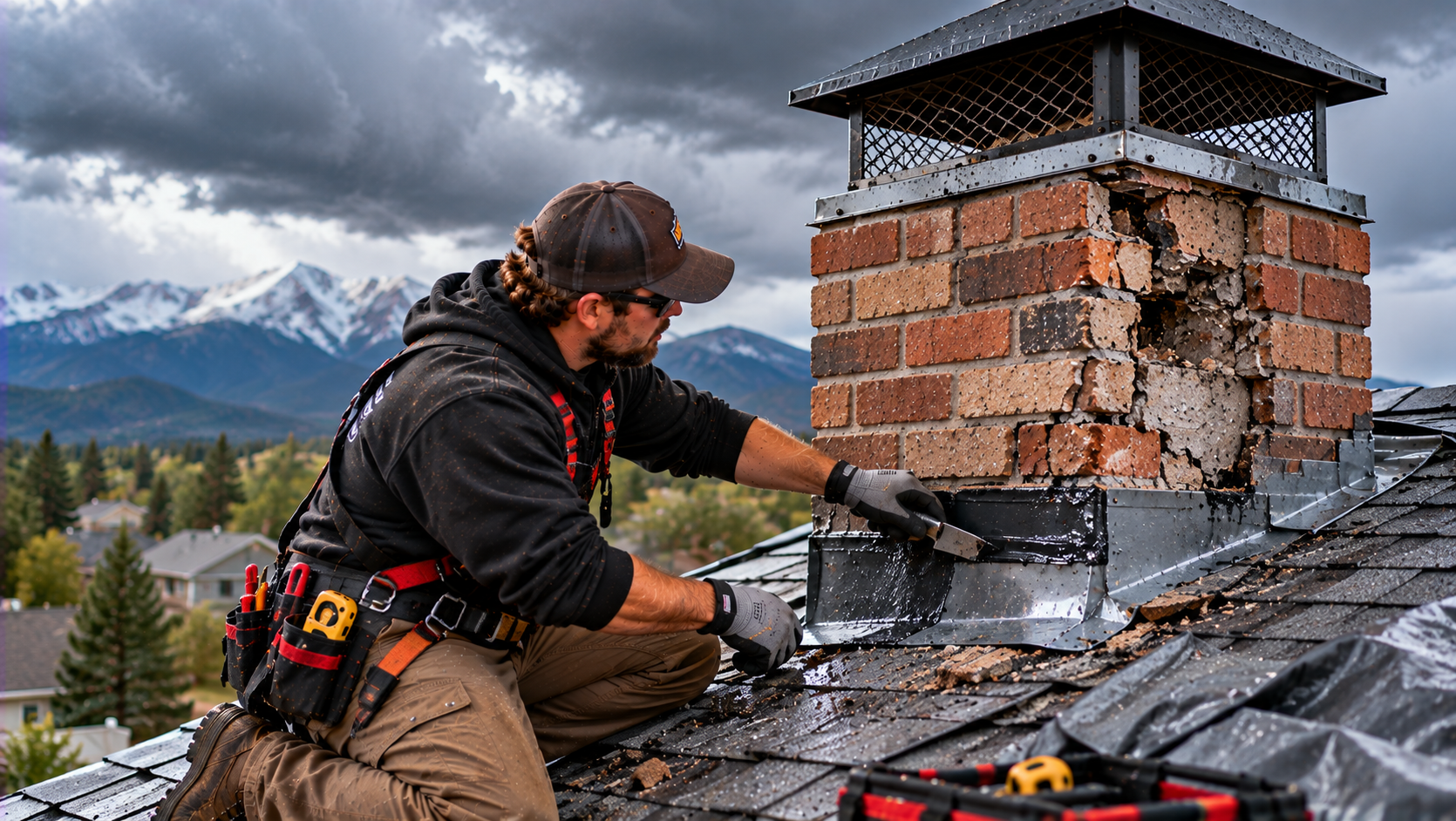
What Emergency Chimney Storm Damage Means in Colorado Springs
Emergency chimney storm damage means water has found more than one way into your chimney at once.
After a hail event, a chimney can take damage at three or four points at the same time. The crown cracks. The flashing pulls away. The chase cover dents and perforates. None of those entry points announce themselves with a visible hole from the ground.
What you see instead is a water stain on your ceiling or a damp patch on a wall near the firebox. The water is already inside - and it entered through multiple compromised components at once. That's what makes post-storm chimney damage different from a single-point repair call.
At Chimney Sweep Colorado Springs, we assess every potential entry point before a single repair material goes down. Crown, flashing, chase cover, mortar joints, and cap - all checked at roof level and from inside the flue. That sequence matters.
20 minOne storm can crack, dent, and shear all three
Colorado Springs Sits in One of Colorado's Most Active Hail Zones
The Palmer Divide Hail Belt runs directly through El Paso County - and chimneys take the full impact.
The Palmer Divide Hail Belt is the geographic zone along the Palmer Divide, running through El Paso and Douglas Counties, where Colorado's hail events concentrate. Colorado Springs sits squarely in that corridor. Communities along US-24 - Falcon, Peyton, and Calhan to the east - experience some of the highest hail frequency in the state.
Large-diameter hail moves fast. It fractures concrete chimney crowns. It dents and punches through metal chase covers. It shears the caulk line between flashing and masonry. All three can happen in the same 20-minute storm.
Here's what many homeowners don't realize about Palmer Divide hail events: the damage doesn't always show up right away. A hairline chimney crown fracture - a crack in the concrete crown caused by impact - may not let water through until the next heavy rain. By then, the storm connection is easy to miss.
Our crews know this corridor well. We dispatch to Falcon and Peyton on the same routes we run daily. That geographic familiarity means faster response and sharper diagnostics for communities along that eastern stretch.
What I Found After a July Hailstorm in Briargate
One storm. Four separate water entry points. All confirmed before a single repair was started.From the field - Chimney Sweep Colorado Springs crew assessment, Briargate neighborhood
I got a call the morning after a major July hailstorm.
- 1Water on the hearthThe homeowner had found water pooling on the hearth floor. She assumed the cap had blown off. That's a reasonable first guess - but it wasn't the full picture.
- 2A full-width crown fractureWhen I got on the roof, I found a chimney crown fracture - a crack running nearly the full width of the concrete crown. That crack alone was enough to direct water straight into the flue. But there was more.
- 3Two hail perforationsThe metal chase cover had taken direct hail impact. Two small perforations, roughly the size of a pencil eraser. Not visible from the ground, but sitting at the highest collection point on the chimney. Every rain would funnel water through those holes and down the liner.
- 4Flashing pull-away uphillThe flashing - the metal seal between the chimney base and the roof deck - had pulled away on the uphill side. That's flashing pull-away: the separation of chimney flashing from the masonry face or roof deck caused by storm impact or wind uplift. Water was entering there too.
- 5Crumbled upper jointsFinally, two mortar joints at the upper course were crumbled - not from the hail itself, but from freeze-thaw stress that the hail impact had accelerated.
I documented all four points with photographs before touching anything. That storm damage documentation - the photographic and written record of pre-repair chimney condition - went directly to her insurance contact. We applied temporary weatherproofing over the crown and chase cover before leaving that first visit. The structure was protected while we waited on material delivery for the permanent repair.
She didn't lose more ceiling drywall. That mattered.
How We Handle the Gap Between Assessment Day and Repair Day
Temporary weatherproofing keeps your structure protected until the permanent repair is complete.
Permanent chimney repairs sometimes require a return trip. Crown replacement needs the right concrete mix and dry curing conditions. A new chase cover is fabricated to fit. We don't rush that work.
What we do instead is apply temporary weatherproofing - a water-resistant cover or sealant placed on a damaged chimney during an emergency visit - on the same appointment when a return trip is needed. That step is built into our emergency protocol.
You'll know what was found, what was temporarily sealed, and exactly what the permanent repair plan covers before we leave that first visit.
Our storm assessment
- Roof level and inside the flue
- Crown, flashing, chase cover, cap, and mortar
- Every entry point before any repair
A general roofer
- Inspects the roof surface
- No flue interior, smoke chamber, or mortar joints
- One missed entry point keeps the damage going
Our Standards for Emergency Storm Damage Repair
Every emergency repair follows the same quality benchmark as a scheduled job.
- Full roof-level assessment before any repair work begins: crown, flashing, chase cover, cap, and mortar joints all checked
- Storm damage documentation: photographic record created at time of assessment, organized for insurance submission
- Temporary weatherproofing applied same-visit when permanent repair requires scheduling
- Multi-point water entry: each entry point identified and addressed independently, not assumed from the most obvious symptom
- CSIA-certified technicians performing all diagnostic and repair work
- 10+ crew members available for responsive deployment across El Paso County and the greater Colorado Springs area
- All repair materials selected for Colorado's freeze-thaw climate and hail exposure
From your first call to a weatherproofed chimney - here's exactly what happens.
Our Emergency Repair Process
Roof-Level Diagnostics First
We start at the top. Roof-level inspection covers the chimney crown for fracture, the chase cover for hail impact and perforation, the cap for displacement or damage, and the flashing for pull-away or gaps at the masonry face and roof deck. Then we move inside - flue camera or visual inspection of the liner, smoke chamber, and firebox. Multi-point water entry means we don't stop at the first thing we find. Every compromised component gets documented before repair scope is confirmed.
Repair and Weatherproofing in Sequence
Temporary weatherproofing goes on the same day when permanent repair can't be completed in one visit. Crown repairs use a mix suited to Colorado's temperature range and freeze-thaw cycling - not a standard patch product. Flashing is re-sealed or replaced depending on condition. Chase covers are custom-fit to the chimney dimensions. Each repair point is addressed individually, in sequence, from the top of the chimney down.
Post-Service Verification
After permanent repairs are complete, we test for water tightness and confirm flue clearance is unaffected. Storm damage documentation is updated to reflect the completed repair scope - useful if a supplemental insurance claim needs to be filed after final inspection.
Areas We Serve for Emergency Chimney Repair
We serve Colorado Springs and the surrounding region - from Pueblo to Castle Rock and beyond.
- Colorado Springs
- Briargate
- Falcon
- Peyton
- Calhan
- Black Forest
- Rockrimmon
- Cimarron Hills
- Security-Widefield
- Fountain
- Manitou Springs
- Monument
- Palmer Lake
- Woodland Park
- Divide
- Pueblo
- Pueblo West
- Castle Rock
- Parker
Our emergency storm damage repair crews serve Colorado Springs, Briargate, Falcon, Peyton, Calhan, Black Forest, Rockrimmon, Cimarron Hills, Security-Widefield, Fountain, Manitou Springs, Monument, Palmer Lake, Woodland Park, Divide, Pueblo, Pueblo West, Castle Rock, Parker, and communities throughout El Paso, Douglas, and Pueblo Counties.
Get Your Chimney Assessed and Weatherproofed
Call us after a storm - same-visit weatherproofing is part of how we work.
Call Chimney Sweep Colorado Springs at (720) 505-5030 or email info@chimneysweepscoloradosprings.com to schedule your emergency assessment. Tell us what you saw - water stains, visible crown damage, a dented chase cover - and we'll prioritize your appointment. Same-visit temporary weatherproofing is part of every emergency call we run.
Frequently Asked Questions
Call and talk to the team directly.
Call (720) 505-5030Pricing for emergency storm damage repair depends on how many components were compromised. Every emergency visit includes a roof-level assessment and same-visit temporary weatherproofing - no separate charge for that protective step. Final repair cost is scoped and priced before any work begins. Multi-point damage from a single hail event typically involves crown, flashing, and chase cover repairs. Call (720) 505-5030 to schedule your assessment.
Yes - temporary weatherproofing is a water-resistant cover or sealant applied specifically to stop active water intrusion between visits. It isn't a cosmetic patch. Our protocol requires it before we leave any emergency call where a return trip is needed. Your structure stays protected while we wait on materials, cure conditions, or fabrication of a custom component like a replacement chase cover.
Most emergency assessments run 60-90 minutes on-site. Roof-level inspection, interior flue check, and storm damage documentation all happen during that first visit. Temporary weatherproofing is applied before we leave. Permanent repair scheduling depends on scope - some single-component repairs are completed same-day, while multi-point damage typically requires a return appointment within days.
Roofers inspect the roof surface - they don't access the flue interior, smoke chamber, or mortar joints. Palmer Divide hail events commonly compromise four chimney components simultaneously. Missing even one water entry point means continued interior damage after the "repair" is done. Our CSIA-certified technicians assess every potential entry point - crown, flashing, chase cover, cap, and mortar - before a single repair material is applied.
Storm damage documentation - photographs and written records of pre-repair chimney condition - is created on the assessment visit, organized for direct submission to your insurance contact. This record captures every compromised component before any repair work begins. If a supplemental claim is needed after the permanent repair, we update the documentation to reflect completed scope.
No - waiting allows water to move deeper into masonry, the liner, and surrounding framing. Hail-fractured crowns and perforated chase covers may not show active dripping until the next storm, but the entry point is already open. Call as soon as you notice ceiling stains, damp patches near the firebox, or visible crown damage after a hail event. Early assessment limits how far water travels before it's stopped.