Level 2 Chimney Inspection in Colorado Springs - Camera & Full Scope
See Inside Your Flue Before You Sign - or Before You Sell
Camera footage documents liner condition you can show your agent or attorney.
- CSIA-certified technicians
- Full flue video scan
- Footage delivered before we leave
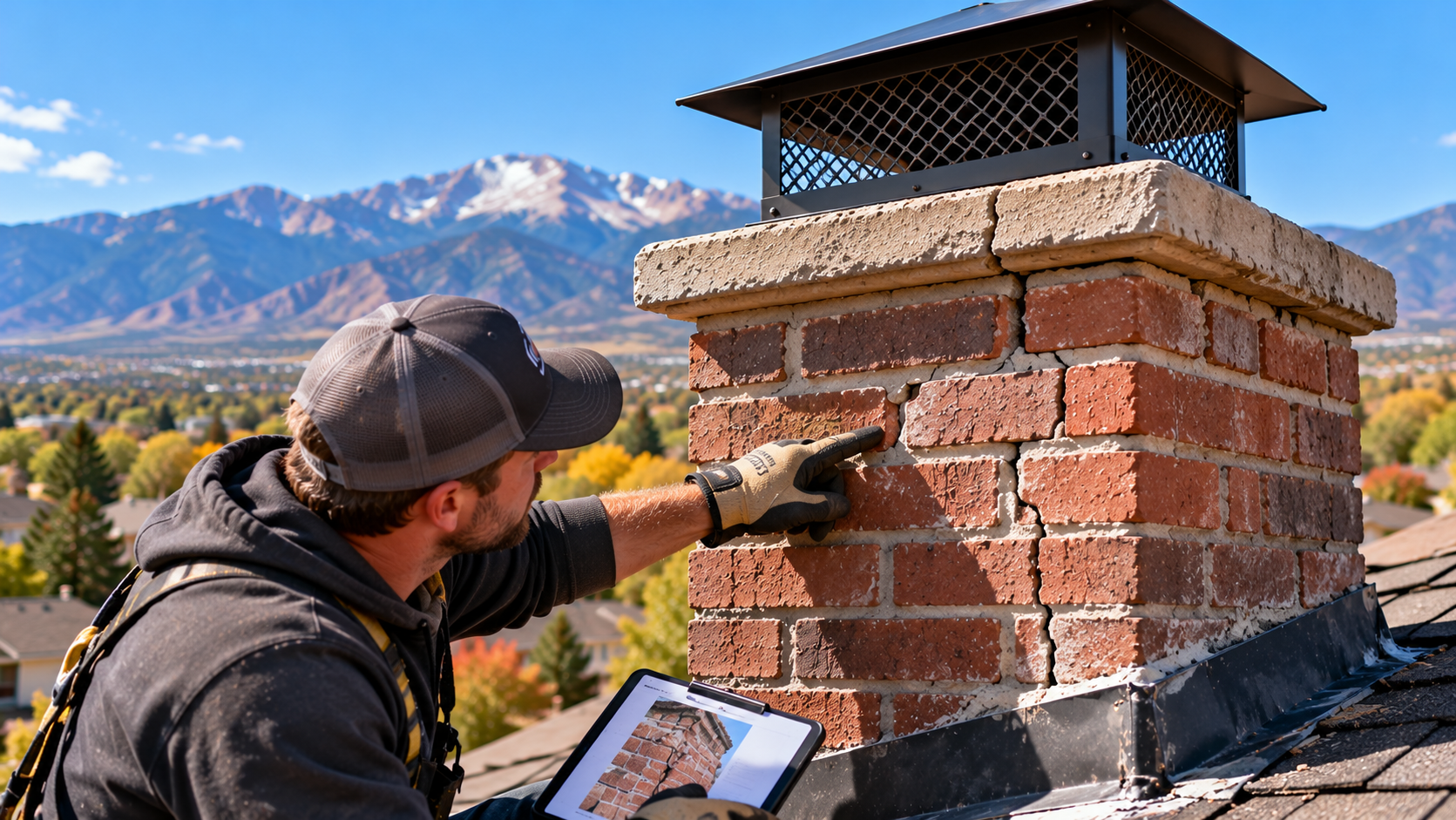
A Level 2 Chimney Inspection Gives You Documented Proof, Not Just a Technician's Opinion.
What separates it from a basic visual check isn't the checklist. It's the camera.
A Level 2 chimney inspection - as defined by NFPA 211 (the National Fire Protection Association standard governing chimney inspection tiers) - is the required inspection scope any time a property changes ownership. It's also triggered when a heating appliance is replaced, added, or changed in fuel type. And it's what's called for after any chimney event: a chimney fire, an earthquake, or a weather event that could have damaged the system.
Our CSIA-certified technicians use video scanning equipment to record the full interior of the flue liner - every surface, every joint, every course of tile. You receive that footage. Not a summary. Not a checkbox. The actual video record of your chimney's condition, ready to share with your real estate agent, your attorney, or your buyer.
Full scopeRequired when ownership changes
Colorado Springs Real Estate Makes Level 2 Inspections Essential - Here's Why.
Colorado Springs has one of the most active real estate markets on the Front Range - and some of its oldest chimneys.
Neighborhoods like Old Colorado City, Manitou Springs, and the central historic districts carry original masonry chimneys built decades before modern liner standards existed. These are homes where the flue liner - the clay tile channel that contains combustion gases - was installed once and never touched again.
Standard home inspections don't include chimney camera access. A general inspector looks from the firebox up and from the top down. That covers maybe 18 inches of visible tile in each direction.
A real estate transaction chimney inspection - triggered by NFPA 211 whenever ownership changes - requires the full interior scope. That's where flue liner cracks - fractures in the clay tile that allow combustion gases to migrate into surrounding masonry - show up. Those cracks are invisible without camera equipment.
Here's what most homeowners don't realize about the Front Range housing stock: a chimney can look perfectly fine from outside and still have compromised liner integrity that only appears on-screen.
What a Camera Inspection Actually Shows - From One Real Colorado Springs Property
The camera footage captures conditions that no other inspection method reaches.
One of our CSIA-certified technicians, working a pre-listing inspection in Briargate, describes what a typical camera walkthrough looks like on a mid-1980s two-story with a gas log insert.
- 1Firebox to smoke chamber"I run the camera from the firebox level up through the smoke chamber - that's the tapered area above the firebox where gases begin accelerating toward the flue. The smoke chamber condition matters because spalling (flaking and deterioration of the interior surface) up there isn't visible from the firebox below. You can't see it with a flashlight. The camera shows it clearly."
- 2Up through the liner"Once I'm through the smoke chamber, the camera moves up through the liner itself. On a clay tile liner, I'm watching the joints between tiles. A hairline crack in a joint looks like a dark seam that doesn't match the tile edge - it runs diagonally or branches. On screen it's unmistakable once you know what you're looking at."
- 3The finding"On that Briargate inspection, we identified a joint separation in the upper section of the liner - exactly the kind of finding that a standard visual pass would miss entirely. The seller had the documentation before the buyer ever made a request. They used our video footage as part of their disclosure package. That's exactly what a Level 2 inspection is designed to do."
- 4Documented on the spotThat's the value of a recorded visual: the finding is documented the moment it's discovered, timestamped on video, and handed to you before the negotiation table ever appears.
Buyers and Sellers Use This Inspection Differently - We Handle Both.
Whether you're disclosing or verifying, the camera footage serves your position.
Either way, the footage belongs to you. We don't retain it as the only record. You walk away with something you can actually use.
SellersKnow what's there before a buyer requests it
- Sellers preparing to list a Colorado Springs property often want to know what's there before a buyer requests it. That's smart.
- A pre-listing Level 2 inspection gives you the ability to address any liner condition, smoke chamber issue, or attic and crawlspace clearance finding on your own timeline - not under a contingency deadline.
BuyersVerification, not assurance
- Buyers reviewing inspection contingencies need verification, not assurance. Our video record gives your agent something concrete to reference.
- If liner condition is acceptable, that's documented. If attic and crawlspace access reveals a structural deviation or clearance violation, that's documented too.
Our Standards for Level 2 Camera Inspections
CSIA certification and NFPA 211 compliance aren't optional - they're our baseline. Every Level 2 inspection at Chimney Sweep Colorado Springs includes:
- Video scanning of the full flue liner interior - not a partial pass, not visual-only
- Smoke chamber condition assessment via camera, including parging integrity
- Attic and crawlspace access where physically accessible, per NFPA 211 scope
- Flue liner crack identification with footage timestamps for each finding
- Appliance change trigger documentation if the inspection is related to a new insert or fuel type change
- Delivered video record - you receive the footage, not just our written notes
- CSIA-certified technician - the national credential for chimney inspection professionals
No shortcuts on scope. No partial inspections called complete.
How the Inspection Is Executed
Before the Camera Goes In
The process starts with a pre-scan review. We confirm the appliance type, fuel source, and any known history: prior chimney events, insert changes, or previous repairs. This shapes what we're watching for as the camera moves through the system. A recently converted gas log installation triggers different liner concerns than a wood-burning system in continuous use.
Camera Scan and Documentation
The video scanning equipment is introduced at the firebox level and moves methodically up through the smoke chamber, through the full liner run, and to the top of the flue. We document smoke chamber condition, joint integrity on clay tile liners, and any visible deviation in liner geometry. For chimneys with accessible attic or crawlspace runs, we inspect those sections for clearance compliance and structural deviation per NFPA 211 requirements.
Post-Inspection Walkthrough
You receive the video record before we leave. We walk through the footage with you, identify each finding by location in the flue, and answer questions on what the footage shows. If findings require follow-up - liner repair, smoke chamber parging, or further forensic work - we explain the options at that point. No waiting on a mailed report.
Areas We Serve
We schedule Level 2 inspections throughout Colorado Springs and the surrounding region.
- Falcon
- Black Forest
- Woodmen Hills
- Manitou Springs
- Old Colorado City
- Monument
- Briargate
- Rockrimmon
- Pueblo
- Castle Rock
- Parker
- Denver
Our dispatch point off E. Fountain Blvd provides direct east corridor access to Falcon, Black Forest, and Woodmen Hills - areas with significant newer development and active home sale activity. We also serve Manitou Springs, Old Colorado City, Monument, Briargate, Rockrimmon, Pueblo, Castle Rock, Parker, and Denver. Call to confirm scheduling availability for your area and closing timeline.
Schedule Your Level 2 Inspection Before the Deadline Moves
A Level 2 chimney inspection in Colorado Springs is time-sensitive when a closing date is involved.
Call Chimney Sweep Colorado Springs at 720-505-5030 or email info@chimneysweepscoloradosprings.com. Tell us your property address and your timeline. We'll confirm availability and get your inspection on the calendar - with enough lead time to use the video footage before any contingency window closes.
Frequently Asked Questions
Call and talk to the team directly.
Call (720) 505-5030Call 720-505-5030 for current rates. Level 2 inspections require video scanning equipment and CSIA-certified labor, so pricing differs from a standard visual check. The cost is often negotiated into real estate transaction terms between buyer and seller.
Most Level 2 inspections run 60-90 minutes from setup to video walkthrough. Camera setup, full liner scan, and attic or crawlspace access all add time beyond a basic visual pass. You receive the footage before the technician leaves - no waiting on a mailed report.
A cracked tile joint appears as a dark seam that doesn't follow the tile's edge - it runs diagonally or branches across the surface. Standard visual checks from the firebox or rooftop can't reach the middle and upper liner sections. Camera footage timestamps each finding by location in the flue.
NFPA 211 - the national standard governing chimney inspection tiers - requires a Level 2 scope whenever a property changes ownership. This rule exists because liner cracks and smoke chamber damage are invisible without camera access. A general home inspector cannot fulfill this requirement.
Yes. The recorded footage is yours - timestamped, shareable, and usable in disclosure packages or contingency discussions. Sellers in Colorado Springs use it to document condition before listing. Buyers use it to verify or challenge findings before closing. We don't retain it as the sole record.
Attic and crawlspace sections are inspected wherever physically accessible, per NFPA 211 scope. These areas can reveal clearance violations or structural deviations that interior camera work alone won't catch. CSIA-certified technicians follow the full required scope - not a shortened version.