
DIY vs Professional Fireplace Insert Installation Colorado Springs: Which Makes Sense?
The short answer
Professional fireplace insert installation in Colorado Springs is the right call for most homeowners. The work involves gas connections or high-temperature wiring, flue liner sizing to NFPA 211 requirements, and clearances that vary by insert type and existing firebox dimensions. A mistake in any of those areas creates a carbon monoxide or house-fire risk. DIY is only realistic for the most straightforward electric insert swaps, and even then the flue still needs an inspection first.
Learn more about chimney leak repair Colorado Springs in Fountain
Learn more about chimney cap installation Colorado Springs in Manitou Springs
Learn more about NFPA 211 chimney inspection Colorado Springs
Answered by Luis Ortega, CSIA Certified chimney technician at Chimney Sweep Colorado Springs
| Insert types | Wood, gas, pellet, electric - each has different installation requirements |
|---|---|
| Flue liner requirement | NFPA 211 requires a correctly sized liner for wood and gas inserts |
| Gas work | Requires a licensed contractor in Colorado; not a DIY task |
| Clearances | Manufacturer specs and local building codes both apply |
| Inspection needed first | Level 2 chimney inspection required before any insert install |
Questions about your specific fireplace? Call +1 720-505-5030
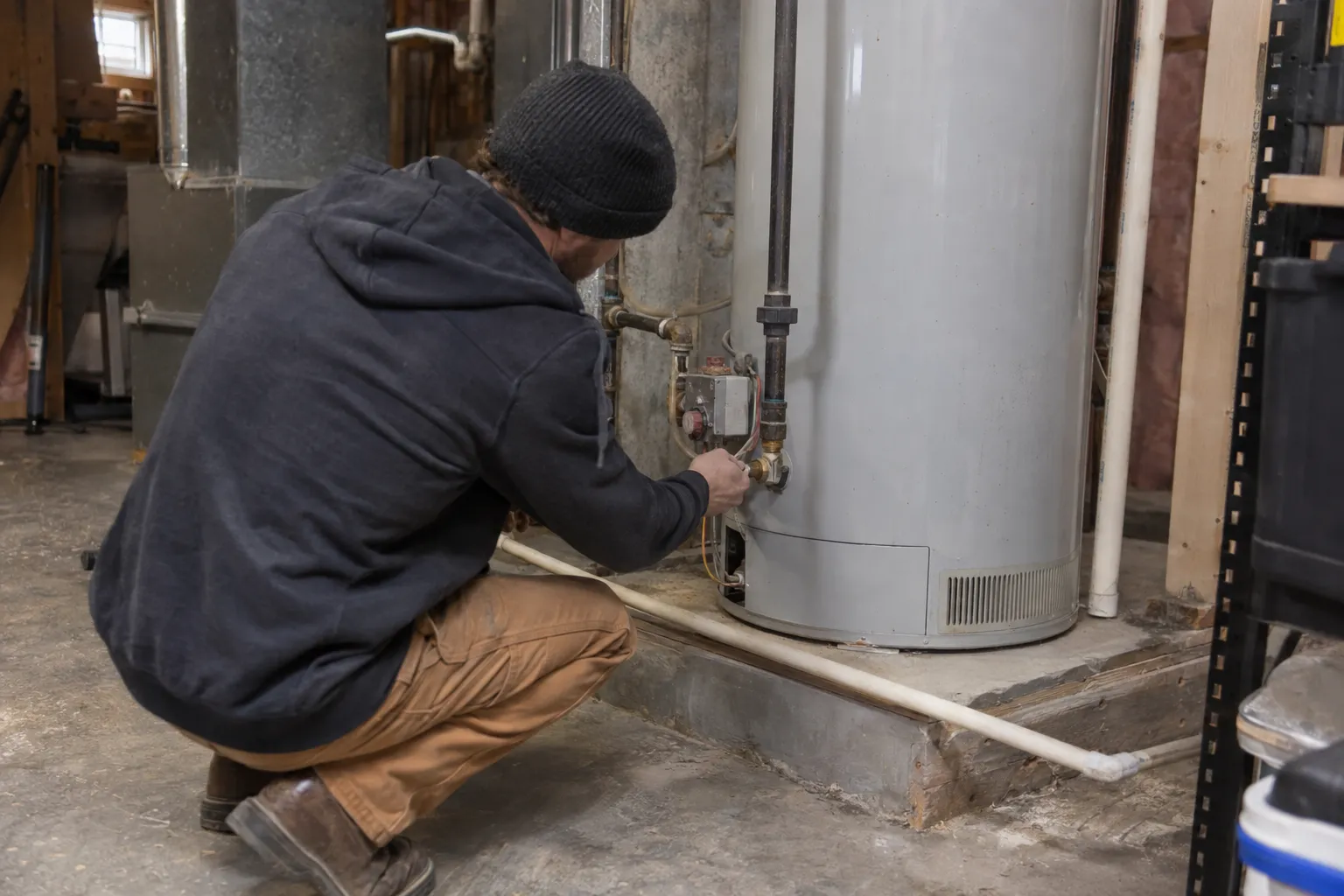
What does fireplace insert installation actually involve?
An insert slides into an existing firebox opening, but the work behind it is more involved than the name suggests.
Before anything goes in, a Level 2 inspection is required by NFPA 211 any time the appliance type or fuel source changes. That inspection checks the firebox dimensions, flue condition, existing liner integrity, and whether the flue can be properly lined for the new insert.
The flue liner is the part most DIYers underestimate. Wood and gas inserts both need a continuous, correctly sized liner running from the insert collar to the flue termination cap. The liner diameter is calculated from the insert's BTU output and flue height - it is not a one-size-fits-all dimension.
Gas inserts also require a dedicated gas supply line, which in Colorado must be run and connected by a licensed contractor. The insert's control wiring, thermostat connections, and blower wiring come after that.
What are the real risks of a DIY insert install?
The two most serious risks are carbon monoxide entering the living space and a chimney fire caused by an improperly fitted liner or inadequate clearances.
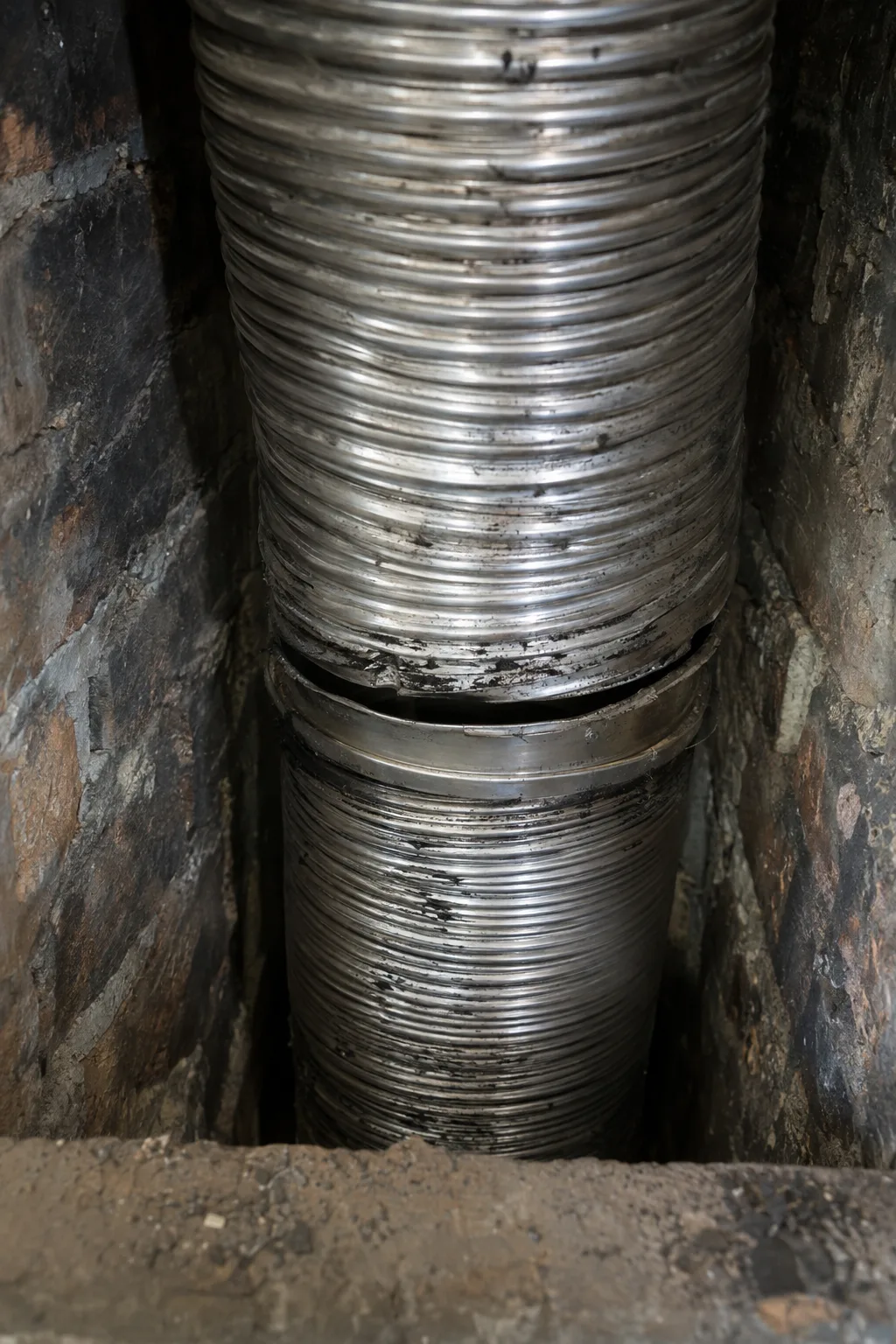
Here is where DIY installs most commonly go wrong:
- Undersized liner: restricts draft, causes backdrafting, and allows combustion gases including CO to spill into the room.
- Gap at the collar or liner joints: combustion gases bypass the liner inside the chase. The problem may not show any visible symptom until a CO detector triggers.
- Clearance violations: inserts have specific minimum clearances to combustibles at the firebox surround, hearth extension, and mantel. Getting these wrong is a building code violation and a fire hazard.
- Improper gas connection: even a small leak at an unqualified fitting is a combustion risk. Colorado building codes require licensed gas work for a reason.
- Skipping the pre-install inspection: an existing liner crack or firebox deterioration hidden behind the old insert can make a new installation unsafe from day one.
What makes Colorado Springs installs different?
Elevation, freeze-thaw cycles, and the local inventory of older masonry fireplaces all affect how insert installation goes here.
Colorado Springs sits at roughly 6,000 feet. At that elevation, combustion appliances receive about 20% less oxygen than at sea level. Gas insert BTU ratings and orifice sizing are set at the factory for sea-level performance; an insert not properly adjusted or rated for high altitude will burn rich, produce more CO, and may not meet manufacturer specs for safe operation.
The freeze-thaw cycles here are hard on masonry. Spalling brick, cracked flue tiles, and deteriorated mortar joints are common in Colorado Springs homes built before 1990. These problems must be repaired before a liner is installed - a new flexible liner dropped into a deteriorated flue still relies on the outer masonry for structural support and weather protection.
Many older homes in the area have fireplaces originally built for wood that homeowners now want converted to gas inserts. That change triggers the NFPA 211 Level 2 inspection requirement and typically requires a full liner replacement, since the existing flue dimensions were sized for wood combustion volumes, not gas.
Is there any scenario where DIY makes sense?
A basic electric insert with no venting requirements is the only realistic candidate for a homeowner-installed unit.
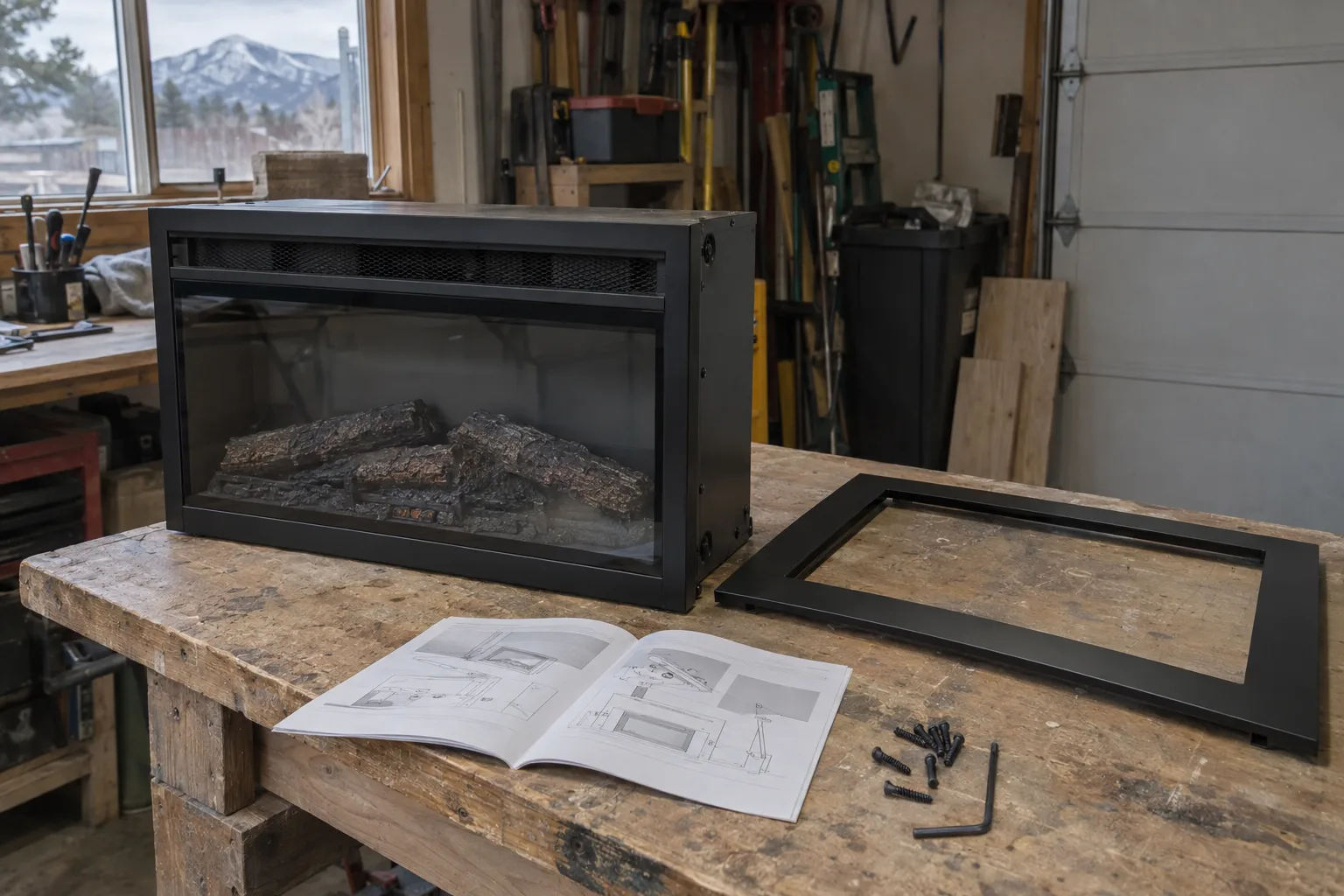
Electric inserts plug into a standard outlet, produce no combustion gases, and require no liner work. The installation itself is placing the unit in the opening and connecting the surround trim. If the existing firebox is clean and structurally sound, this is work most homeowners can do safely.
But even here, the flue and firebox should be inspected before the insert goes in. Sealing off a firebox that has existing damage traps moisture inside the chase. That moisture accelerates deterioration of the flue liner and masonry, and you will not see it until the damage is extensive.
Wood, gas, and pellet inserts are a different category entirely. The liner sizing, gas connections, altitude adjustments, and clearance requirements make professional installation the only practical route for those fuel types.
What does a professional installation include?
A proper installation covers the inspection, liner work, appliance fitting, clearance verification, and a test fire before the technician leaves.
When our CSIA certified technicians handle a fireplace insert installation in Colorado Springs, the process follows a defined sequence:
- Level 2 inspection first: firebox dimensions, flue condition, existing liner integrity, and clearance measurements are all documented before anything is ordered.
- Liner sizing and installation: liner diameter is calculated from the insert's BTU output, flue height, and any offsets in the chimney. The liner is set, joints are sealed, and the top plate is fitted to weatherproof the crown.
- Appliance placement and connection: the insert is fitted to the firebox opening, the collar is connected to the liner, and all gas or electrical connections are made to code.
- Clearance and trim verification: the surround trim, hearth extension, and mantel clearances are checked against both the manufacturer's specifications and applicable building codes.
- Test fire and CO check: the unit is run through its operating range and combustion gases are checked at the flue termination and in the room.
The NFPA 211 standard and the Chimney Safety Institute of America both provide the framework our technicians work from on every install.
Other questions we get
Do I need a permit for fireplace insert installation in Colorado Springs?
Gas insert installations typically require a mechanical permit through the Pikes Peak Regional Building Department (PPRBD), which handles permits for Colorado Springs. Electric inserts usually do not, but confirm with PPRBD before you start. A permit means an inspection, which protects you if you sell the home.
Can I install a gas insert in a fireplace that only had wood before?
Yes, but it triggers a Level 2 chimney inspection and almost always requires a new flexible liner. Wood flues are typically sized larger than what a gas insert needs, and the liner diameter must match the insert's venting requirements exactly.
How do I know what size insert fits my firebox?
Measure the firebox opening width and height, the depth from the face to the back wall, and the opening height. Most insert manufacturers publish minimum firebox dimension requirements in their spec sheets. A technician can verify fit and flue compatibility during the pre-installation inspection.
Sources and how we know
The installation requirements described here come from NFPA 211 (Standard for Chimneys, Fireplaces, Vents, and Solid Fuel-Burning Appliances), CSIA technical guidelines, and insert manufacturer installation manuals. Altitude combustion information reflects standard engineering data for high-elevation appliance performance.
- NFPA 211 Standard for Chimneys, Fireplaces, Vents, and Solid Fuel-Burning AppliancesNational Fire Protection AssociationThe governing standard for chimney and venting system installation and inspection requirements.
- Chimney Safety Institute of AmericaCSIACertification standards and technical guidance for chimney system installation and inspection.
- Insert manufacturer installation and venting manualsLiner sizing calculations, clearance requirements, and altitude adjustment specifications as published by appliance manufacturers.
Who wrote this
Luis Ortega
CSIA Certified chimney technician
Luis handles fireplace insert installations, flue liner replacements, and chimney inspections across Colorado Springs, working to NFPA 211 standards on every job.
- CSIA Certified
- Chamber of Commerce Verified Member